AMD Plans More AI Chip Supply in 2027, but Demand Still Leads

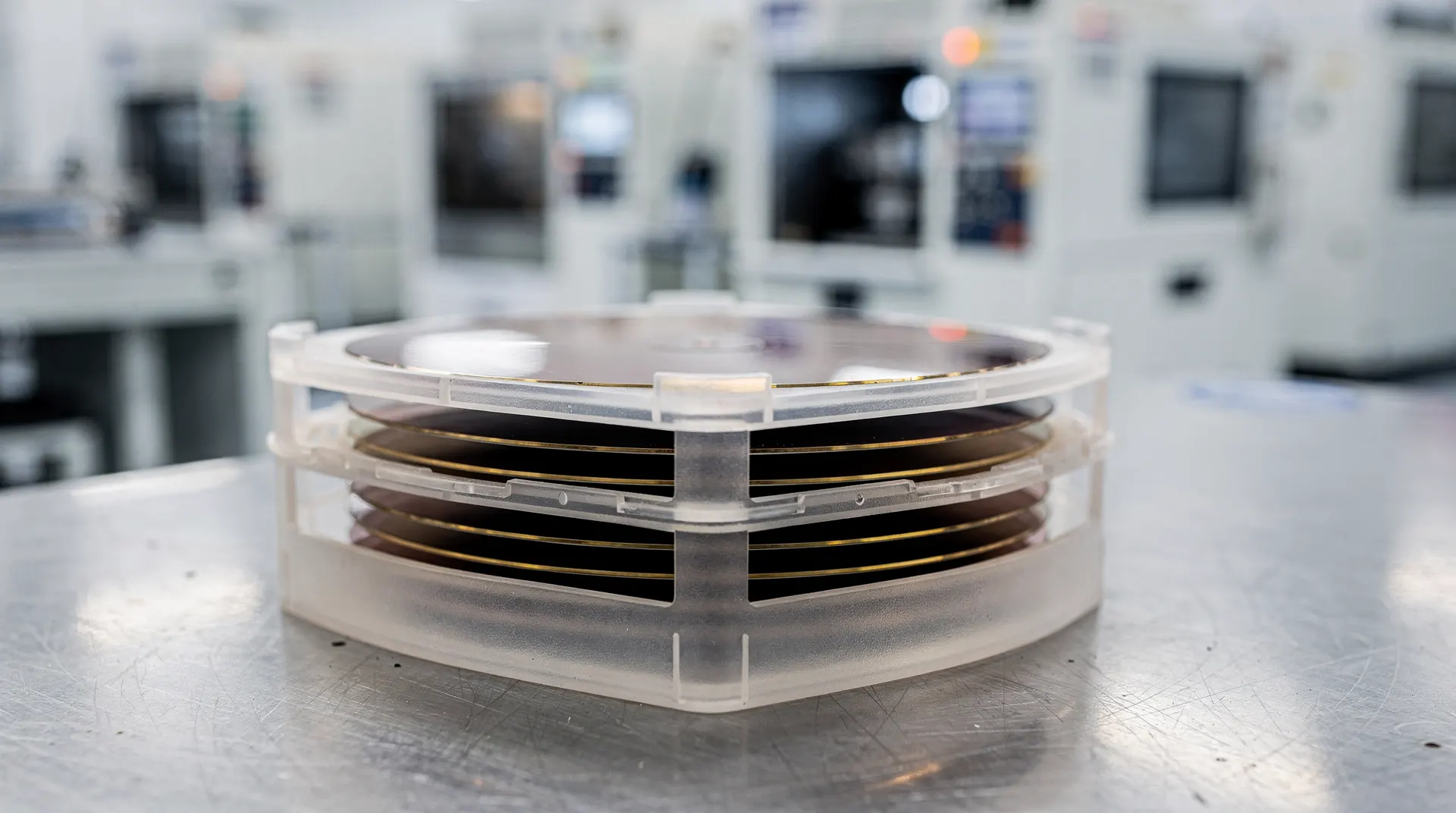
AMD plans a substantial increase in AI chip supply in 2027, but CEO Lisa Su says even that expansion may not meet demand. In comments reported from Taipei on October 6, Su said AMD is extending capacity planning with suppliers from a one to two year horizon to three to five years. That is a clear signal that the constraint has moved beyond near-term GPU orders: wafer output, advanced packaging and memory all need to scale together.
The comments matter because AI infrastructure buyers have spent the past year announcing large plans, while supplier capacity remains the practical limit on how quickly those plans turn into installed systems and revenue. Su's remarks, reported by Seoul Economic Daily on October 7, describe both the current imbalance and the longer lead times that AMD sees across its supply chain. They are management commentary, not a filed production forecast or a numerical unit target.
Related reading: AI Data Center Orders Reach 100 MW, but Plans Are Not Demand.
From chip orders to system capacity
Su said AMD had increased its supply and capacity in 2026, but demand still exceeded supply. She expects supply to rise substantially in 2027, while saying more will be needed. The distinction is important: a large percentage increase from a constrained base can still leave customers waiting, and the interview did not specify the number of accelerators AMD expects to ship or when the gap closes.
The planning horizon also points to a broader bottleneck than wafer starts alone. Su visited Taiwan partners including Taiwan Semiconductor Manufacturing Company and Hon Hai Precision Industry on October 6, according to Seoul Economic Daily. Her description covered advanced wafers, packaging and substrates. Those components have different production cycles, so an increase in GPU design output does not automatically translate into a matching increase in complete, deployable systems.
Related reading: One Week of Memory Inventory Left Before Micron's Test.
Packaging is one potential pressure point. Su said demand for TSMC's CoWoS packaging is rising with AI chip demand and that AMD is exploring other approaches with Taiwanese companies, including fan-out panel-level packaging. CoWoS places an AI processor and high-bandwidth memory together on an interposer. Alternative packaging could add capacity over time, but exploration is not production qualification, and the report did not give a schedule or volume for any alternative process.
Memory and system integration add another layer. Seoul Economic Daily reported that AMD's Helios rack, which the company expects to ship in volume in the fourth quarter of 2026, integrates 72 Instinct MI455X GPUs and 18 Venice CPUs. Samsung Electronics was selected in March 2026 as the priority supplier of HBM4 for the MI455X, according to the same report. A rack depends on the coordinated availability of accelerators, memory, networking and power delivery. A shortfall in one part can hold back shipments even if other components are ready.
Related reading: Nvidia Expects Chip Sales to Double: The Filings Back It.
Demand has more than one driver
AMD's potential customers for Helios include OpenAI, Anthropic, Microsoft, Meta and Oracle, Seoul Economic Daily reported on October 7. That list connects AMD's supply effort to both specialist AI developers and large cloud operators. It does not establish how much each customer has committed to buy, whether orders are binding, or the timing of deliveries. Those details will matter more than a customer roster when investors judge how much demand AMD can convert into recognized sales.
Su also cited AI agents as a source of demand for server CPUs, because agent workloads can require more general-purpose processing around accelerator-heavy tasks. The report identified AMD's Epyc line as a server CPU product serving enterprise, cloud and high-performance computing workloads. This expands the potential revenue pool beyond GPUs, but it does not prove that agent deployments will create a discrete, measurable step-up in CPU orders. The market needs evidence in customer deployments and segment results.
Related reading: The Chip Layer This Week: Memory Prices Climb While Nvidia Slides.
Seoul Economic Daily quoted Citigroup analyst Atif Malik projecting that the CPU market could grow at a 60% average annual rate from $29 billion in 2025 to $300 billion in 2030. Those are analyst estimates, not AMD guidance. The projected endpoint implies a large expansion over five years, and it depends on AI agents and other server workloads translating into purchases. AMD's broad CPU exposure gives it an opportunity, while Intel's presence and uncertain workload economics make the outcome competitive rather than assured.
What would confirm the ramp
The bullish reading is straightforward: customers are booking scarce AI compute, AMD is seeing demand above available supply, and its suppliers are considering capacity across more than one stage of production. Su also referred to AMD's more than $10 billion investment in Taiwan announced in May 2026, saying the company would expand that figure as demand rises, per the October 7 report. This points to a willingness to commit capital and deepen local supply relationships.
The counterargument is execution risk. Longer-range capacity plans can be revised, and the October 6 interview disclosed no firm wafer, packaging or chip-volume targets for 2027. Qualifying a new packaging method may take time. Customer plans can also change if data-center financing, power availability or the economics of AI services weaken. The announced buildout is not equivalent to paid utilization, and AMD's comments do not quantify its market share or future margins.
Investors should therefore separate a demand signal from a delivery result. The next evidence will come from AMD's reported data-center revenue, any quantified supply or shipment targets, and updates on Helios volume production expected in the fourth quarter of 2026. Supplier disclosures from TSMC and memory vendors can help reveal whether added capacity is materializing, but they will not map one-for-one to AMD shipments because those suppliers serve multiple customers.
Su's remarks place the AI chip debate on a longer clock. If capacity expands through wafers, packaging and memory, AMD may capture more of an unusually strong backlog of compute demand. If one of those inputs remains tight, a 2027 supply increase can coexist with customer shortages. The distinction to watch is not whether demand sounds strong, but whether quarterly deliveries and data-center revenue rise alongside supplier capacity.
This content is for informational purposes only and does not constitute financial advice. Past performance is not indicative of future results. Consult a qualified financial advisor before making investment decisions.
Get daily intelligence delivered
Create a free account for the Daily Brief every weekday and The Week Ahead every Sunday. No card required.