VIX Surges 9.5% as Market Internals Flash Caution

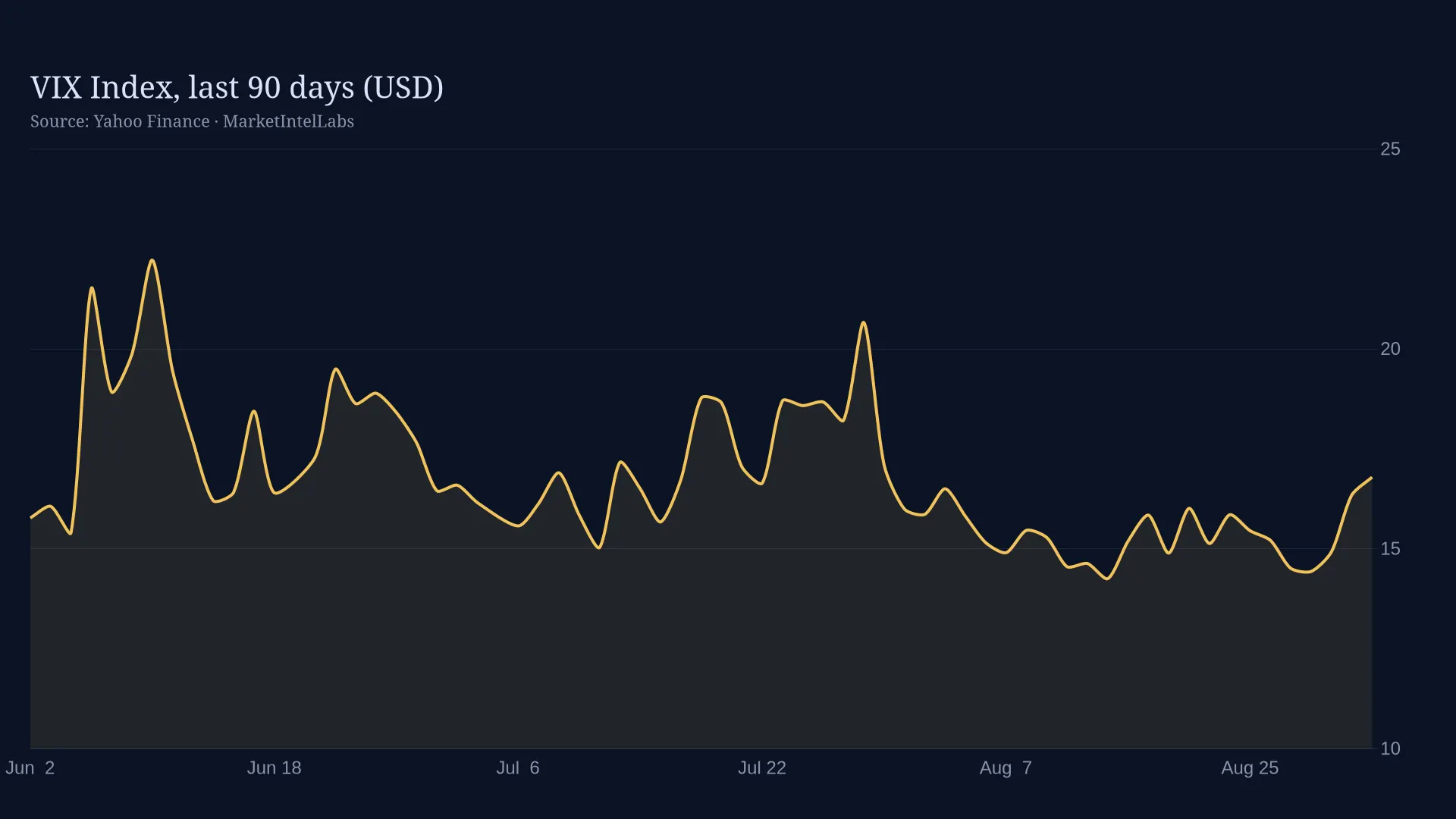
Per CBOE data, the VIX jumped 9.52% to 16.34 on September 2, 2026. This signals that investors are bracing for choppy trading. The volatility spike arrived alongside a broad-based equity decline. SPY fell 0.69% to $761.78 while QQQ dropped 1.27% to $707.64.
Growth names led the move lower, with technology and consumer discretionary underperforming. Defensive sectors posted modest gains during the session. This rotation pattern suggests reduced risk exposure as investors position ahead of potential catalysts.
Market breadth confirmed the risk-off tone. Defensive sectors attracted capital while growth areas saw selling pressure. Utilities posted a 0.78% gain and healthcare added 0.66%. This shows where investors parked capital.
Technology and consumer discretionary bore the brunt of the selling. XLK fell 1.53% and XLY dropped 1.72%. This pattern often emerges when uncertainty rises. Economic data and Fed policy are likely concerns.
The volatility index move is notable. The VIX had been compressed in recent sessions. A jump of nearly 10% suggests option pricing is adjusting quickly. Traders are factoring in new risks.
While the VIX level of 16.34 remains below crisis levels, the uptick carries meaning. The market is pricing in a wider range of outcomes. This reflects uncertainty about the path ahead.
QQQ underperformed SPY on September 2. The Nasdaq 100 ETF declined 1.27% compared to SPY's 0.69% drop. High-beta technology stocks saw aggressive profit-taking. The selling was not uniform across the market.
Investors are selectively reducing exposure to expensive growth names. They are maintaining positions in defensive areas. That pattern often precedes elevated volatility. September historically marks a seasonally weak period.
The pullback follows a summer rally that pushed SPY near recent highs. Similar rotations into defensives have preceded corrections before. This is particularly true when accompanied by a rising VIX. The current action fits that historical pattern.
What matters is whether the VIX sustains levels above 16. A hold above this threshold would signal entrenched volatility expectations. That would indicate more than a one-day adjustment. A retreat toward 14-15 would suggest the spike was an overshoot.
The September jobs report from BLS will be the key data point. Strong labor data could reignite rate cut concerns. That would push volatility higher. A softer print might ease pressure on risk assets.
This content is for informational purposes only and does not constitute financial advice. Past performance is not indicative of future results. Consult a qualified financial advisor before making investment decisions.
Related reading: Market Internals Flash Warning as Technology Underperforms, Volatility Compresses as VIX Falls to 14.51 and Options Traders Turn Bullish, and Sector Rotation Signals: Tech and Industrials Lead as Market Breadth Narrows.
Get daily intelligence delivered
Create a free account for the Daily Brief every weekday and The Week Ahead every Sunday. No card required.