TeraWulf Expands Muskie Contracted Power to 1 GW

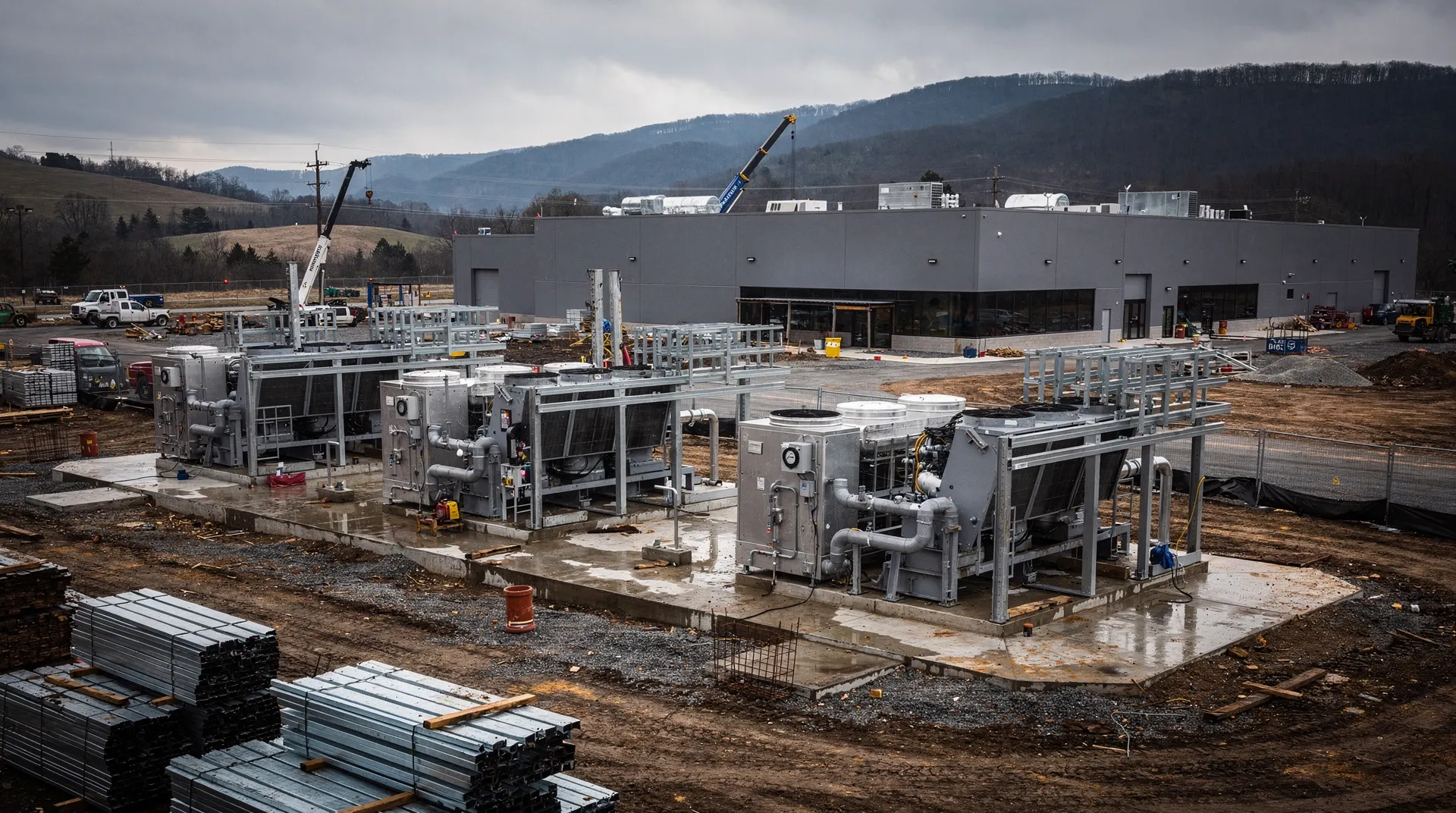
TeraWulf’s amended Kentucky Power agreement raises contracted capacity at its Muskie Data Campus in eastern Kentucky from 500 megawatts to 1 gigawatt. The added 500 MW clears the materiality bar for AI infrastructure, but it is not yet delivered compute: the second phase remains subject to Kentucky Public Service Commission approval and utility construction.
The amended agreement
TeraWulf said on October 5, 2026, that it executed an amended and restated electric service agreement with Kentucky Power, an American Electric Power subsidiary. The second 500 MW phase is now planned for 2029, one year earlier than the previous target. TeraWulf still targets a 2028 ramp for the initial 500 MW.
Both timelines are targets, not guarantees. The company’s announcement makes the 2029 phase contingent on Kentucky Public Service Commission approval and Kentucky Power’s construction schedule. Kentucky Power is developing a 765-kilovolt and 345-kilovolt substation connected to the regional transmission network to serve Muskie.
Related reading: Micron’s $54.2B Quarter Puts AI Memory at the Center of the Trade.
TeraWulf says it acquired the Muskie site in May 2026 for phased development as an AI and high-performance computing campus. The October 5 announcement cites customer interest, but it does not identify a tenant, lease or customer contract for the additional capacity. Nor does it give a capital budget for the second phase.
Capacity is not revenue
Power is a prerequisite for a data center, not a measure of its future sales. The campus needs approvals, construction, electrical equipment and servers, followed by a customer commitment that supports utilization. An earlier target date could shorten the wait before the second phase serves load, if the remaining dependencies are met.
Related reading: Synopsys Signed Two Billion Dollar AI Deals in One Day, and Chip Design Tooling Is Now the Choke Point.
The distinction matters as TeraWulf discusses further expansion. The company said it is evaluating the campus’s potential to support up to 2 GW over time. It also said that possibility requires additional utility planning, infrastructure and agreements. That 2 GW figure is not part of the 1 GW now covered by the amended service agreement.
A campus of this scale requires substantial investment. TeraWulf has not quantified spending or disclosed how it will finance the incremental 500 MW. Until the company discloses a customer commitment and the utility or regulator advances the project, the added capacity is an infrastructure milestone rather than contracted computing revenue.
Related reading: Five AI Deals in One Day, and Not One Was About GPUs.
There is a relevant Kentucky policy framework. Governor Andy Beshear’s Executive Order 2026-494, dated August 6, 2026, requires data center developers to submit an energy plan addressing protection of residential ratepayers. It directs the Public Service Commission not to allow utilities to raise rates paid by other ratepayers to recover data center development and operating costs. TeraWulf’s October 5 release says Muskie will proceed consistent with the order. The order is a state-level framework, distinct from the project-specific approval still named as a condition for the second phase.
For the broader sector, Muskie is another example of a constraint shifting from access to land toward the timing of grid upgrades and the structure of utility service. A 1 GW headline can help define the potential scale of a site, but delivery depends on transmission equipment, regulatory review and the commercial terms that make a customer willing to occupy the facility. Those steps take time and carry cost.
The state order also makes ratepayer protection part of the project context. Its requirement that data center developers show how they will meet energy needs without shifting added costs to other utility customers could shape contract design and review. It does not remove the need for approval; rather, it adds a policy condition against which the project’s energy plan must be assessed.
That distinction matters for interpreting announcements across the AI infrastructure market. A power agreement can improve a developer’s position with prospective users. Economics still depend on how much capacity is delivered, when it comes online and who pays for construction. Public updates on regulator filings and utility milestones will offer more evidence than expansion potential alone.
Tracking approval and construction
Investors can track the commission’s review of the amended agreement, Kentucky Power’s substation schedule and any customer contract covering the additional phase. Construction updates and financing disclosures would help determine whether the 2029 target is backed by funded execution.
For TeraWulf, the added capacity could support more AI and high-performance computing customers and bring forward the second phase. But there is no disclosed tenant or pricing for the additional power, and the schedule remains conditional. Contracted megawatts alone do not establish occupancy or utilization.
The amendment raises the potential scale of Muskie, but the decisive evidence will be conversion into approved, energized capacity and customer-backed demand. That gap between contracted megawatts and revenue is the next test for TeraWulf and the wider AI data center buildout.
Sources: TeraWulf, October 5, 2026 press release; Kentucky Executive Order 2026-494, August 6, 2026.
This content is for informational purposes only and does not constitute financial advice. Past performance is not indicative of future results. Consult a qualified financial advisor before making investment decisions.
Get daily intelligence delivered
Create a free account for the Daily Brief every weekday and The Week Ahead every Sunday. No card required.