Micron’s $54.2B Quarter Puts AI Memory at the Center of the Trade

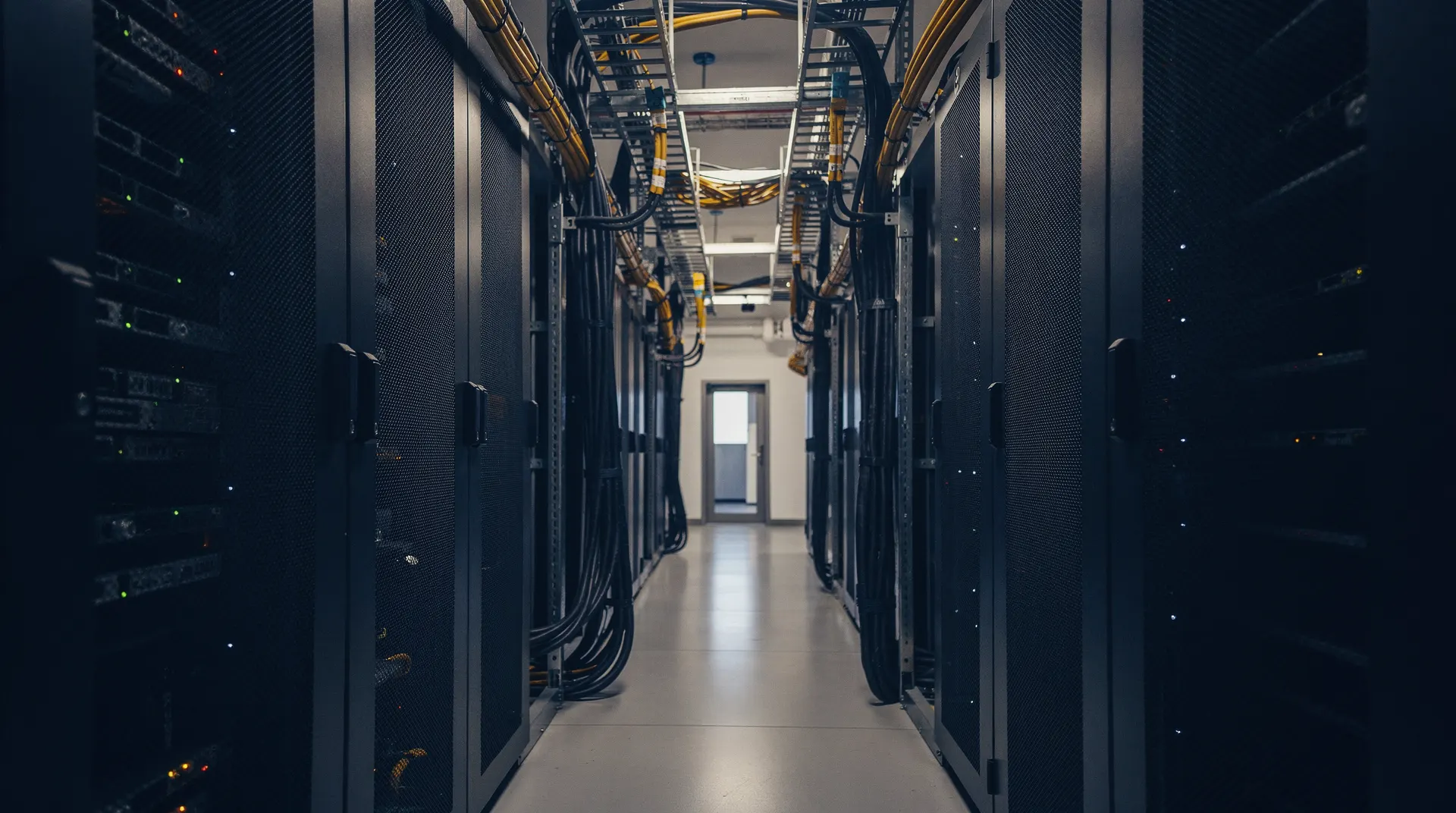
Micron’s September 30 results put an unusually large number on the AI hardware cycle: $54.23 billion of fiscal fourth-quarter revenue, up from $41.46 billion in the prior quarter and $11.32 billion a year earlier. The company guided to $61.5 billion, plus or minus $1.5 billion, for fiscal first-quarter 2027. The immediate read-through is clear: AI infrastructure demand is expanding beyond accelerators into memory, storage, and the electricity and financing needed to run increasingly large data centers. The dynamics behind this quarter started earlier, as we detail in Micron Sold Out Fiscal 2027 Before It Started, and the Shortage Now Has No End Date. The harder question is whether that growth can be sustained at current economics. For the full desk, see our AI markets coverage.
Micron said its fiscal 2026 revenue reached $133.19 billion, compared with $37.38 billion in fiscal 2025. Its fiscal Q4 gross margin was 86.8% under GAAP, against 44.7% in the year-ago quarter. Management attributed the step-up to AI-driven demand and strong execution, and said it expects a stronger fiscal 2027. Those figures are a striking snapshot of tight supply and product mix, but they are company results and guidance, not a guarantee of future growth. A steep year-over-year comparison also reflects the memory cycle’s low base: Micron’s fiscal Q4 2025 revenue was $11.32 billion.
The business-unit disclosures help locate the demand. Micron’s Cloud Memory unit generated $16.28 billion in Q4, up from $4.54 billion a year earlier; its Core Data Center unit reported $18.00 billion, versus $1.58 billion. Both figures demonstrate how much of this particular quarter’s revenue now sits in data-center-related categories. They do not, by themselves, establish that each dollar is exclusively AI-related or that the same growth rate will persist. Micron also cited 512GB high-capacity DDR5 module sampling, customer qualifications for high-speed server memory, and SSD shipments for KV-cache applications. That product detail points to a broadening bill of materials: serving larger models requires more than a leading-edge accelerator.
For investors tracking the AI supply chain, the bull case is that memory content and storage needs rise as inference workloads scale, supporting new capacity and high-value product launches. Micron’s Q1 outlook and its stated intention to increase investments in technology, products, and manufacturing support that interpretation. The countercase is that memory remains cyclical. Elevated margins invite capacity investment, while customer inventories, deployment schedules, or a slower-than-expected payoff from AI services could change purchasing patterns. The latest quarter confirms strong realized demand; it does not settle the durability question.
Capital is following the infrastructure bottleneck
A second signal arrived on October 1, when SoftBank Group said it completed a previously announced $10 billion third tranche investment in OpenAI. That completed a $30 billion follow-on commitment, bringing SoftBank’s cumulative investment in OpenAI to $64.6 billion and its ownership interest to approximately 13%, according to the company. The transaction was funded with proceeds from foreign-currency senior notes. SoftBank also said it canceled the remaining $10 billion of undrawn bridge capacity and had repaid all borrowings under that facility.
The disclosure shows the scale and financing complexity behind private AI investment. It is evidence of one investor’s committed capital, not an industry-wide measure of funding or a direct read-through to near-term chip orders. Debt-funded investment concentrates attention on capital costs and the eventual conversion of model usage into cash flows. We traced one such financing round in Amazon's Nvidia Financing Talks Meet a $7.6 Billion Cash Flow Gap. For the broader market, the key test remains whether operators can turn expensive compute into recurring revenue at a pace that justifies continued infrastructure commitments.
Power is becoming a parallel investment theme. On September 29, Samsung said six affiliates would invest a combined $1 billion in Helix Digital Infrastructure, alongside KKR, Kuwait Investment Authority, NVIDIA, and Vistra. Samsung described Helix as spanning data-center development, power generation, grid infrastructure, and fiber networks. Its stated rationale is to link compute campuses with energy and network capacity. The power side of the AI buildout is the subject of Five AI Deals in One Day, and Not One Was About GPUs. This is an announced investment commitment and strategic positioning, not proof that new facilities are already energized or earning returns.
Regulators are also making the cost allocation question more concrete. On October 1, Michigan’s Public Service Commission approved special DTE Electric contracts for a Google data center in Van Buren Township, with protections intended to keep other utility customers from bearing the project’s costs, a structure we unpacked in Michigan's Google Data Center Gets a 20-Year Power Deal. The agreement sets a 20-year term, an 80% minimum billing demand, and early-termination provisions requiring Google to cover at least 15 years of minimum monthly charges. The commission said Google will pay for DTE to develop up to 1,600 megawatts of renewable energy and 480 megawatts of battery storage; the data center is expected to begin taking service in December 2027, with maximum load by December 2028. These are project-specific terms, not a template for every market, but they show how long-duration contracts can shift demand and cancellation risk back to the customer driving the buildout.
At the regional level, a September 29 statement from FERC Commissioner See on PJM’s reliability backstop procurement emphasized both the need for additional generation and the principle that customers driving new costs should bear appropriate responsibility. The statement noted that PJM’s proposal did not adequately ensure costs would be allocated to the customers driving the need and called for improved load forecasting. It was a commissioner’s concurrence statement on a commission order, not a final industry-wide cost regime. Still, it captures the tension: utilities and grids need credible demand forecasts before they build, while data-center operators need a path to reliable capacity.
What to watch next
TSMC’s investor calendar lists September monthly sales for October 8 and its third-quarter results for October 15. As of the latest monthly-revenue table, August sales were NT$514.806 billion, up 53.3% year over year; September was blank. August’s figure was up 53.3% from NT$335.772 billion in August 2025, according to TSMC’s published monthly series. September’s release will offer another near-term check on foundry demand, while the earnings call should provide additional context on utilization, customer demand, and investment plans. Neither is a standalone verdict on the whole AI market.
This week’s evidence supports a measured conclusion: Micron’s fiscal Q4 revenue reached $54.23 billion, up from $11.32 billion a year earlier, while capital continues to move into model developers and data-center platforms and energy procurement is becoming more explicit. The upside case depends on AI workloads continuing to absorb costly compute and related components. The risk is that supply investment and financing move faster than monetization, while grid connection and project economics delay capacity. The next useful signals are TSMC’s September sales and Q3 commentary, updates to memory suppliers’ customer commitments and capex, and whether data-center contracts increasingly make project sponsors accountable for the power costs their load creates.
Sources: Micron Technology, fiscal Q4 and full-year 2026 results, September 30, 2026, investors.micron.com ; Micron Technology, fiscal Q4 and full-year 2025 results, September 23, 2025, investors.micron.com ; SoftBank Group, October 1, 2026, group.softbank ; Samsung Global Newsroom, September 29, 2026, news.samsung.com ; Michigan Public Service Commission, October 1, 2026, www.michigan.gov ; FERC Commissioner See concurrence, September 29, 2026, www.ferc.gov ; TSMC monthly revenue, investor.tsmc.com ; TSMC financial calendar, investor.tsmc.com
This content is for informational purposes only and does not constitute financial advice. Past performance is not indicative of future results. Consult a qualified financial advisor before making investment decisions.
Get daily intelligence delivered
Create a free account for the Daily Brief every weekday and The Week Ahead every Sunday. No card required.