Strategic Petroleum Reserve Release: DOE Authorizes 4 Million Barrel Exchange With Exxon, BP After Isaias

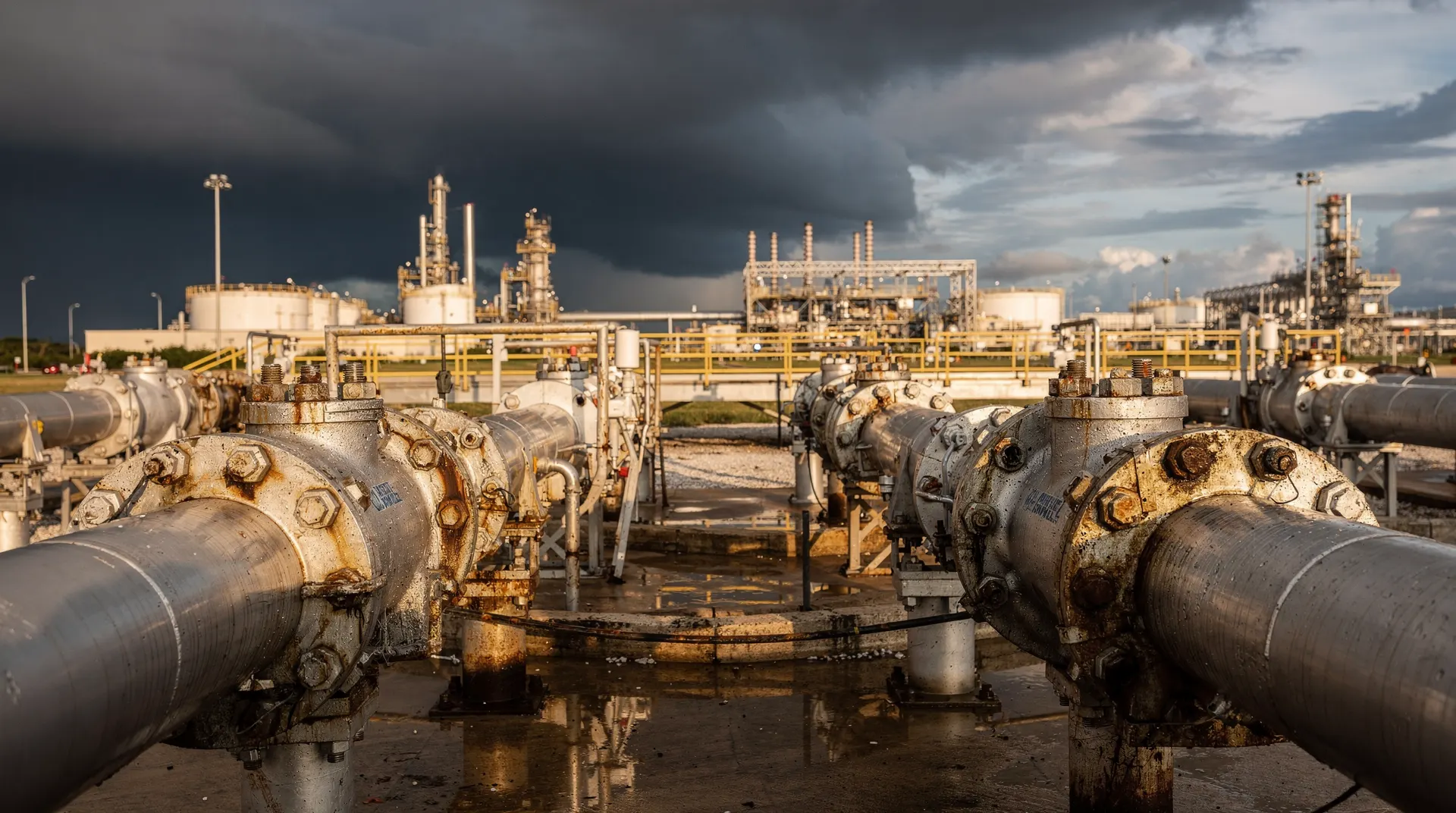
Oil markets have another reason to stay on edge, and it comes straight from Washington. The U.S. Department of Energy on Saturday authorized an emergency exchange of up to 4 million barrels of crude from the Strategic Petroleum Reserve to blunt the supply disruption from Hurricane Isaias in the Gulf of Mexico. It is the first drawdown since the Iran escalation, and the structure matters as much as the number.
The announcement, dated October 10, authorizes up to 2 million barrels each for ExxonMobil and BP America, per the DOE press release. Energy Secretary Chris Wright framed the move as an emergency exchange meant to offset supply disruptions tied to the storm. The companies are borrowing crude now and will pay it back in 2027 with an additional premium barrel allocation on top, which the department says replenishes the reserve at no net cost to taxpayers.
Related reading: Hurricane Isaias shuts in 1.28M bpd of Gulf oil production: what it means.
Read that structure closely, because it changes what this release accomplishes. This is not a sale that drains the reserve permanently, the kind Washington has leaned on to cap prices in past supply shocks. It is a loan timed to cover a gap. ExxonMobil's portion accelerates deliveries of SPR crude it was already awarded under earlier authority, so part of this is logistics, pulling forward barrels the company already had coming. BP's allocation adds a fresh tranche on top.
The urgency comes from the storm's footprint in the water. Isaias, which made landfall near Destin, Florida as a hurricane, has knocked out a meaningful slice of Gulf production. Reuters cited figures showing roughly 69% of Gulf of Mexico oil output and 57% of natural gas output remained shut on Saturday as operators worked to redeploy personnel. That is a big chunk of U.S. offshore supply sitting idle at a moment when the market is already short.
For the broader framework, see our crude oil coverage.
Related reading: G7, IEA release 100 million barrels to break the diesel squeeze.
Short, because the broader tightness that has built up since the late-February Iran strikes has not let up. The reserve was already drawn hard. Roughly 132 million barrels have been withdrawn from the SPR since U.S. and Israeli strikes on Iran in late February, according to reported figures, out of a reserve of about 415 million barrels, with Washington pledging to release roughly 172 million barrels. Add in coordinated G7 and IEA releases and elevated diesel prices, and the system had little spare cushion before Isaias came ashore.
On the numbers, 4 million barrels is a rounding error against daily global demand of just over 100 million barrels, so nobody should read this as a market-wide fix. In trader terms, this is a bridge, not a flood. Its real job is to keep Gulf and Gulf Coast refiners from scrambling for feedstock in the days and weeks after the storm, while the mortgage of the borrowed barrels hangs over the 2027 calendar.
Related reading: IEA oil release accelerates and prioritizes diesel: what the 100 million barrels means.
Bullish and bearish takes both hold up here. The bull case is that the exchange blunts the worst of the refinery feedstock strain and signals Washington is willing to step in, which can cool a panic bid. The bear case is that the release is small and temporary, the reserve is a fraction of what it was, and the repayment obligation means those barrels have to come back next year. A 4 million barrel swap does not restore the roughly 69% of Gulf production that was offline. Physical barrels out of the reserve cannot replace the production that a cat 3 storm took off the water.
Where does that leave price? The market was already carrying a war premium before the storm complicated the Gulf: roughly 132 million barrels have come out of the reserve since late February, the reserve sits around 415 million barrels with Washington pledging to release roughly 172 million, and about 69% of Gulf oil output remained shut on Saturday per Reuters. That tells you how little room this reserve action has to push prices down on its own.
Related reading: Brent Holds $101 as the 100M-Barrel G7 Release Meets a $20-25 War Premium.
What matters next is not the announcement but the follow-through. Watch the speed of refinery restarts across the Gulf Coast, whether further releases get authorized as damage assessments come in, and how the exchange mechanics play out against a reserve that has already given up about a third of its barrels since the winter. The loan helps keep the lights on through the storm's aftermath. It does not undo a year of drawdowns, and the bill for those borrowed barrels comes due in 2027.
This content is for informational purposes only and does not constitute financial advice. Past performance is not indicative of future results. Consult a qualified financial advisor before making investment decisions.
Get daily intelligence delivered
Create a free account for the Daily Brief every weekday and The Week Ahead every Sunday. No card required.