SK Telecom Data Center Arm Seeks $350 Billion for South Korea AI Buildout

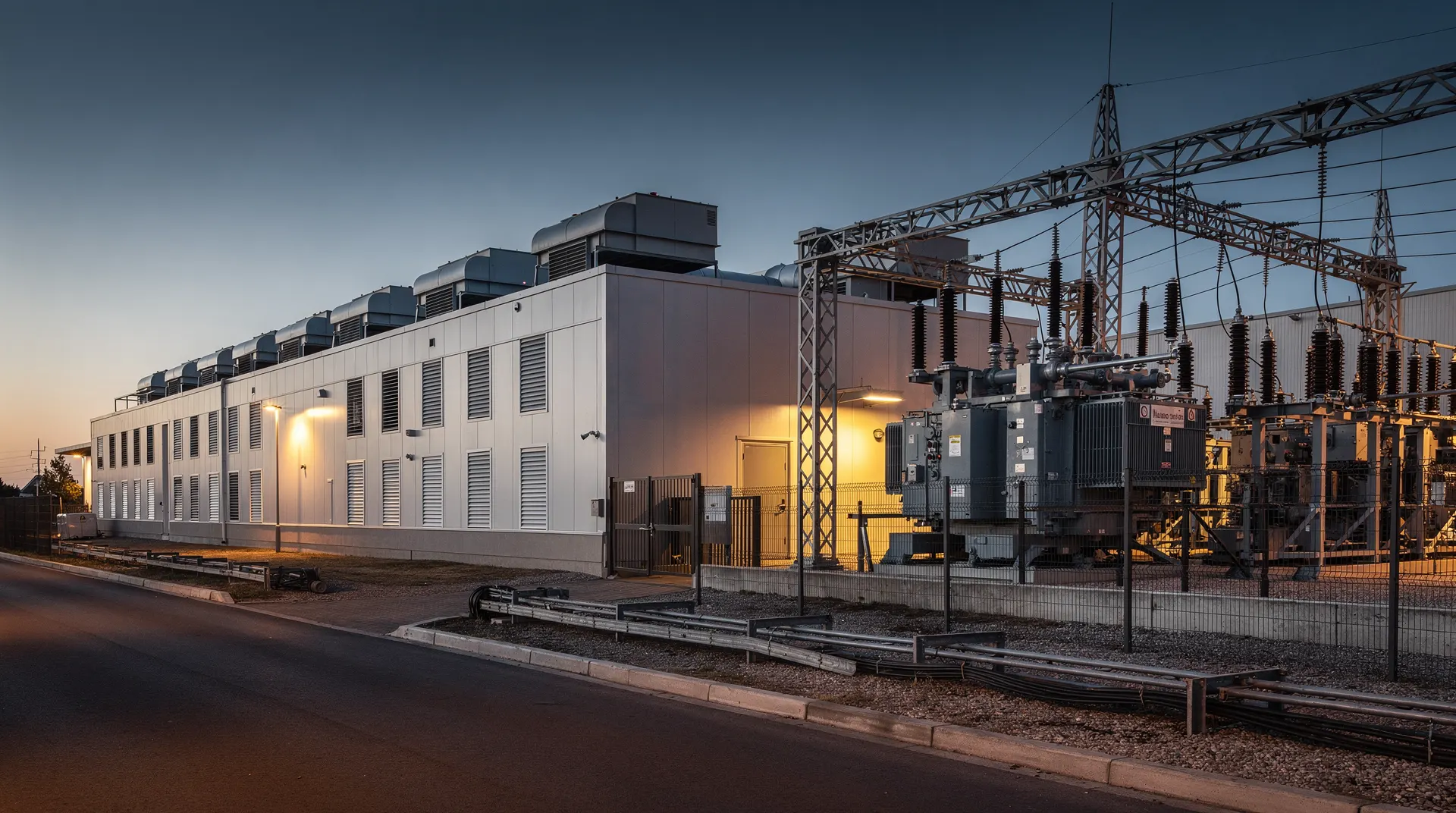
SK Hyper, the data center arm of South Korea's SK Group, is in talks with big technology companies and financial investors to raise toward a $350 billion AI infrastructure buildout, Bloomberg reported on October 23. The figure covers just the first phase: 5 gigawatts of computing capacity including equipment, on a path to 15 gigawatts in the country by 2035.
It would rank among the largest private infrastructure outlays in Asia behind a single corporate bet on sustained AI compute demand. SK Hyper was set up in July as a unit of SK Telecom, and it counts on the broader SK Group, with its semiconductor, energy and telecom affiliates, to offset South Korea's relatively high electricity costs and to push computing performance per watt.
Related reading: DayOne Data Center IPO Filing Shows 2.3 GW in Bookings.
Chung, speaking to Bloomberg Television, was explicit that the company will not commit to the full programme up front. "We are going to manage our risk appropriately, meeting with market demand," he said, adding that SK Hyper would share costs with data center tenants and outside investors and adjust the pace of investment to actual demand.
South Korea, under this plan, becomes an alternative to US-centric AI computing hubs for customers across Japan, Taiwan and wider Asian markets, and SK Hyper is in discussions with governments in Asia and the Middle East about supplying integrated computing capacity and AI models. It is also working with South Korean officials on land for future expansions.
Related reading: Micron’s $54.2B Quarter Puts AI Memory at the Center of the Trade.
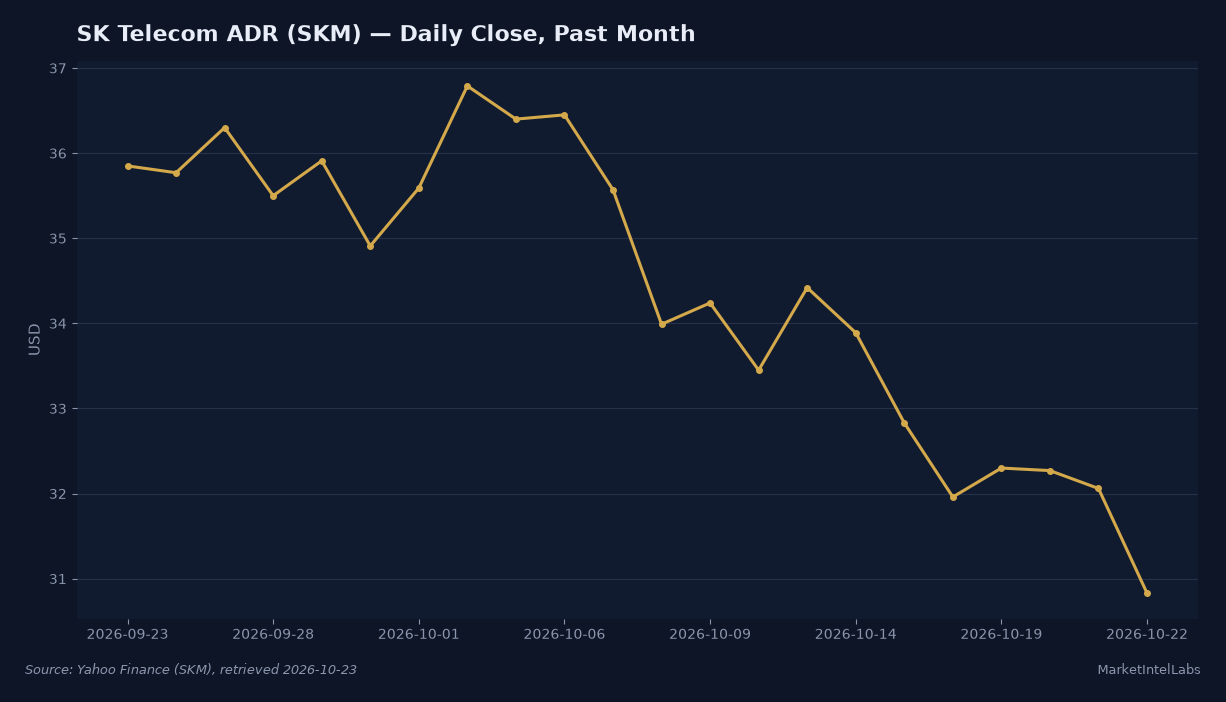
Timing is the risk. The fundraising push lands in the middle of a reassessment of AI infrastructure spending, and the market had already moved before the report broke. SKM, SK Telecom's ADR, closed at $30.83 on October 22, down 3.84% and about 14% over the past month, a decline that predates this report.
Announced ambition and contracted demand are not the same thing. The $350 billion is a target tied to a first phase, not a signed commitment, and SK Hyper has kept the option to scale down if tenants do not appear. Its first projects, the 900 MW Ulsan site and a previously announced 100 MW facility for Amazon Web Services, provide the clearest read on whether the math works before the bigger tranches come due.
Related reading: Who Pays for the Datacenters: Debt, Leases and the Hidden Cost of AI Capex.
Watch the first external round, expected by the end of this year or early 2027. It will show whether financial markets remain willing to underwrite multi-hundred-billion-dollar AI infrastructure at a moment when investors want to see utilization and revenue before the next wave of capacity. If tenants and outside capital back the Ulsan and AWS projects, the 15 GW target looks less like a rounding figure. If they hesitate, SK Hyper's phased structure limits the damage, but the scale of the ask will frame the debate over AI infrastructure debt and equity appetite into next year.
Competitive context matters as much as the capital structure. South Korea is chasing a position in the global AI supply chain that hyperscalers have so far centered on the US, with secondary hubs in Europe and the Gulf. SK Group's own footprint spans memory chips through SK Hynix, energy and telecom infrastructure, which gives SK Hyper a base of component and power expertise a standalone developer would lack, and the question is whether that vertical integration translates into a lower cost per megawatt at a time when every hyperscaler is hunting the same efficiency edge.
Related reading: Meta Q3 2026 Earnings: Capex Floor Raised to $135 Billion as New Share Class Funds AI Spend.
Land, power and permitting will bind the timeline. Executives said the company is in talks with South Korean officials over additional sites, and the initial Ulsan project anchors the regional pitch to Japan and Taiwan tenants who want AI compute closer than the US east coast. South Korea's grid constraints and approval process are real limits, which is part of why the company is leaning on the SK Group's energy affiliates. Every gigawatt of new capacity needs power and cooling, and neither gets cheaper at 15 GW scale, so the pace of tenant pre-leasing will decide whether this becomes a 15 GW reality or a smaller, slower buildout that still moves the region's AI supply chain.
The funding structure is where the ambition meets a hard constraint. SK Telecom has committed about 750 billion won to SK Hyper through 2030, roughly $562 million at the October 16 exchange rate of about 1,334 won per dollar per Federal Reserve data, a foundation sum that leaves the stack of capital to come to tenants and outside investors. Chung has said the company will flex the pace of construction against real demand rather than frontload the full 15 GW, a structure that limits downside but also means the headline $350 billion figure is a ceiling to be earned, not a check being written.
Sources: Bloomberg News interview with SK Hyper Chief Executive Chung Suk-geun; Yahoo Finance quote for SKM (SK Telecom ADR), closing print October 22, 2026; Federal Reserve via FRED (DEXKOUS) for the won-dollar rate, latest observation October 16, 2026.
This content is for informational purposes only and does not constitute financial advice. Past performance is not indicative of future results. Consult a qualified financial advisor before making investment decisions.
Get daily intelligence delivered
Create a free account for the Daily Brief every weekday and The Week Ahead every Sunday. No card required.