Nvidia to invest $3 billion in Meta AI equity raise as Muse partnership deepens

Nvidia said it will invest $3 billion in Meta Platforms' equity offering, pairing the AI chip seller's capital with its silicon inside the same buildout. The announcement, made Tuesday morning, comes with an expanded partnership on Meta's Muse family of AI models, and it is the clearest sign yet that the AI boom has reached the stage where the biggest hardware supplier is also bankrolling its largest customers' compute plans.
The capital structure is the part worth reading closely. Nvidia and Meta said in a joint statement they will work to improve inference and training performance in Meta's Muse models. Alongside that, Meta said it had upsized an offering of common stock to $25 billion from $22.5 billion, and that combined with a depository share offering the package will now raise as much as $37.5 billion, according to Reuters and Investing.com. The two priced the common stock at $625 per share and the depository shares at $50 apiece.
Related reading: Meta Files $95 Billion AI Raise, Anthropic IPO Shows $80.7 Billion Loss.
The number that changes the story is Nvidia's $3 billion contribution. This is not Nvidia buying compute for its own account; it is the chipmaker putting equity capital directly into the balance sheet of a hyperscaler whose AI plans depend on Nvidia hardware. Nvidia has sold into Meta for years. Now it is helping to fund the customer, and that changes how the AI capex cycle should be read.
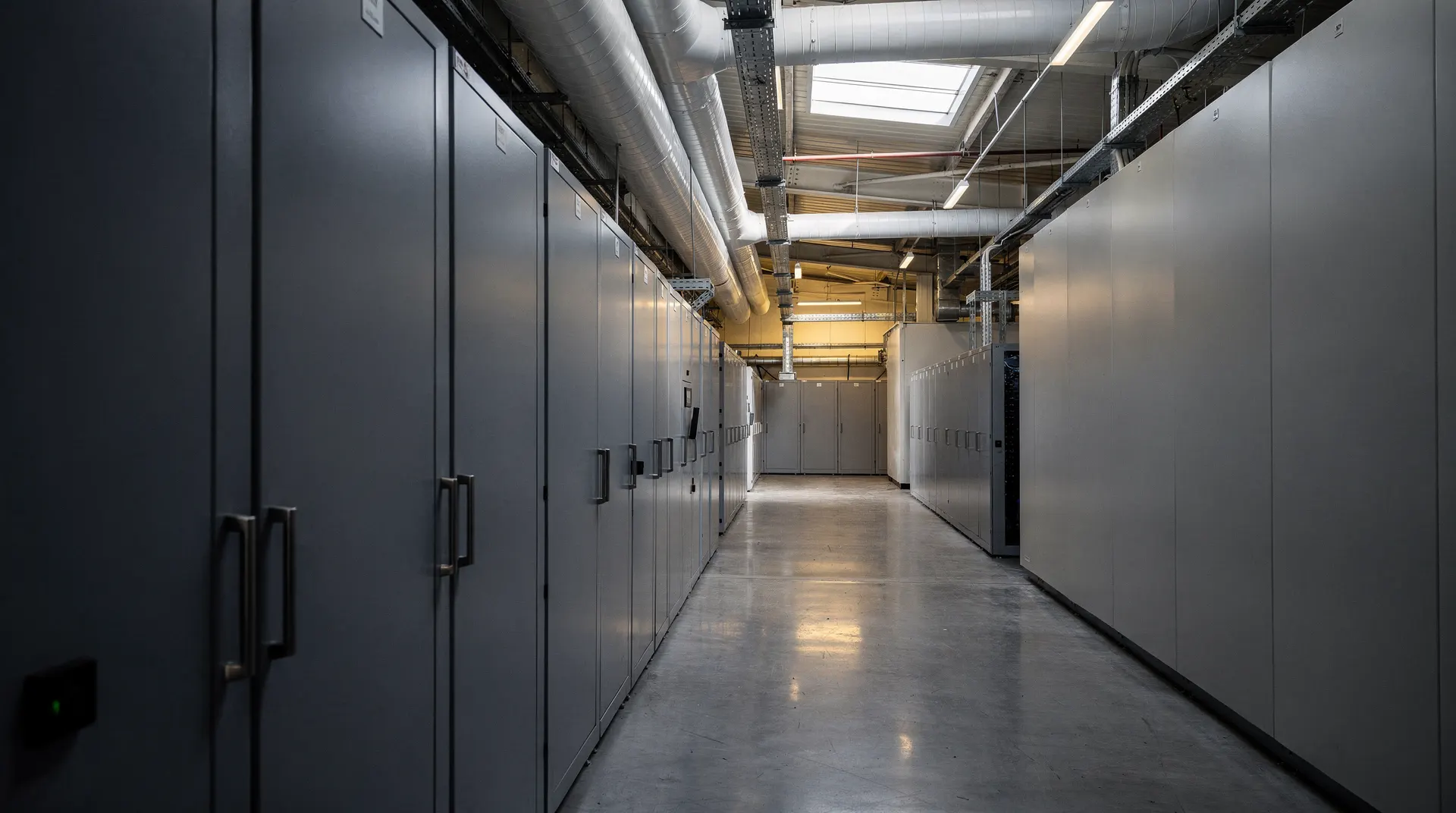
Spend on Meta's AI infrastructure is the connective thread. Meta said it will expand the deployment of Nvidia infrastructure in its data centers, including Vera Rubin and Vera central processing units, to power its AI agents, and it will deploy Nvidia's Spectrum-X Ethernet networking and BlueField-4, according to the Nvidia newsroom. The two are also discussing Nvidia's OpenShell reference architecture for agent security and Nvidia Sentry for monitoring agent behavior. For Nvidia, that locks in demand for its newest platforms. For Meta, it deepens a dependency that the company itself has increasingly framed as a cost to be managed.
Related reading: Meta Q3 2026 Earnings: Capex Floor Raised to $135 Billion as New Share Class Funds AI Spend.
Muse is the product reason the two are closer now. Meta's Muse models and agents, which run on Nvidia infrastructure, delivered the kind of consumer pickup that justifies more capex. The Muse agent application became one of the most downloaded apps within a week of launch, Reuters reported. That user traction is what makes the deployment of Nvidia's next-generation chips inside Meta's data centers a bet, not just a bill.
Jensen Huang, Nvidia's chief executive, framed the deal as an infrastructure decision. The two are expanding the partnership to optimize the computing infrastructure end to end for capable, efficient and secure AI agents, he said in the joint statement. That language matters because it puts Nvidia's gear at the center of Meta's agents push, which is where Meta says its AI returns are compounding.
Related reading: Meta Stock Drops 6% After Lifting 2026 AI Capex Floor to $135 Billion.
The market read into Tuesday was down across AI names. Nvidia shares closed Monday down about 0.5% at $216.00, and the semiconductor ETF slipped about 1.25% to $541.62, according to Yahoo Finance (retrieved 2026-10-27 07:29 UTC). Meta shares fell about 10.6% to $630.56 on Monday, a reminder that the equity raise itself is dilutive and that the market was already digesting the steep price of the AI buildout before Nvidia's contribution arrived.
Meta's total capital program is what gives the $3 billion its scale. Meta said Monday it was also planning a separate $60 billion non-voting share offering in 2027, and the company has framed its raise program at as much as $95 billion across its offerings, per Reuters. Nvidia's $3 billion is a rounding error against that total, but it is the most strategic piece: it aligns the chip supplier's incentive with Meta's capex plan at a moment when financing the AI buildout has become the sector's central question.
Related reading: SpaceX GPU debt: $40 billion closed for AI chips as Musk warns of a neocloud shakeout.
Set this against the funding picture the desk has tracked all week. The AI capex cycle was already leaning on debt, with Standard Chartered estimating that 40% of 2027 AI spend would be financed by borrowing. SpaceX closed $40 billion in GPU debt for AI chips over the weekend. Now the equity leg is heating up, with Meta doing public offerings, SpaceX and Anthropic in the picture, and Nvidia, the supplier, stepping in to write a check.
That is the signal that matters for investors. The era when AI companies simply took venture money and bought chips is giving way to one where the buildout is financed across debt and equity, with big tech and even hardware makers committing their own balance sheets. That spreads the risk of the capex supercycle across more stakeholders, and it makes the funding structure, not just demand, the thing to watch.
There is a bear case worth the same weight. Meta's stock fell even as it raised, a signal the market is keeping score on dilution and on whether the capital will earn its cost. Nvidia's willingness to invest in a customer also concentrates its own revenue into the largest capex stories, which is a concentration risk if any of them stumble. And an equity offering that funds AI infrastructure is only as good as the returns that infrastructure eventually produces, which remain unproven at scale.
What to watch next: the pricing and close of Meta's combined offering, the company's third-quarter earnings and forward capex guidance later this reporting season, and whether other hyperscalers follow Meta in pulling their chip suppliers into the capital structure. Nvidia effectively buying into its own demand is a new data point in the AI financing debate, and it is the right one to anchor this week's reading of the cycle.
This content is for informational purposes only and does not constitute financial advice. Past performance is not indicative of future results. Consult a qualified financial advisor before making investment decisions.
Get daily intelligence delivered
Create a free account for the Daily Brief every weekday and The Week Ahead every Sunday. No card required.