Nvidia supply chain expansion: SPIL, Amkor packaging deals

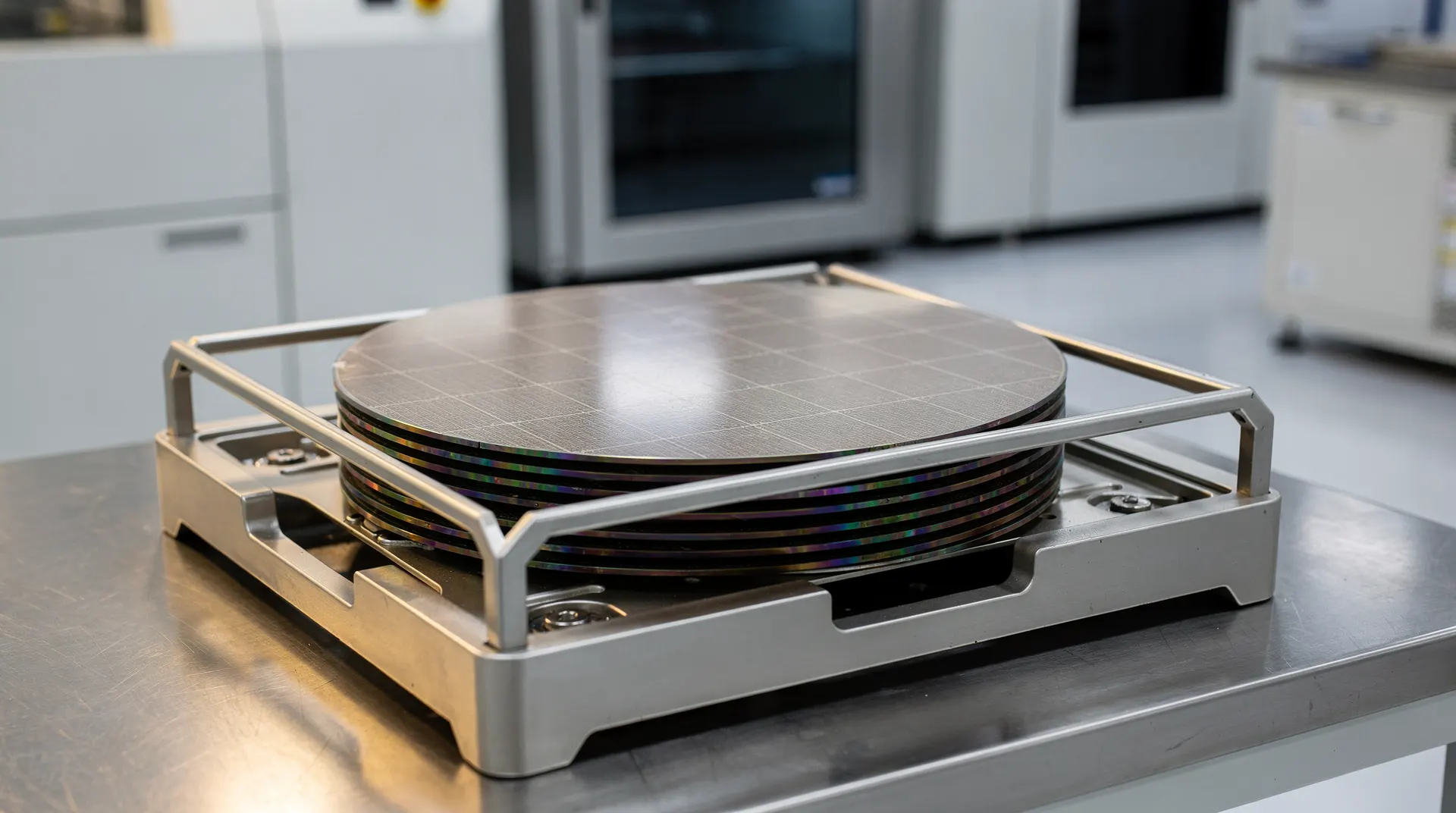
Nvidia moved further to lock down the pieces of its AI hardware that are hardest to buy: advanced packaging and the substrates that carry the chips. In a November 17 release the company announced expanded multiyear supply agreements across six partners, led by a multibillion-dollar expansion of Siliconware Precision Industries (SPIL) advanced packaging in Taiwan and a nearly $3 billion package with Amkor announced over two earlier deals.
The release names Amkor Technology, Foxconn, Kinsus Interconnect Technology, Samsung Electro-Mechanics, SPIL and TSMC as the partners Nvidia is scaling with. The work splits into two bottlenecks: the package substrates that sit under the silicon and the advanced packaging that joins the compute die, memory and interconnect into a finished module.
Related reading: Hon Hai Monthly Revenue Jumps 46% in October on AI Server Demand.
On the substrate side, Kinsus plans to expand its advanced ABF package substrate capacity dedicated to Nvidia by more than 3.5 times current levels from its Youth campus in Taoyuan, Taiwan. Per the release, production is expected to begin in the second half of 2027, with the additional capacity targeted around the third quarter of 2028. Nvidia also amended its substrate supply agreement with Samsung Electro-Mechanics to improve output at existing factories in Sejong and Busan, South Korea.
Advanced packaging is the tighter constraint. Nvidia and SPIL are expanding operations in Taiwan under a multiyear agreement supported by multibillion-dollar funding from Nvidia, and the contracted advanced packaging capacity dedicated to Nvidia is set to increase by mid-2029. The project adds production lines spanning bumping, interposer wafer fabrication, assembly and testing. Separately, Nvidia is backing Amkor's buildout in Arizona and South Korea through agreements announced in July and October 2026 that total nearly $3 billion and include prepayments to help Amkor scale capacity across multiple product generations.
Related reading: Nvidia Q3 earnings explained: who pays for AI growth?.
Foxconn is deepening its collaboration with Nvidia, drawing on its global production network to support next-generation GPU and networking platforms, according to the release. The Taiwanese assembler is the point where components, packaging and systems come together before they ship to the hyperscalers and cloud providers that buy Vera Rubin-based systems.
The timing ties to the current product cycle. Nvidia said Vera Rubin NVL72 and Vera CPUs began volume shipments in the third quarter, using TSMC's 5nm, 3nm and CoWoS advanced packaging technologies.
Related reading: AI chip stocks diverge after TSMC record October revenue.
On November 17 Nvidia also reported third-quarter revenue of $115.8 billion, up 103 percent from a year earlier, with data center revenue of $107.6 billion, up 110 percent. The supply chain announcements arrived the same day as those financial results, a signal that the scale of demand being invoiced now is being matched with capacity that will not exist for another two years.
Nvidia's framing makes the point explicitly. "Our supply chain is a strategic advantage," operations chief Debora Shoquist said in the release, adding that the work "builds on our manufacturing foundation for long-term growth." That is a shift in how the company treats suppliers, from arms-length buyers to anchors of long-dated, prepaid capacity that takes years to bring online.
Related reading: Nvidia Data Center Revenue Hits Record $107.6B as Vera Rubin Ships.
There is a bear case to weigh. These are prepayment-backed commitments at a time when Nvidia has halted sales of Hopper-class chips to China under an expanded U.S. export rule, a move the company discussed in its fourth-quarter guidance.
If export restrictions or a demand slowdown outpace the buildout, prepaid capacity becomes an inventory and cash drag rather than a growth asset. Packaging partners are also taking on debt and site risk to prebuild for a customer with a changeable product roadmap.
What the market mostly priced in the third-quarter print was the record data center revenue and the zero-China fourth-quarter guidance. What is still being priced is whether the packaging and substrate partnership costs show up as higher cost of goods sold or as a durable margin cushion. Nvidia's fourth-quarter gross margin guidance of 71 to 72 percent, stated in the results release, implies that for now the company expects to pass through strong pricing even while funding supplier expansion.
The next dated catalysts are the substrate and packaging milestones themselves. Kinsus extra capacity begins production in the second half of 2027 and targets full output around the third quarter of 2028, while SPIL's expanded contracted capacity is set for mid-2029. TSMC's monthly revenue report, due around December 10, is the earliest public read on whether the packaging backlog behind Vera Rubin is building as planned.
This content is for informational purposes only and does not constitute financial advice.
Get daily intelligence delivered
Create a free account for the Daily Brief every weekday and The Week Ahead every Sunday. No card required.