HUD Plan Sets Seven Steps for Manufactured Housing

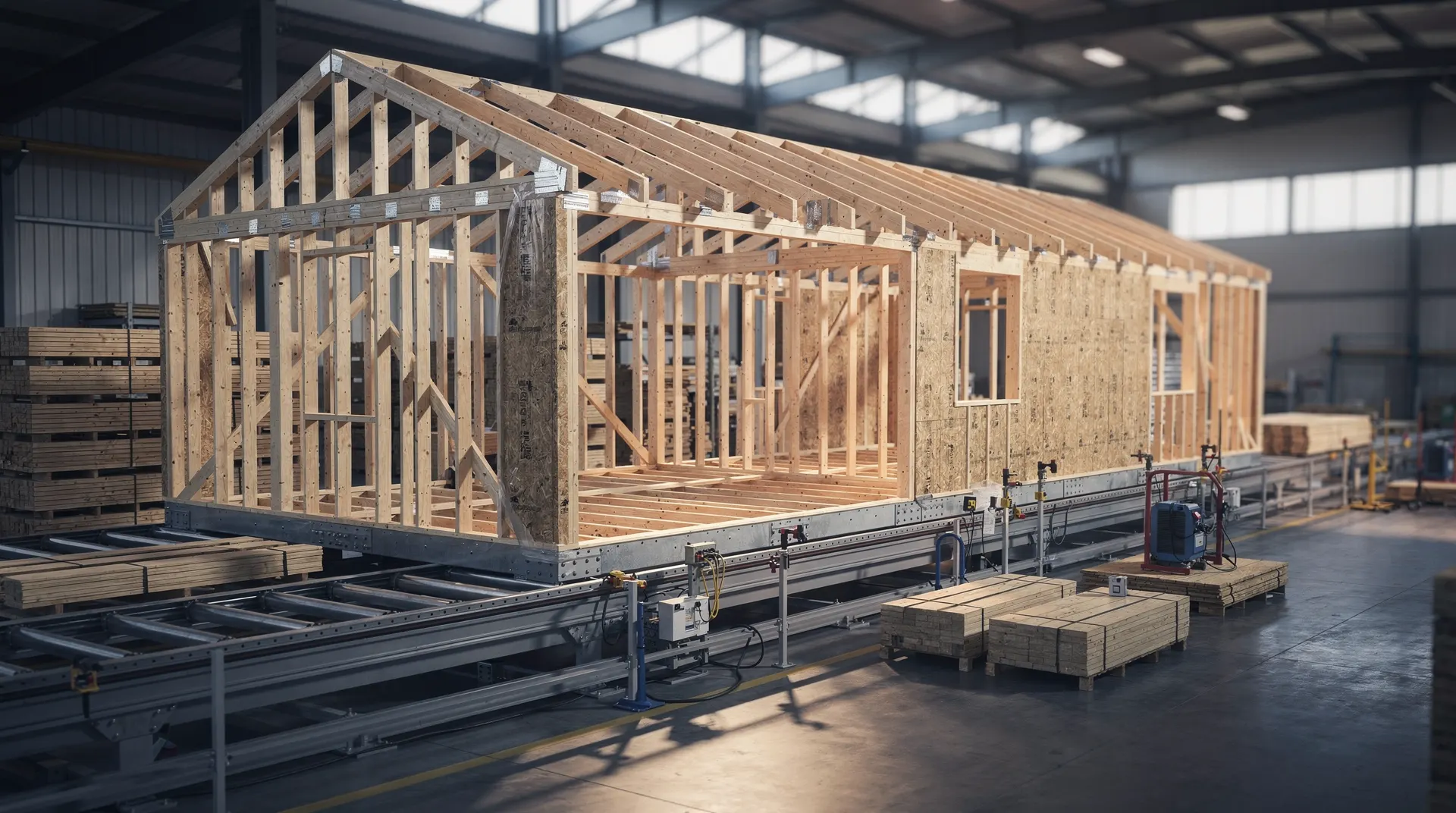
HUD’s new Next Generation Manufactured Housing Action Plan is a regulatory work plan, not a promise of near-term home-price relief. Released this week, it maps seven potential actions after Congress removed the permanent chassis requirement, but the agency says it has not predetermined regulatory outcomes. That distinction matters: factory-built housing could gain new design options, while buyers will wait on standards, approvals and local implementation before any extra supply reaches the market.
The policy opening came from Section 301 of the 21st Century ROAD to Housing Act, which became Public Law 119-101 on July 11, 2026. HUD’s plan says the law removes the permanent chassis requirement and directs the agency, in consultation with the Manufactured Housing Consensus Committee, to establish revised standards for homes built without one. HUD identifies structural design, transportation, lifting and connections as matters for standards work. The department also says it will update energy-efficiency rules, consistent with the committee’s recommendations.
Related reading: New-Home Sales Cleared at 684,000 While the 30-Year Fixed Crossed 7 Percent.
The plan reaches beyond the basic single-section home. HUD lists seven possible work areas: energy-efficiency standards; chassis-free construction rules; foundations and installation; a multi-module construction pathway; a performance-based code for buildings with five or more units; case studies; and guidance to help other off-site manufacturers enter the HUD system. In combination, these steps could make a wider range of factory-built forms feasible under federal oversight. They do not establish that any particular design will be approved or built at scale.
That qualification is the central point for housing supply. HUD describes the plan as a framework for standards, research, demonstrations, technical analysis and stakeholder input. It says the MHCC will advise on program changes and emphasizes preserving factory quality controls, third-party oversight, installation requirements and consumer protections. Those safeguards are not side issues. Homes without a permanent chassis raise practical questions about transport, lifting, structural connections, foundations and installation that codes must answer before lenders, insurers and local officials can treat a new design as routine.
Related reading: Housing Week: More Listings, But Buyers Still Face a Payment Wall.
The affordability arithmetic shows why a long regulatory runway matters. Freddie Mac’s Primary Mortgage Market Survey put the average 30-year fixed rate at 7.40% on October 8, 2026, up from 7.28% on October 1 and 6.30% on October 9, 2025. The Census Bureau and HUD reported a $410,700 median new-home price for the second quarter of 2026, down from $412,300 in the fourth quarter of 2025. Applying the October 8 rate to an 80% loan on that $410,700 benchmark gives an estimated principal-and-interest payment of roughly $2,275 per month over 30 years. The same loan at 6.30% would be about $2,034. These are illustrative calculations, not quotes, and exclude taxes, insurance, land and other costs.
The comparison also puts the limits of the policy claim in focus. Even if chassis-free standards eventually let factories use new layouts or add stories, lower construction cost is not automatic. Site preparation, utility connections, transport, local zoning, financing and installation all affect the delivered price. HUD’s proposed work on case studies explicitly includes zoning, appraisal, lending, insurance and market acceptance, a recognition that code revisions alone cannot guarantee that a home can be financed, sited and sold at a lower total cost.
Related reading: Housing Starts Split in August as Builders Ration by Rate Sensitivity.
There is a plausible supply case. Factory construction can standardize repeatable work, and multi-module pathways or a federal framework for five-plus-unit buildings could broaden the uses of off-site production. A manufacturer on-ramp could also widen the pool of firms able to seek HUD Code approval. Those possibilities are meaningful, but they remain policy mechanisms rather than measured additions to housing inventory. HUD’s action plan does not set a unit target, cost-reduction estimate or completion timetable.
The near-term counterweight is financing. The Freddie Mac rate increase over the past year raises the monthly cost of carrying a mortgage, while the median new-home price has moved only modestly between the two latest reported quarters. On the supply side, Census data show 1.275 million housing starts at a seasonally adjusted annual rate in August 2026, compared with 1.319 million in September 2025. That is a measure of all residential starts, not manufactured homes alone, but it underscores that a future code pathway should not be mistaken for current construction volume.
Related reading: Permits Collapse and Builder Margins Squeeze as Housing Supply Pipeline Tightens.
For the next several weeks, the evidence will be procedural: whether HUD and the MHCC publish specific recommendations, whether proposed standards include workable transition rules, and whether agency analysis estimates compliance costs. The Census Bureau’s next New Residential Construction release, covering September 2026, is scheduled for October 20, 2026. It can update the broader starts and permits picture, though it will arrive too soon to measure any production response to the action plan.
HUD has started a process that could expand what the federal manufactured-housing code can accommodate. The strongest conclusion today is narrower than a supply boom: regulatory scope is widening, but the affordability outcome depends on the details and on costs beyond the factory. Watch for proposed standards and quantified impact analysis before treating the plan as a change in available homes.
This content is for informational purposes only and does not constitute financial advice. Past performance is not indicative of future results. Consult a qualified financial advisor before making investment decisions.
Sources
HUD, Next Generation Manufactured Housing Action Plan; Congress.gov, H.R. 6644, Public Law 119-101; Federal Reserve Bank of St. Louis FRED, 30-Year Fixed Rate Mortgage Average and Median Sales Price of Houses Sold; U.S. Census Bureau, New Residential Construction and release schedule.
Get daily intelligence delivered
Create a free account for the Daily Brief every weekday and The Week Ahead every Sunday. No card required.