Housing Starts Split in August as Builders Ration by Rate Sensitivity

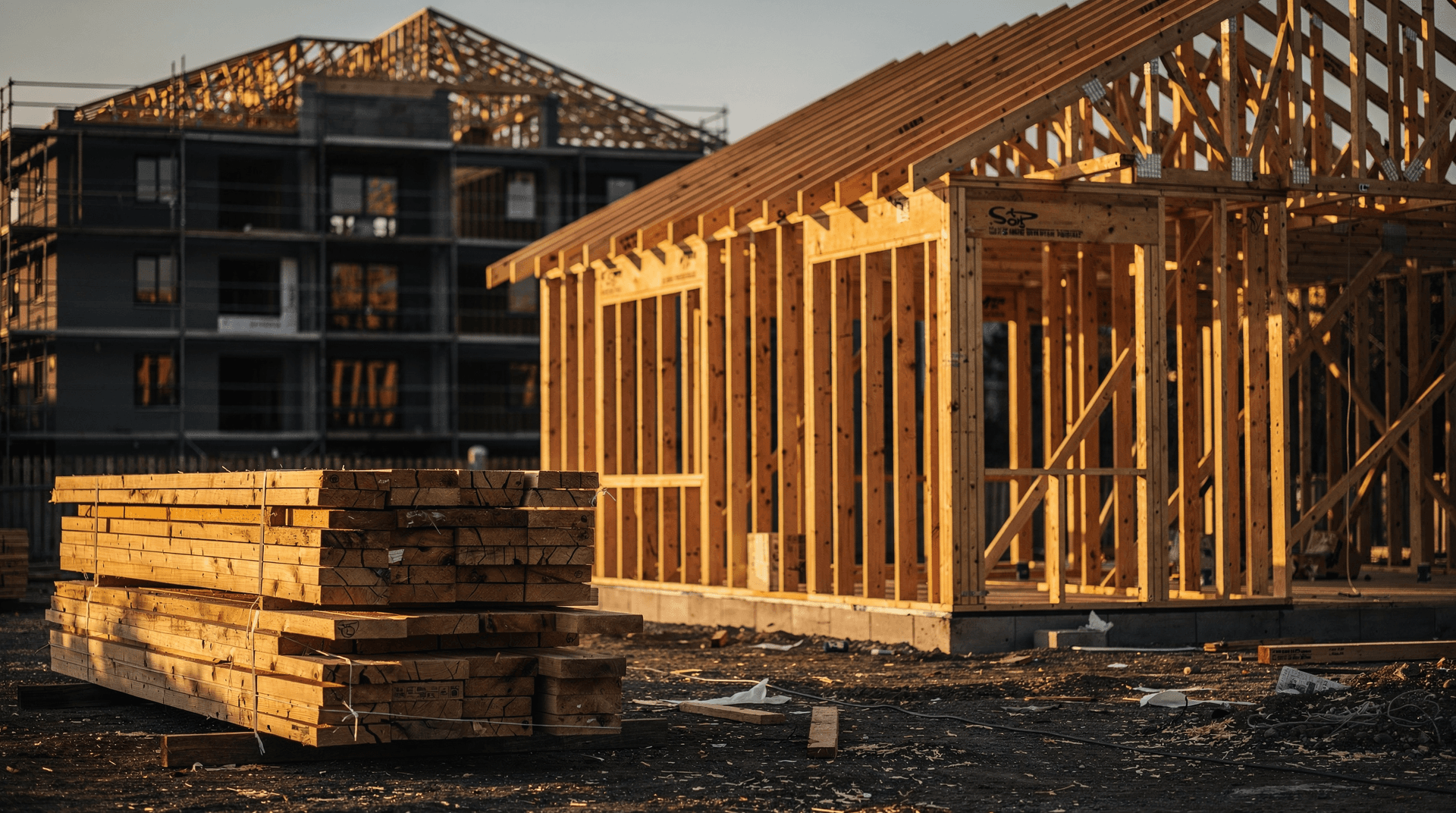
Homebuilders broke ground on 1.275 million homes at a seasonally adjusted annual rate in August, the Census Bureau reported Thursday, down 2.6 percent from July's 1.309 million and 1.2 percent below August 2025. The headline understates the story. Single-family starts rose 7.6 percent to 918,000, the strongest month since March, while the apartment category collapsed 21.7 percent, from 456,000 to 357,000.
Start with the mortgage, because it explains almost everything else in the report. Freddie Mac's PMMS put the 30-year fixed at 6.95 percent in the September 17 survey, the highest weekly print since early 2024 and up from 6.26 percent in the same survey a year ago. On the Census median sales price of a new home, $410,700 as of April in the FRED series, that rate gap turns into roughly $188 more per month on a 30-year loan: about $2,719 versus $2,531. Every basis point the 10-year Treasury adds shows up in a buyer's budget before a builder sells another lot.
Against that backdrop, the split inside the starts number is the actual news. Multifamily, meaning buildings of five units or more, came in at 357,000 annualized after 456,000 in July. That is the softest month since early 2024 and a 22 percent one-month drop. Multifamily construction is finance-sensitive in a different way than single-family: projects underwrite against rents and cap rates, and with financing costs where they are, marginal deals simply stop penciling. The pullback is concentrated exactly where interest rates bite hardest.
Single-family went the other way. Starts of 918,000 are up 5.2 percent year over year from 873,000, and July's 853,000 now looks like a dip rather than a trend. That is striking when you remember where builder sentiment sits. The NAHB housing market index fell to 32 in September, a twelve-month low, and 38 percent of builders reported cutting prices. Builders are unhappy and cutting margins, yet they keep starting houses. The explanation is the incentive math: with 66 percent of builders using sales incentives, the way to move inventory is to buy the rate down for the buyer, and the way to justify that cost is volume. A builder who stops starting homes loses the lots they already paid for.
Permits, the forward-looking series, slipped 2.7 percent to 1.394 million from July's 1.433 million. The single-family component has been remarkably stable, hovering near 900,000 for three straight months, which says builders see roughly steady demand at today's incentive-laden prices. The volatility is all on the multifamily side of the ledger.
The supply picture tells you why this matters for prices. Months of supply for new homes sat at 9.6 in July, per Census data, the highest since 2022 and up from 8.5 a year earlier. For existing homes, the National Association of Realtors reported 4.9 months of supply in August, a decade high, which my desk covered Wednesday. Rising resale inventory is the direct substitute for new construction, and it is why builders need incentives to compete. A buyer choosing between a 2024 resale listing at 4.9 months of supply and a new build with a 2-1 buydown is holding real negotiating power in either direction.
There is also a rental-market read-through. A sustained multifamily pullback does nothing for supply in the next twelve months, but it shows up in 2027 and 2028 as fewer new apartments, which is how rent growth re-accelerates after a period of flat rents. The apartment construction boom of 2022 through 2024 is still delivering units today, which is why rents have cooled in Sun Belt metros. That pipeline thins from here. Census permits for five-unit buildings have now fallen four of the last five months.
What to watch next. The September NAHB housing market index already told us sentiment, and the August new-home sales report arrives September 24, where the months-supply figure and the share of sales with price cuts will confirm or contradict the incentive story. The Freddie Mac survey comes out again Thursday. If the 10-year Treasury yield stays near 5 percent, expect the single-family starts number to flatten and the multifamily slide to deepen, because neither side of the market has an answer to financing costs this high. The data suggests a housing system that is rationing construction by interest-rate sensitivity, cheapest projects first, and that is a supply story that will matter for prices on both sides of the rent-versus-buy line in 2027.
This content is for informational purposes only and does not constitute financial advice. Past performance is not indicative of future results. Consult a qualified financial advisor before making investment decisions.
Get daily intelligence delivered
Create a free account for the Daily Brief every weekday and The Week Ahead every Sunday. No card required.