Treasury Yields Near 5% as Mortgage Lock-in Traps Homeowners

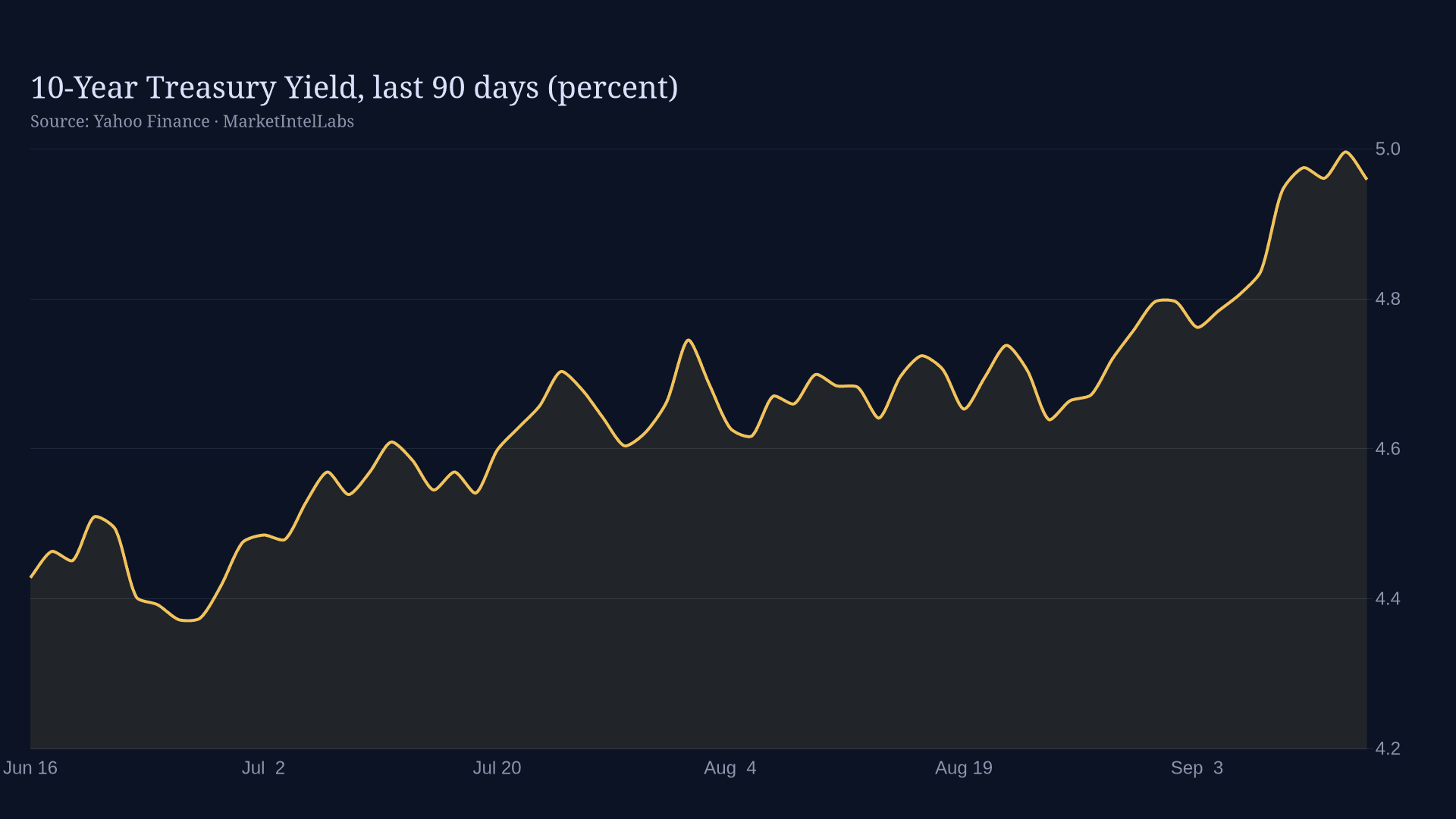
The 10-year Treasury yield climbed to 4.97% on September 14, 2026, its highest level since early August, and the housing market is feeling the pressure. Mortgage rates followed the bond market higher. The 30-year fixed rate averaged 6.76% as of September 10, 2026, up from 6.71% the prior week and above the 6.35% rate a year earlier, according to Freddie Mac's Primary Mortgage Market Survey. This level sits nearly a percentage point above the 6% threshold that homeowners consider acceptable when giving up their existing mortgage, and the consequences show in the application data.
Mortgage applications fell sharply in response. Total applications decreased 4.1% for the week ending September 11, 2026, according to the Mortgage Bankers Association's Weekly Applications Survey. The breakdown tells the story. Purchase applications declined 0.8% from the prior week and stood 19% lower than the same week one year earlier. Refinance applications, which are the most sensitive to rate movements, dropped 8.8% week-over-week and were 60.7% below the same week in 2025. Applications have remained weak through 2026 as rates have stayed elevated.
The lock-in effect explains why purchase demand remains depressed despite expectations of a rate adjustment from the Federal Reserve. Nearly 80% of outstanding mortgages carry rates below 6%, according to Realtor.com's analysis of outstanding mortgage data. Almost 20% of homeowners hold rates at 3% or below. Trading a 3% mortgage for one approaching 7% adds roughly $1,000 to the monthly payment on a median-priced home. That math keeps inventory tight and turnover low. Existing-home sales ran at an annualized pace of 4.06 million in July 2026, roughly 1.2 million below the pre-pandemic average according to Apollo Global Management's housing outlook. The probability of changing residence over the next 12 months fell to a record-low 13.5%, according to the New York Fed Survey of Consumer Expectations.
Weekly data shows the same dynamic. The seasonally adjusted Purchase Index decreased 0.2% from one week earlier, while the unadjusted Purchase Index decreased 3% compared with the previous week. These numbers look weak on their own, and they look worse in context. Purchase applications were 4% higher than the same week one year earlier, but that comparison masks the reality that 2025 levels were already depressed. The baseline has shifted downward. Homeowners stay in place because they cannot afford the payment shock, and would-be buyers face both higher rates and scarce inventory.
Refinance activity tells an even clearer story. The Refinance Index dropped 6% from the previous week and stood 25% lower than the same week one year earlier. This is the slowest pace since May 2025. The math here is straightforward. A homeowner with a rate below 4% sees no benefit in refinancing when the prevailing rate sits near 7%. The share of mortgages with rates above 6% has barely budged, inching up just 0.1 percentage point between the fourth quarter of 2025 and the first quarter of 2026 to 22.1%, per Realtor.com. The lock-in effect persists because the rate discount on existing loans is too large to ignore.
The Treasury market suggests the pressure may continue. The 10-year yield has climbed as bond markets reprice expectations for inflation and monetary policy. Yield at 4.97% sits comfortably below the 5% psychological threshold, but the direction matters more than the level. When the 10-year moves up, mortgage rates typically follow within weeks. Lenders set mortgage rates based on the 10-year yield plus a spread that reflects credit risk and prepayment risk. That spread has averaged roughly 1.5 to 2 percentage points over the past decade. A 10-year yield at 5% would imply mortgage rates near 7% under normal conditions.
The lock-in effect will only ease when rates move meaningfully lower and stay there. Industry analysts suggest that consistent rates in the mid-5% range could unlock additional inventory, as homeowners who have been sitting on historically low rates become more willing to sell or refinance. That threshold is still roughly 75 basis points away from current levels. Until then, the housing market remains stuck in a low-turnover equilibrium. Homeowners stay put, inventory stays tight, and buyers face the double challenge of higher monthly payments and fewer homes to choose from.
Freddie Mac releases the next Primary Mortgage Market Survey on September 17, 2026. The MBA Weekly Applications Survey for the week ending September 18, 2026, follows on September 23. Both releases will show whether the recent increase in Treasury yields has pushed mortgage rates higher still, and whether applications have weakened further. The lock-in effect is structural as long as rates remain elevated. Housing turnover will not recover until the rate math changes.
This content is for informational purposes only and does not constitute financial advice. Past performance is not indicative of future results. Consult a qualified financial advisor before making investment decisions.
Get daily intelligence delivered
Create a free account for the Daily Brief every weekday and The Week Ahead every Sunday. No card required.