Strait of Hormuz tanker attacks widen as Iran strikes US air base in Kuwait

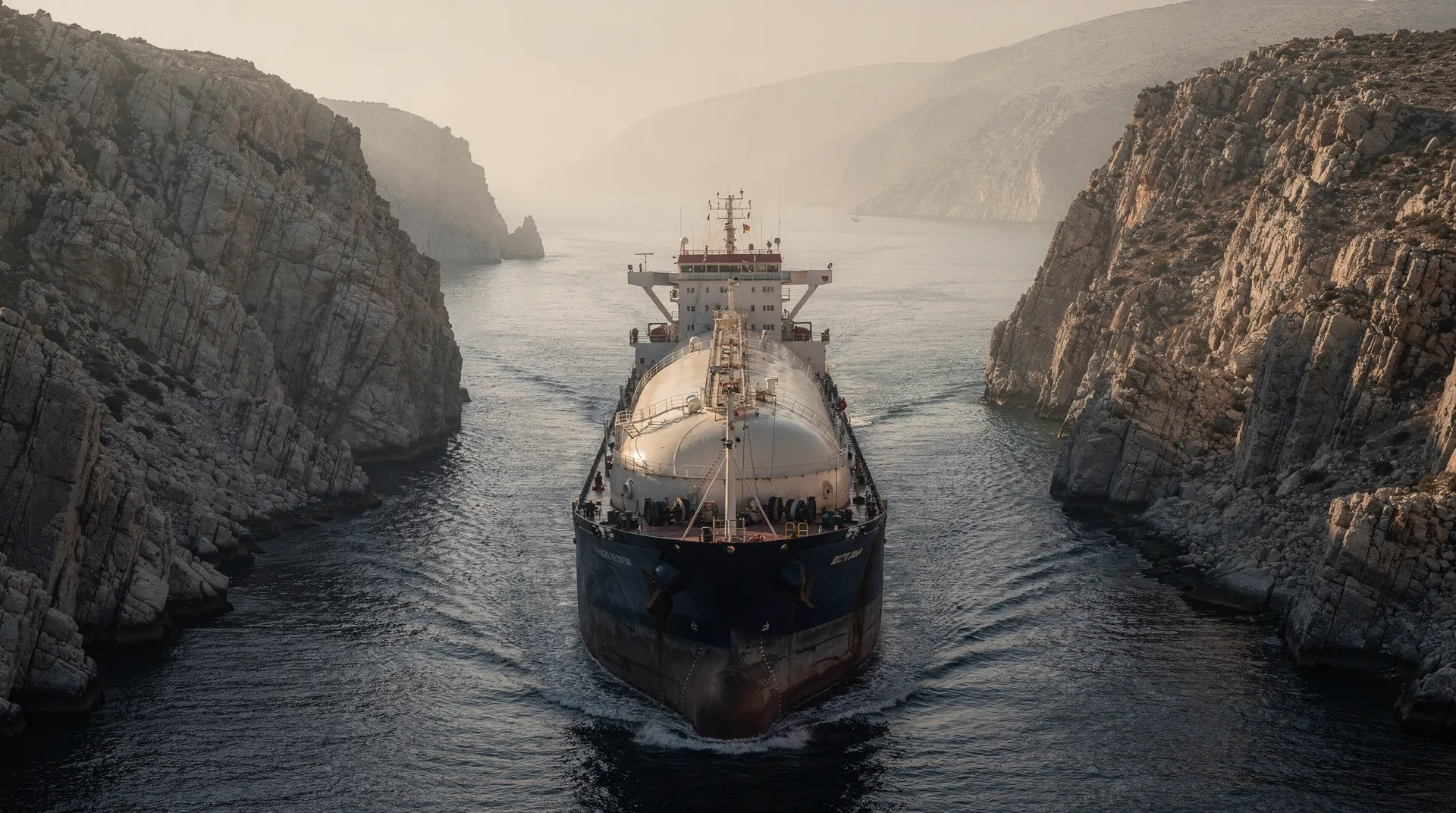
Iran's campaign against Gulf targets widened to a third Gulf state Wednesday when its army said drones hit Patriot air defense systems at Ali Al Salem Air Base in Kuwait, and the tanker war at the Strait of Hormuz kept disabling gas and oil carriers in the world's most important shipping chokepoint. The market read is shipping and insurance risk, not a crude price spike: oil traded broadly flat to lower on the session, because inventories, not Hormuz headlines, are driving the prompt price right now.
The campaign reaches Kuwait
In a statement carried by state television IRIB and reported by Gulf News, the army said combat and kamikaze drones targeted Patriot air defense systems and drone and missile launch platforms at Ali Al Salem Air Base in Kuwait. Kuwait said its air defense was countering hostile drone attacks. Bahrain said its own air defenses intercepted attacks from Iran early Wednesday, a day after the United States struck an Iranian Revolutionary Guard Corps missile launch site on Qeshm Island in the Strait of Hormuz.
Related reading: Iran Strikes Tanker in Strait of Hormuz, Warns Wider Attacks.
The Associated Press frames the sequence as Iran widening its attacks on Gulf neighbors in retaliation for the US strike on the Qeshm launch site, itself retaliation for an Iranian attack Tuesday on a US radar at Bahrain's Isa Air Base, which hosts the US Navy's 5th Fleet. Whether the Kuwait base claim is confirmed is separate from what the escalation signals: the exchange of strikes is no longer confined to Bahrain, and a US air base on Kuwaiti soil is a new geography for the campaign.
The tanker war keeps taking carriers
On the shipping side, the dated, quantified damage sits with the tanker fleet. UAE state oil giant ADNOC Logistics and Services said one crew member is missing and 11 injured after one of its vessels, the Panama-flagged LPG tanker Tara Gas, was attacked in the Strait of Hormuz, per Reuters. The crew of 25 included 24 Indian nationals, and the crew abandoned ship after the vessel was struck by a projectile on Tuesday. Separately, the United Kingdom Maritime Trade Operations reported a tanker's crew unaccounted for after a second attack north of Khasab, on the Omani side of the strait.
For the broader framework, see our crude oil coverage.
Related reading: US Strikes Iran's Qeshm Island After Bahrain Base Attack.
Reuters notes a surge in tanker attacks this month, with the strait effectively closed to tankers by Iran in response to the US-Israeli war. The practical consequence for the goods economy is that every Gulf transit now carries war-risk premium, and the small set of carriers willing to run the strait is shrinking. Khasab is an LNG load point, so a second incident in that area puts gas carriers at direct risk, not just oil tankers.
Who pays, and what is dated next
Shippers and insurers eat the first hit: war-risk premia on Gulf transits are already elevated and still repricing, and freight consumers inherit that in the landed cost of cargoes that do move. Gulf coastal states pay in the disruption to their own exports and port operations. For oil and gas exporters tied to the strait, the window of effective closure is widening, which is the slow burn to watch even while prompt crude ignores it on inventory overhang.
Related reading: Strait of Hormuz tanker attacks: missile hits gas carrier.
The dated catalysts to follow are any US military response to the Kuwait base attack, further tanker incidents in the strait, the stalled Qatari mediation that was meant to de-escalate, and the forward crude curve if tanker losses accumulate enough to tighten physical supply. Until one of those breaks, the story for this desk is a shipping and insurance problem at the chokepoint, priced in rates and premia, not in the prompt barrel.
Shipments that reroute add days and freight cost; shipments that wait inside the Gulf raise risk for everyone. For freight consumers the takeaway is simpler: the chokepoint that moves about 20% of global oil trade is increasingly hard to insure at pre-war terms, and that premium does not need a crude spike to show up in delivered prices.
Related reading: Hormuz Tanker War Risk Premia Spike After Supertanker Blasts.
This content is for informational purposes only and does not constitute financial advice. Past performance is not indicative of future results. Consult a qualified financial advisor before making investment decisions.
Get daily intelligence delivered
Create a free account for the Daily Brief every weekday and The Week Ahead every Sunday. No card required.