Strait of Hormuz oil tankers attacked near Khasab as flows slide to 10 million barrels a day

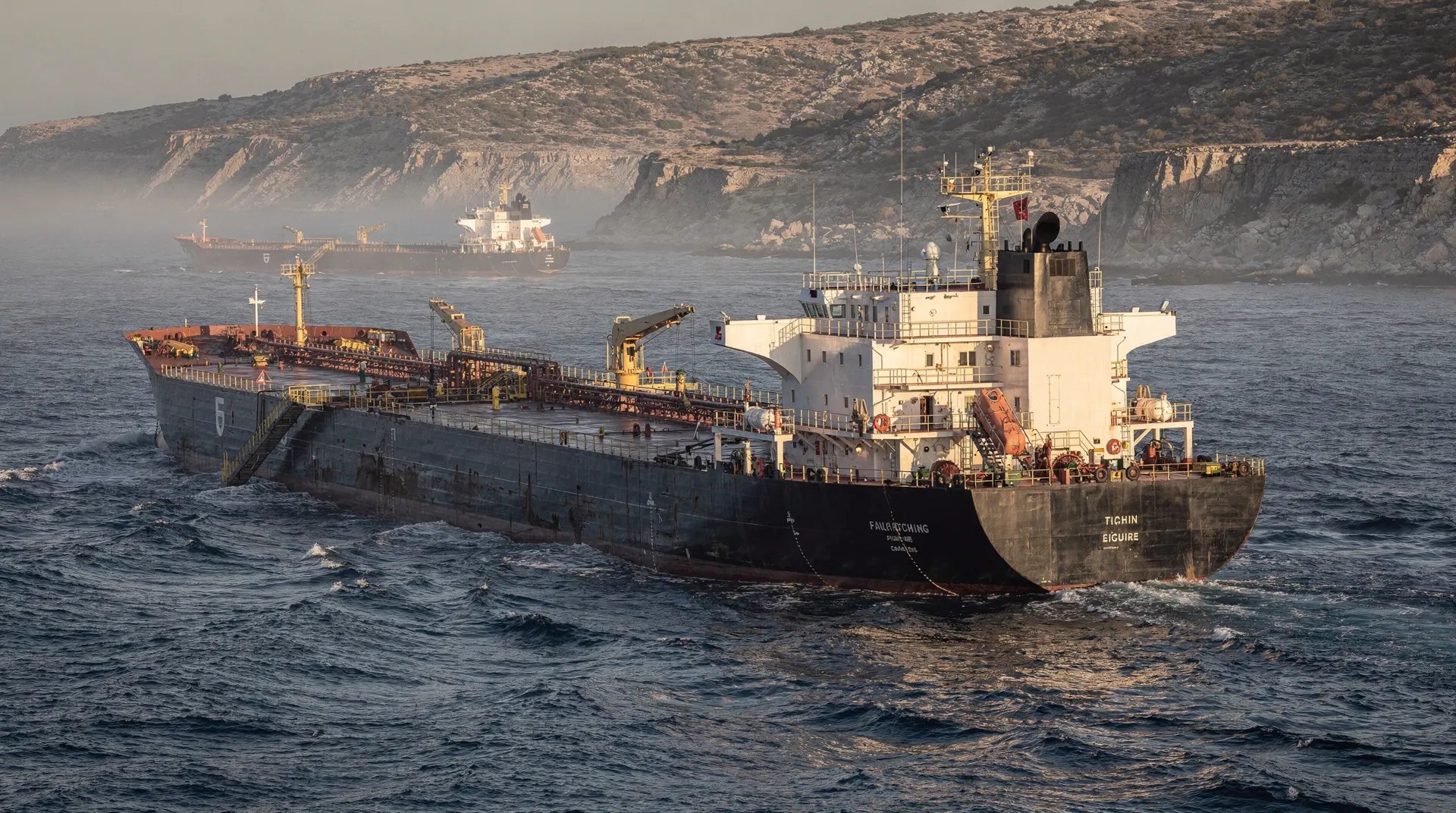
The United Kingdom Maritime Trade Operations office reported two tanker attack incidents off Oman's Musandam peninsula on Saturday morning, the latest violence on a chokepoint already moving a fraction of its pre-conflict oil. Tracked crude flows through the Strait of Hormuz now run at about 10 million barrels a day, down from 13.4 million on November 1 and roughly 40 percent below the 17-20 million the US Energy Information Administration used as its pre-war baseline.
The UKMTO feed logged two incidents in the morning window of about 09:11 to 11:42 GMT, both near Khasab and roughly 13 nautical miles off the Omani coast. In each, a tanker was taken under fire by unidentified projectiles. The attacks come after a week in which Windward and Orbital Risk Intelligence counted 15 shipping attacks and piracy incidents through November 20, the highest weekly total since mid-October, according to gCaptain. The rising incident count is the signal the insurance and freight markets watch first, because it moves war-risk premia on exactly the routes that carry the world's exported Gulf crude.
Related reading: Strait of Hormuz oil shipping: crude flows recover to 10.3M bpd, attacks keep freight at $1M a day.
Iran's navy claimed one tanker struck a mine, a report carried by the Jerusalem Post. That claim is not independently confirmed, and UKMTO's account describes the vessels as taken under fire by projectiles rather than hitting mines. We attribute Iran's version to its navy and flag it as unconfirmed; the two accounts differ on the mechanism, and no second source has yet corroborated either one.
The flow data is the harder constraint. Bloomberg data compiled by Kpler put Hormuz oil volumes at about 10 million barrels a day as of November 10, down from 13.4 million on November 1 and roughly 40 percent below the pre-war 17-20 million barrel-a-day baseline the US Energy Information Administration tracked before the escalation. A chokepoint running at a 40 percent discount to its normal throughput is exactly the kind of supply constraint that reprices crude when it closes a session, and the barrel economics get passed down to products, freight and insurance.
For the broader framework, see our crude oil coverage.
Related reading: Strait of Hormuz oil tankers caught fire after naval mine strikes, Iran's navy says.
The weekend tape says nothing yet. Brent last settled Friday at $89.95 a barrel and WTI at $83.41, each about 2.7 percent lower on the session at 21:59 UTC. Futures closed for the weekend shortly after, so Monday's Asia open is the first session that can price the Saturday attacks, and shipping markets along with them.
For the supply chain the read is the rate and the route, not the barrel number alone. Tanker rates on the Gulf legs, war-risk premia in Joint War Committee listed areas, and any pause or diversion in port and terminal loadings at Hormuz are the transmission channels, and each moves before Monday's crude print does. A 40 percent flow deficit at a chokepoint that carries about a fifth of global oil consumption is the kind of number freight markets tend to reprice first.
Related reading: Strait of Hormuz tanker attacks: missile hits gas carrier.
What is dated next: the Monday Asia open for crude, any updated UKMTO incident reporting over the weekend, and whether insurers widen or narrow the listed area that governs war-risk premia. Each will say more than the headline attack count about how much of this sticks to the barrel price.
Related reading: Hormuz Tanker War Risk Premia Spike After Supertanker Blasts.
This content is for informational purposes only and does not constitute financial advice. Past performance is not indicative of future results. Consult a qualified financial advisor before making investment decisions.
Get daily intelligence delivered
Create a free account for the Daily Brief every weekday and The Week Ahead every Sunday. No card required.