FAA nationwide ground stop: all departing flights grounded after air traffic communications outage

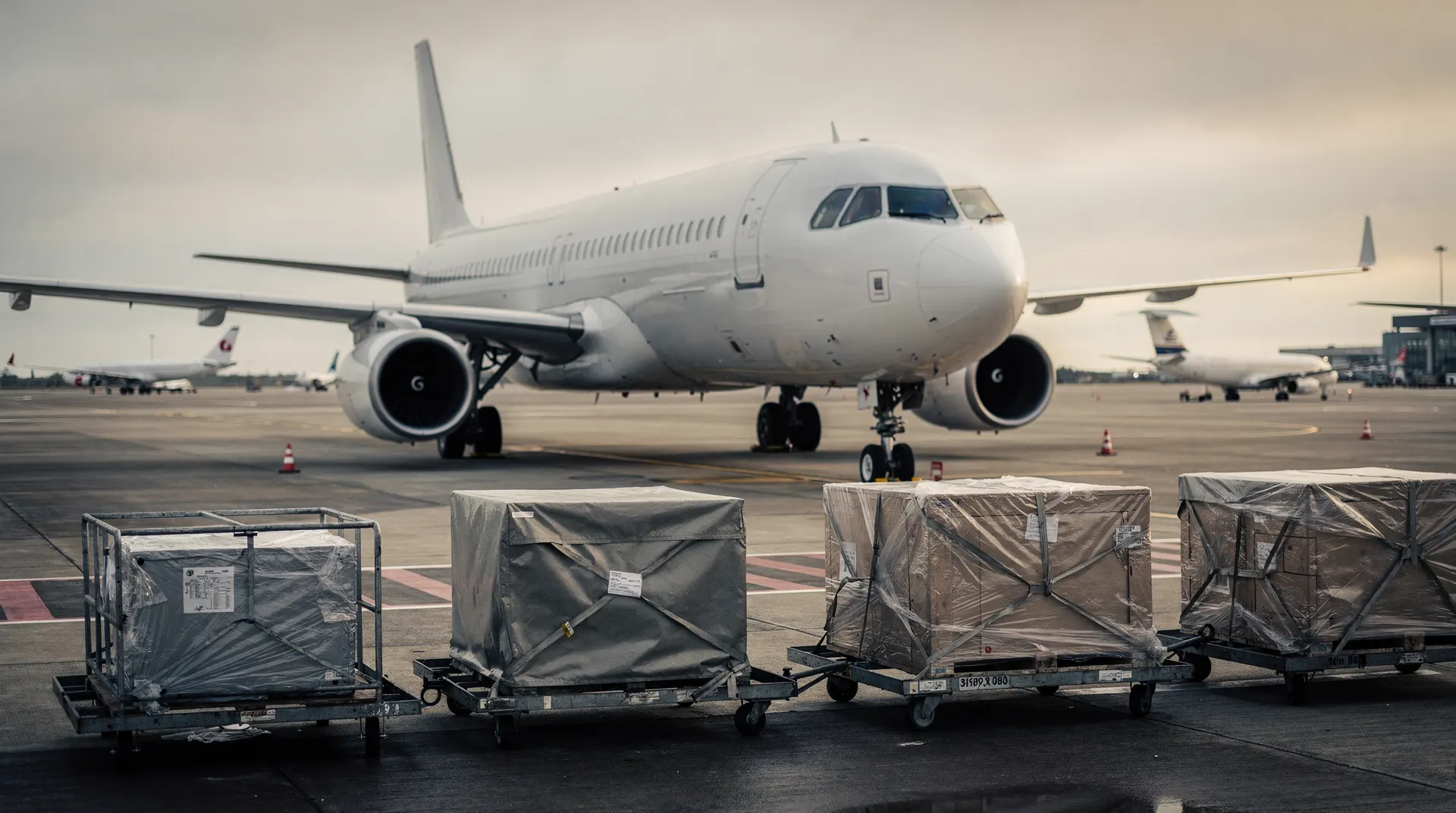
The Federal Aviation Administration stood down every departing flight in the United States on Friday afternoon, a nationwide ground stop born of what the agency first called a problem in its own backbone communications system. Transportation Secretary Sean Duffy posted on the FAA's official account just after 4:00 p.m. ET on Nov 13 that a "communication issue impacting all Air Route Traffic Control Centers" had triggered the halt, and the agency described the event as "a temporary telecommunications outage." The grounding is an operational shock to the largest single-country air network on Earth, and for freight it is more than a circle of grounded passenger jets. Much of what travels by air moves in the belly of those passenger planes, so every grounded departure stalls not just travelers but the time-sensitive cargo that share the hold.
The history of these events argues for keeping the air-freight read inside narrow bounds. The White House said there is no indication of a "nefarious act," per CBS News reporting in the same window, which pushes the cause back toward a technical failure rather than a directed attack. That matters for how the market should price it. A temporary telecommunications outage is an infrastructure event; the FAA said around 5:00 p.m. ET that "every flight has been accounted for," with international flights to be "handled on a case by case basis," and the hold was still in effect across airports from the JFK area to San Diego, Portland, the Atlanta region and Alabama as of 22:10 GMT, roughly two hours after it began.
Related reading: United Airlines blocks AI agents from booking flights over security concerns.
For cargo the question is not whether Friday gets lost, but what it costs after the backlog settles. U.S. air freight moves on two rails: dedicated freighters flown by the integrators, and the belly cargo tucked into scheduled passenger service. A nationwide ground stop cuts both at once, and the second rail is the bigger one by flight count. When dozens of passenger departures sit on the tarmac for hours, the freight that would have ridden them joins a queue. Electronics, pharmaceuticals, perishables and high-value just-in-time imports do not wait well; a stall of hours at a single hub ripples before any plane lifts, because cargo is routed ahead of the flight and the ground plan at major airports fills with the backlog even as the sky clears.
Integrator schedules are the visible casualty. FedEx and UPS move their own freighters, but they also lean on commercial belly lift for the secondary legs and for the import surge into their hub-and-spoke systems. A network-wide halt forces a rerun of the sort-and-load sequence once flights resume, and backlogged units take priority over newly tendered freight. This is the same mechanism that builds when a single major gateway shuts for a storm, except it is national in scope and it has no advance warning for the ramp teams to pre-position freight.
Related reading: Container spot rates ease as SCFI slips to 3,572, down 1.7% for the week to Nov 13.
Set that against what the freight indices already say about slack. The house freight watch showed the Shanghai Containerized Freight Index easing to 3,572 this week, down 1.7 percent for the period to Nov 13, a market where the container option has room to absorb some diverted volume. Shippers who can wait a few days can buy ocean capacity at a rate already softening, and that is the bear case for air-cargo pricing: if the ground stop is short-lived, storage and modal substitution absorb most of the shock. Dwell time at the hubs lengthens overnight, ground handlers run later shifts, and the missed flights are folded into the next cycles, much as a snow day is made up rather than priced as a permanent loss.
The bull case is the opposite, and it rests on how thin air capacity is compared with the container alternative. Air cargo is priced partly on urgency, and a multi-hour national freeze concentrates demand into a narrow resume window. Spot rates for urgent air freight have a history of stepping up when capacity vanishes at the margin, even if the underlying event was brief, because the premium edge of the product is speed itself. If the outage runs longer than a few hours, or if any hub operation staggers on restart, the step-up in short-notice airfreight pricing becomes measurable even as passenger metrics absorb most of the direct hit.
Related reading: Suez Canal container traffic tops 50% of pre-crisis levels.
For airlines and the travel complex, the cost is schedule and fuel and refunds rather than lost cargo yield. Every grounded passenger-mile is forfeited for those hours, and airlines face the operational cost of repositioning aircraft and reaccommodating affected passengers once the hold lifts. The duration is still the open variable: as of the last reading around 22:10 GMT the stop had not been formally lifted, and carriers had not yet announced a full return to schedule.
The next catalyst is the FAA resume notice. A formal end to the ground stop within hours, which the telecommunications-outage framing implies is likely, points to a contained, short-lived event whose freight impact is absorbed by storage and shift work rather than by a repriced market. A hold that stretches across the overnight cargo cycle, by contrast, pushes real volume into the next-day schedule and gives the bull case its footing. Watch the FAA's official channels for the resume declaration and for carriers' normalization timeframes in the hours after it; that timing, more than any single figure, decides whether this stays a scheduled-operations story or becomes an air-cargo pricing story.
Related reading: Container Freight Rates: Drewry WCI Falls 2% to $4,351.
This content is for informational purposes only and does not constitute financial advice. Past performance is not indicative of future results. Consult a qualified financial advisor before making investment decisions.
Get daily intelligence delivered
Create a free account for the Daily Brief every weekday and The Week Ahead every Sunday. No card required.