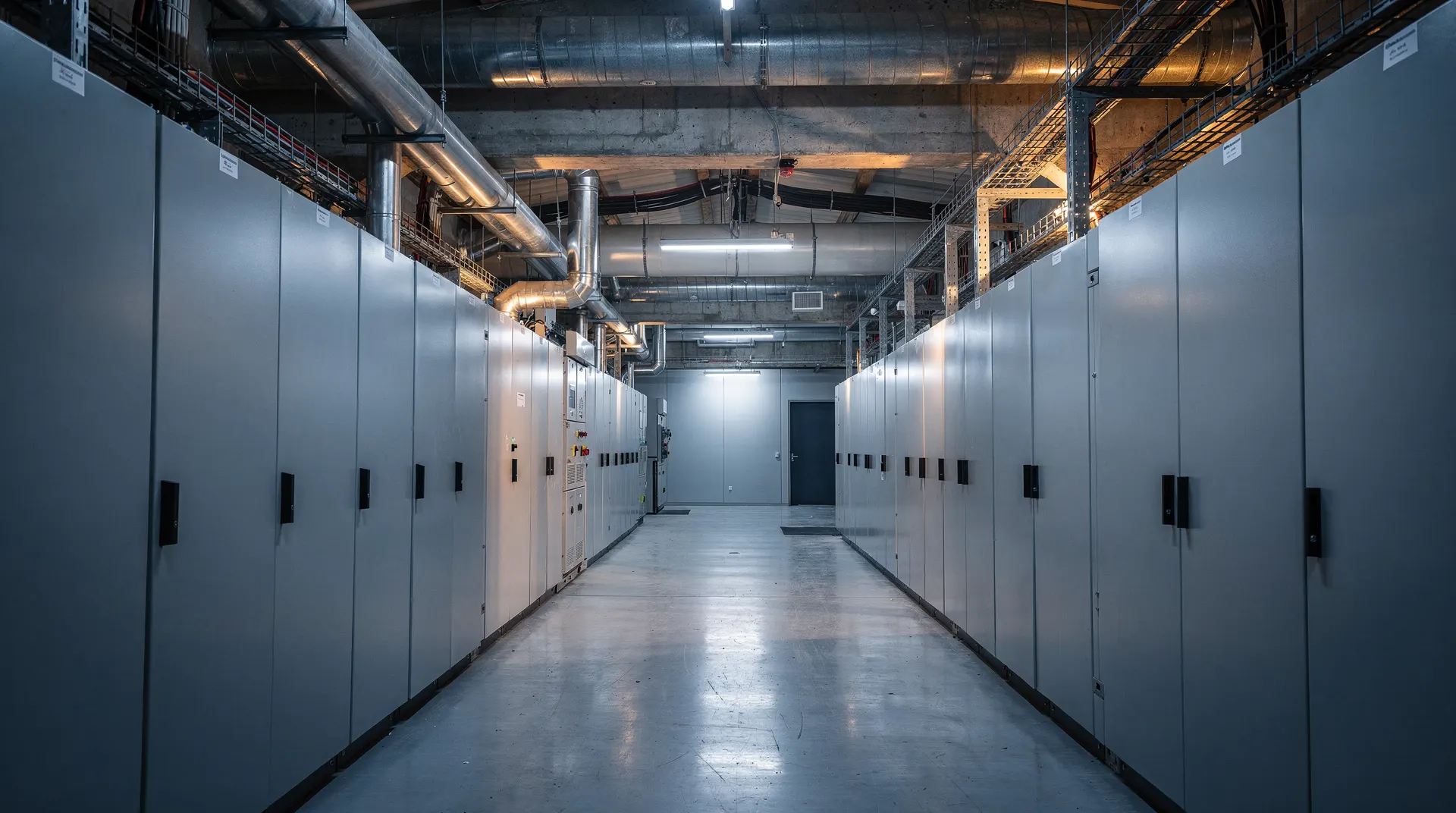
Data-center capacity is a focus of DeepSeek's reported fundraising plans. Illustration: MarketIntelLabs
DeepSeek is raising about $15 billion, roughly 100 billion yuan, in one of China's largest private AI funding rounds on record, a Bloomberg report carried by TechCrunch and other outlets on October 22 said, just two days after the US ordered federal civilian agencies to remove the lab's models from government systems.
The report, first published by Bloomberg and attributed to unnamed people familiar with the matter, puts the round at about $15 billion, roughly 100 billion yuan. CATL, the world's largest battery maker, and Tencent, the WeChat operator, are named among the potential investors, along with a group of existing backers. DeepSeek did not immediately respond to a TechCrunch request for comment.
The timing is the striking part. On October 20 the US Department of Homeland Security directed federal civilian agencies to remove DeepSeek's artificial intelligence from government-operated devices, a procurement action that bars the Hangzhou lab from federal use over data-security concerns. A $15 billion raise landing two days later is a direct statement of intent from China's private capital market, and it widens the funding gap between DeepSeek and most of its domestic rivals.
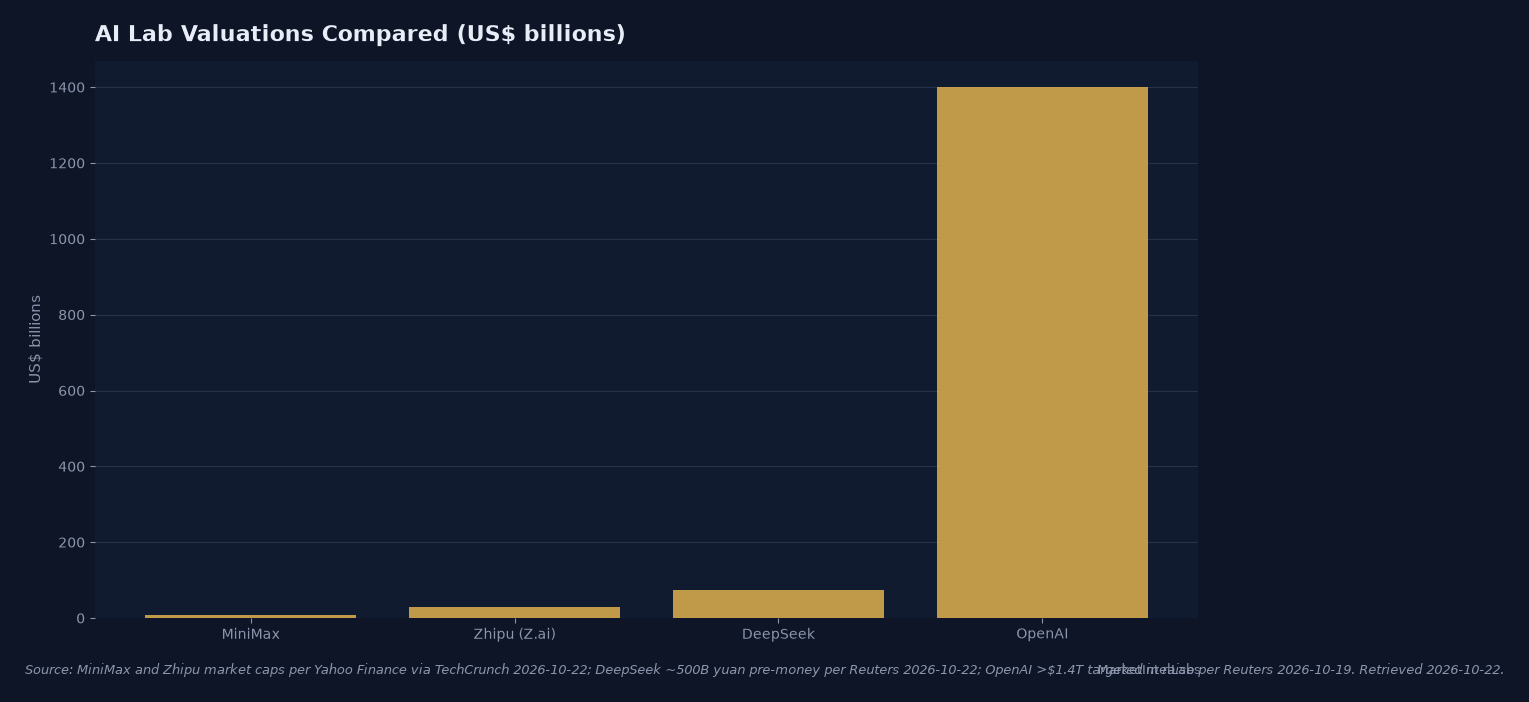
The round follows two prior steps up the ladder documented in public filings and earlier reports. In June, DeepSeek closed a funding round of more than $7 billion at a reported valuation of $50 billion, according to a Reuters report from June 16. In July, TechCrunch reported the lab was in talks to raise an additional $1.5 billion at a valuation of around $71 billion, with plans for a potential IPO in China as early as the next year. Reuters' wire on October 22, reporting that the round is wrapping up at about 100 billion yuan, put the valuation at close to 500 billion yuan on a pre-money basis, roughly $75 billion, which prices the new capital in at around 600 billion yuan post-money, or about $90 billion at 6.67 yuan per dollar.
Where the money goes matters as much as the size. DeepSeek said through the report that it is ramping up spending on AI infrastructure and on open models for both domestic and international markets even as it faces restrictions in the US. That is a compute and capacity story at a moment when everyone in AI is competing for the same constrained supply of advanced chips and data-center power.
The raise also resets the competitive benchmark within China. Moonshot AI, the developer of the Kimi assistant, raised $2 billion at a $20 billion valuation in May, TechCrunch reported. Manus AI raised more than $500 million in its first round since splitting from Meta earlier this month. Listed rivals already carry public multiples: Zhipu AI (Z.ai) and MiniMax, both of which listed in Hong Kong in January, traded at market capitalizations of roughly $29 billion and $7.2 billion respectively as of October 22, according to Yahoo Finance quotes referenced by TechCrunch.
Against the US frontier, the numbers are still asymmetric. OpenAI is racing to close a roughly $30 billion raise that could value the ChatGPT maker above $1.4 trillion, Reuters reported on October 19, ahead of rival Anthropic's expected public market debut in mid-November. DeepSeek's implied value near $90 billion post-money is meaningful, but the two remain an order of magnitude apart from the leading American labs. The more consequential read is directional: an explicit answer to the October 20 federal action, funded by two of China's largest industrial companies, pointed at a public listing that would put DeepSeek's valuation in front of global index investors.
A few caveats keep this in perspective. The round is still reported rather than confirmed; DeepSeek has not publicly acknowledged a figure, and the investor list is not closed. Regulatory questions in China around structured funding deals, of the kind that shaped DeepSeek's June round, remain live. And the US export-control picture can shift again, which could change what the capital can buy.
For investors the watch item is the IPO. Europe and US markets have not yet priced a DeepSeek listing, and a Shanghai float near a $90 billion post-money valuation would be among the largest Chinese tech listings in recent years, a data point for anyone holding exposure to Chinese internet platforms, AI infrastructure, or the broader global AI capex theme. The funding itself does not change DeepSeek's technology; it changes the runway it has to keep shipping open models, and that is what rivals and customers will be watching.
This content is for informational purposes only and does not constitute financial advice. Past performance is not indicative of future results. Consult a qualified financial advisor before making investment decisions.