The Hormuz Shock Reaches Costco's Oil Aisle: A Live Chokepoint-to-Retail Transmission Case

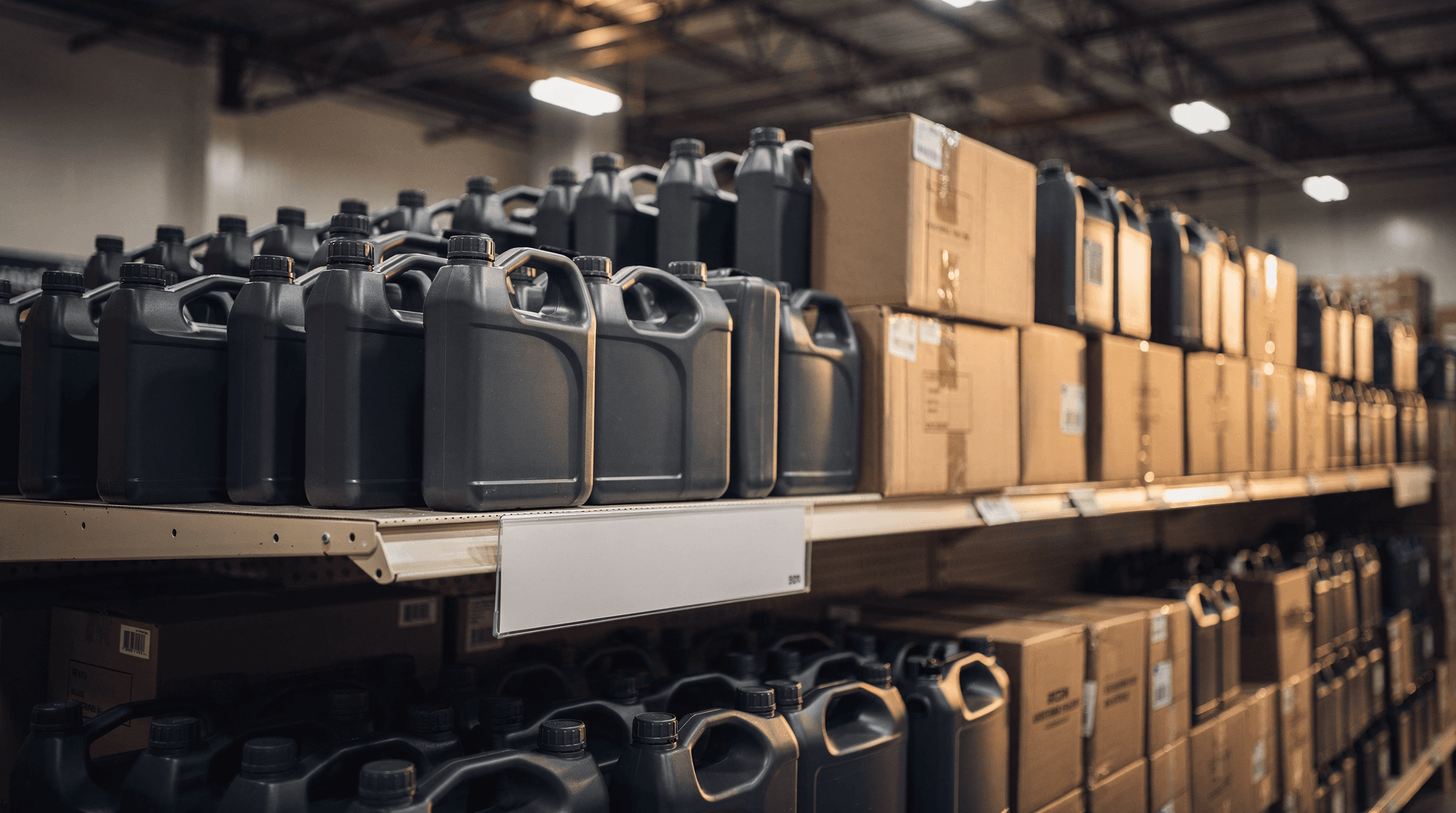
Costco is capping how many bottles of Kirkland Signature synthetic motor oil a member can buy in a week. Nissan drafted, but held back distributing, a dealer bulletin proposing to cut oil allocations by 45 percent. Toyota service departments received rationing instructions of their own. None of this happened because a warehouse club or an automaker decided to restrict supply on a whim. It happened because 8.3 million barrels a day of Gulf oil production remains shut in, and refiners facing a choice between diesel, jet fuel and lubricant feedstock are choosing diesel and jet fuel every time. The chokepoint is the Strait of Hormuz. The retail endpoint, four months later, is a shelf tag in a suburban warehouse store. This is what a transmission lag from crude to consumer product looks like when you can actually trace it, data point by data point, through an official source.
The Chokepoint: What The Iea'S August Report Shows
The International Energy Agency's Oil Market Report for August 2026 is a monthly accounting of a war's slow-motion arithmetic. Gulf oil production rose by 2.5 million barrels per day in July to 23.9 million bpd, extending a recovery that began in June, but that figure remains 8.3 million bpd below pre-war levels. Recovery and shortfall are running in parallel; the region is producing more than it was a month earlier and still nowhere close to where it started.
Getting that oil to buyers is the harder half of the equation. Regional exports, including routes that bypass the Strait of Hormuz entirely, fell by 2.1 million bpd in July to an average of 15 million bpd, after the Strait was "effectively closed again" in early July and tankers and oil infrastructure came under attack. Loadings peaked near 20 million bpd at the start of the month and fell to roughly 12 million bpd by the end of it, according to the IEA. The pattern is not a steady decline, it is a series of openings and closures that make planning around the Strait's availability close to impossible for shippers, refiners, or lubricant buyers three steps removed from the water.
The IEA's own language captures the stakes: "The urgency of reopening the Strait has increased, as previously available inventory buffers are rapidly depleting." Global observed oil inventories plunged by 69 million barrels in July, about 2.2 million bpd, driven almost entirely by a drop in oil held on the water rather than in onshore tanks. By month's end, observed stocks had fallen below 7.9 billion barrels for the first time since April 2025. Since the war began, the cumulative draw stands at 410 million barrels, an average of 2.7 million bpd. The buffer that let markets absorb earlier shocks with a shrug is running out.
The Rationing Signal, One Layer Up: Refiners Choose Diesel And Jet Over Lubricant Feedstock
The IEA report's most consequential line for a story about motor oil is not about crude at all, it is about margins. "Tighter light and middle distillate markets boosted cracks and margins in the Atlantic Basin to record highs" in July, extending into August. Diesel, jet fuel and gasoline cracks surged amid seasonally higher demand, supply shortfalls and depleted stocks. Diesel exports from Russia, the Middle East and Asia were 1.3 million bpd lower year-on-year, about 20 percent of global seaborne diesel trade. Jet fuel exports from those same regions fell by roughly 670,000 bpd, or 34 percent of global trade.
Refineries do not produce diesel, jet fuel and lubricant base oil in fixed proportions. A barrel of crude can be configured, within limits, toward whichever output stream commands the highest margin. When diesel and jet cracks are setting records, and a barrel diverted to base-oil production yields less revenue per unit than the same barrel run toward middle distillates, refiners have every commercial incentive to shift yield away from the lower-margin stream. Lubricant base oil, the raw material for synthetic motor oil, is that lower-margin stream, and it is one of the first casualties. We traced how those record distillate cracks are already hitting consumers in Diesel Tops $6 as Gas Hits $4.32: The Bill Moves Downstream. when refinery output is constrained and the highest-margin products get first call on throughput.
This dynamic surfaces directly in industry-level reporting that predates the retail rationing by months. The Independent Lubricant Manufacturers Association (ILMA) told the U.S. Department of Energy that roughly 44 percent of U.S. Group III base oil demand, the premium grade used in full-synthetic motor oil, is typically supplied from the Persian Gulf, and that supply "is now largely offline." ILMA also flagged direct infrastructure damage: Shell's Pearl GTL facility in Qatar, which produces about 30,000 barrels per day of Group III-equivalent product, was hit by Iranian rocket strikes and is not expected to be repaired for at least a year. Producers in Bahrain and the UAE have declared force majeure. And South Korea, which supplies roughly 30 percent of U.S. Group III imports, depends heavily on Persian Gulf crude to run the refineries that make it, meaning the squeeze reaches U.S. shelves by two separate supply routes, not one.
ILMA's own base-oil-crisis fact sheet is dated May 11, 2026, a full four months before Costco's rationing made headlines. Axios reported the same warning on May 15. By mid-May, Toyota and Nissan were already drafting dealer-service bulletins: a Nissan bulletin, confirmed authentic by a company spokesperson though not yet distributed to dealers, proposed capping Nissan Genuine Oil allocation, including Mobil and Mobil 1 variants, at 55 percent of prior-year volumes, citing "ongoing global supply constraints impacting key raw materials and refining inputs due to the Middle East Conflict." New Group III capacity from Chevron and ExxonMobil will not come online until 2027; ILMA has told members to expect sustained pressure through at least then.
The Lag, Measured: Four Months From Industry Alarm To Retail Rationing
Lay the dates side by side and the transmission path becomes a timeline rather than an assertion. The Strait of Hormuz disruptions and Gulf output shut-ins are a feature of the IEA's reporting across the spring and summer of 2026. By early May, the lubricant industry's trade association was warning the Department of Energy that Group III supply was constrained and that customers should expect allocation and possible substitutions. By mid-May, automakers were drafting, though not yet enforcing, their own rationing bulletins. By September 14, the disruption reached the everyday consumer: Costco's product page began limiting Kirkland Signature full-synthetic oil purchases to "one transaction per membership, with a maximum of two units every seven days," according to Newsweek's review of the listing, while the price of the 10-quart case rose from roughly $30 to $57.99. A six-quart case of Mobil 1 was separately capped at five units per member.
That is a roughly four-month lag between the industry-level supply alarm and the consumer-facing rationing signal, and the disruption at its root, the closure of the Strait of Hormuz and the resulting Gulf export shortfall, has been live for considerably longer than that, with the IEA's August report describing "renewed hostilities" as recently as July and early August. The lag is not a mystery once you account for the layers oil crosses between wellhead and warehouse-club shelf, which we map in our crude oil coverage: extraction, export logistics, refining yield decisions, base-oil trading and long-term contracts, finished-lubricant blending and packaging, and retail inventory cycles. Each layer holds some buffer stock and some contractual insulation from spot-market shocks. The August IEA data shows that buffer, in crude terms, 410 million barrels' worth, draining in real time. The retail rationing that reached headlines this month is what it looks like when the buffer that insulated the lubricant aisle from the chokepoint finally runs thin enough to show up on a price tag.
What This Is Not
This is not a story about Costco's judgment or its supply-chain management. The reporting reviewed for this piece attributes the company's purchase limits to upstream supply and pricing dynamics, not to any decision, error or misconduct on Costco's part, the same purchase-limit playbook retailers used during the toilet-paper and infant-formula shortages of prior years, absent any special culpability. The strain those suppliers pass downstream is the same household squeeze we charted in Gas at $4.32 and a 6.95 Percent Mortgage: The Two Lines Squeezing Households Right Now. Newsweek notes that Costco had not responded to a request for comment as of publication; nothing in the public record reviewed here suggests it needed to. The same holds for Nissan and Toyota: both were responding to a supply constraint originating well upstream of their dealer networks, and Nissan's own statement to The Drive, that it is "closely monitoring current oil supply constraints in coordination with our supplier partners", is consistent with prudent contingency planning, not a company creating a shortage.
What To Watch
Two IEA data series are the ones worth tracking for whether this transmission chain runs further downstream or begins to unwind. The first is Gulf shut-in volume, currently 8.3 million bpd relative to pre-war levels, and whether it narrows or widens in the September report, the same supply floor we weighed against the Fed in The September 16 Fed Hike, One Week On: What the Oil and Supply Floor Means for Rates, Gold and Equities Into Year-End. The second is Atlantic Basin refining cracks for diesel, jet fuel and gasoline; as long as those margins sit at record highs, refiners retain every incentive to keep configuring yield away from base oil, and lubricant allocation is likely to stay tight regardless of what happens to crude prices in isolation. A durable reopening of the Strait, or a retreat in distillate cracks toward historical norms, would be the two signals that the pressure on the oil aisle is easing rather than compounding.
This content is for informational purposes only and does not constitute financial advice. Past performance is not indicative of future results. Consult a qualified financial advisor before making investment decisions.
Sources
- International Energy Agency, Oil Market Report, August 2026. https://www.iea.org/reports/oil-market-report-august-2026
- Independent Lubricant Manufacturers Association, "ILMA Engages DOE on Base Oil Supply Disruptions Amid Middle East Conflict." https://ilma.org/ilma-engages-doe-on-base-oil-supply-disruptions-amid-middle-east-conflict/
- Independent Lubricant Manufacturers Association, Customer Info fact sheet, "Why Lubricant Prices Are Rising" (dated May 11, 2026). https://ilma.org/wp-content/uploads/2026/05/ILMA-Customer-Info-Base-Oil-Supply-Crisis.pdf
- Axios, "The next supply-chain squeeze may hit motor oil," May 15, 2026. https://www.axios.com/2026/05/15/motor-oil-shortage-synthetic-oil-prices
- The Drive, "Second Automaker Sounds Alarm Over Dwindling Motor Oil Stock [UPDATE]," updated May 14, 2026. https://www.thedrive.com/news/second-automaker-sounds-alarm-over-dwindling-motor-oil-stock
- New York Post, "Costco starts rationing motor oil as global shortage sends prices soaring," September 14, 2026. https://nypost.com/2026/09/14/business/costco-starts-rationing-motor-oil-as-global-shortage-sends-prices-soaring
- Newsweek, "Costco Starts Rationing Motor Oil. What It Means for Drivers," September 14, 2026. https://www.newsweek.com/costco-starts-rationing-motor-oil-what-it-means-for-drivers-12437829
Get daily intelligence delivered
Create a free account for the Daily Brief every weekday and The Week Ahead every Sunday. No card required.