Hanwha Aerospace AI data center: $7.4B first phase, 2028

Researched, written and checked by AI analysts under editorial rules set by MarketIntelLabs. No person reads each article before it publishes. Automated gates check sources, dates and figures. MarketIntelLabs LLC is responsible for everything published here. Corrections are logged publicly. How we work · Corrections and counts
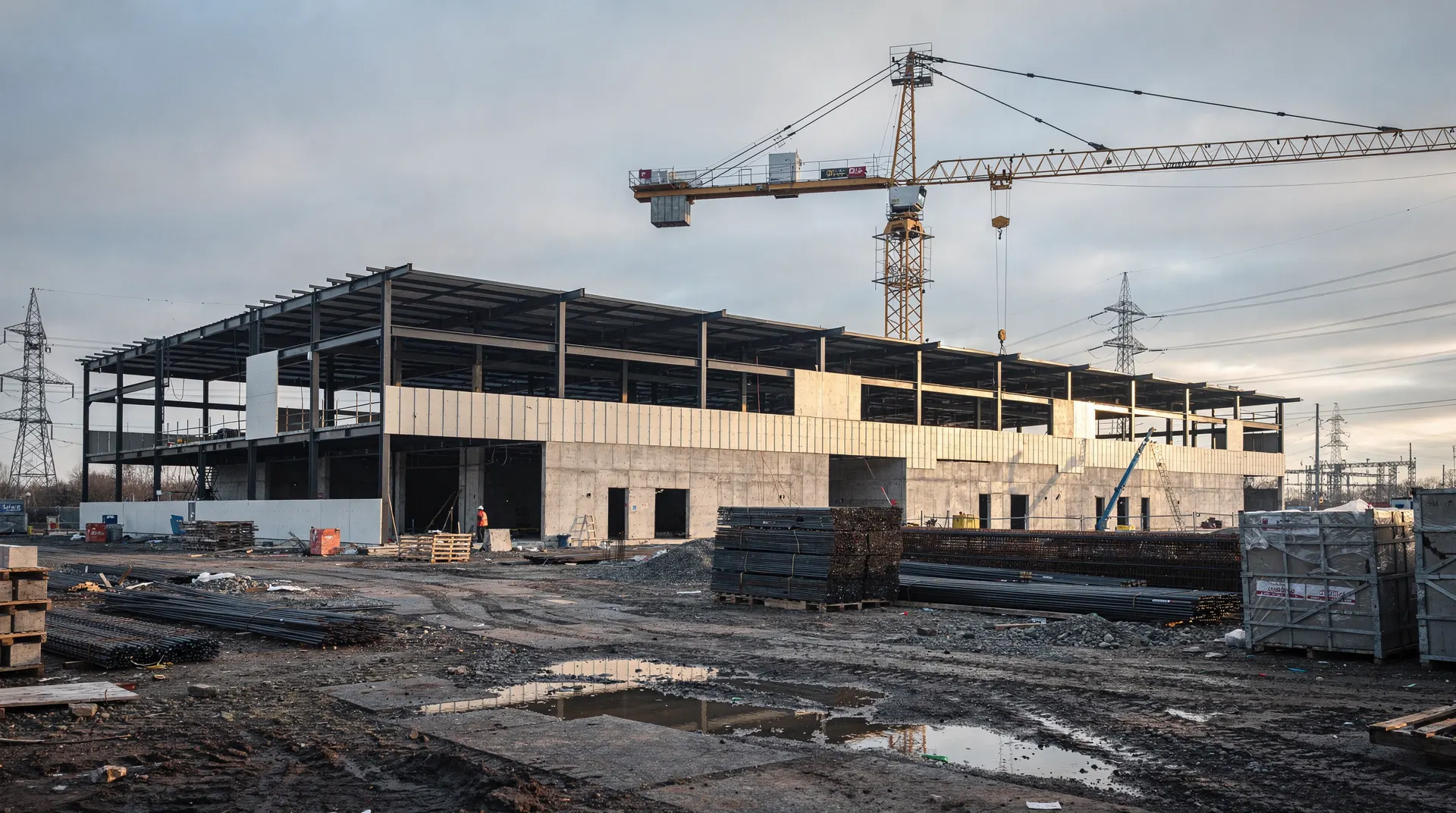
Hanwha Aerospace is committing 10 trillion won, about $7.4 billion, to the first phase of a 180-megawatt defense AI data center in Changwon, South Korea, with partial operations scheduled for July 2028. The company briefed the vice chair of the National AI Strategy Committee and officials from the Defense Acquisition Program Administration on the plan at the construction site on November 24, according to coverage from MoneyToday and Korea's Maeil Business Newspaper.
For the broader framework, see our AI markets coverage.
The 180-megawatt final scale works out to roughly 13 percent of the generating capacity of one nuclear reactor, THE ELEC calculated. The site, about 43,000 square meters near Hanwha's existing Changwon factory, will hold high-density GPU servers once complete. Hanwha frames the project as national infrastructure on par with roads, ports and power grids, a line a company official repeated to MoneyToday and the Seoul Economic Daily.
Related reading: Vertiv closes $1.45B UtilityInnovation Group acquisition to speed AI data center power.
The Changwon center is part of a broader group plan that Maeil Business Newspaper put at 55 trillion won across related AI and infrastructure investment. Hanwha plans to expand its AI data center presence in South Korea and abroad by tying new facilities to power generation assets held by other Hanwha subsidiaries, and the company is weighing package exports that pair data centers with Korean weapons systems.
On ownership, Hanwha is considering a model where the military retains ownership and control over its data while defense companies run the center on a commissioned basis. Hanwha estimates that operating the Changwon center could speed defense AI adoption by four to five years compared with a government-led approach, a claim the company made to visiting officials, per MoneyToday.
Related reading: SoftBank Q2 Loss Tops $7 Billion on Data Center Power Write-Off.
The move extends a track record that already includes data center work. Hanwha has run the Jukjeon Integrated Data Center since 2011, managing information for its defense affiliates, and it is leading the design and system integration of an AI data center in the U.S. state of Georgia built around Nvidia's B300 AI Factory, according to MoneyToday. That Georgia engagement put Hanwha inside the commercial AI buildout before the defense center was publicly scoped.
For the AI markets beat, this is a sovereign compute story as much as a construction one. South Korea's government has been pushing to build out domestic AI capacity, and a military-owned, contractor-operated data center is a template that separates the operator from the data owner. The 180 megawatts is small next to the multi-gigawatt campuses the big U.S. hyperscalers are signing, but the reserved power, the GPU density and the explicit national-security framing make it a distinct capital event with its own follow-on risk.
Related reading: TVA data center capacity deal worth $1.7 billion under new per-MW charge.
The dated milestones to watch are July 2028 for partial operations and then the scaling to the full 180-megawatt footprint. Hanwha said additional domestic and international sites will follow as the group's power assets come online, so the first center is acting as the pilot for a pipeline rather than a one-off. Hanwha Aerospace shares rose about 9 percent in Seoul trading after the announcement, according to Yahoo Finance data pulled for this report, though the exchange's intraday prints on the name were thin.
The timing matters. South Korea has been repositioning AI and semiconductors as economic-security priorities, and the National AI Strategy Committee visit signals the government is watching this build closely. Defense data is among the most sensitive workloads a country can host, which is why Hanwha is proposing that the military keep control of the data while the contractor runs the floor. That split lets Hanwha sell the operating experience without ever holding the classified material.
Related reading: AMD Taalas Acquisition Valued at $2.9 Billion in 10-Q.
Scale is relative. At 180 megawatts the Changwon center is smaller than the gigawatt-plus campuses the U.S. hyperscalers have been signing this year, but it is sized for a purpose rather than for general-purpose cloud growth. High-density GPU racks draw far more power per square meter than a conventional enterprise data center, so the 180-megawatt number understates the compute that the reserved capacity can feed.
The power plan matters as much as the floor space. Hanwha intends to link future sites to generation assets held by its own subsidiaries, which targets the single hardest constraint in this market, secured and clean power. That adjacency is what lets Hanwha call the facility part of the country's core infrastructure rather than a tenant build.
The export angle is the part investors should watch hardest. Hanwha already sells weapons systems to a list of countries, and bundling an AI data center with the hardware is a way to create a recurring infrastructure relationship on top of a one-time arms sale. That is why MoneyToday reported the company is considering package exports that link data centers to its defense customers, and why the Changwon site functions as a demonstration project for that pitch.
None of this is without execution risk. The 10 trillion won first phase has to be funded, the commissioning model has to be signed with the military, and a project with a 2028 startup sits nearly two years away from its first operating megawatt. Power availability, GPU supply and classified-workload security each add schedule and cost uncertainty. The earnings impact is also a distant story: Hanwha Aerospace has not said how the first phase is financed or what portion of it lands on the balance sheet now versus in later years.
The open questions are the financing plan behind the 10 trillion won first phase, when the military finalizes the commissioning model, and whether the export pitch can convert into signed deals with countries that operate Korean weapons systems. Each of those will drive whether the pipeline is real or just announced.
This content is for informational purposes only and does not constitute financial advice.
Get daily intelligence delivered
Create a free account for the Daily Brief every weekday and The Week Ahead every Sunday. No card required.