The Vessel Fee Pause Runs Out on November 9, and Only a Federal Register Notice Can Move It

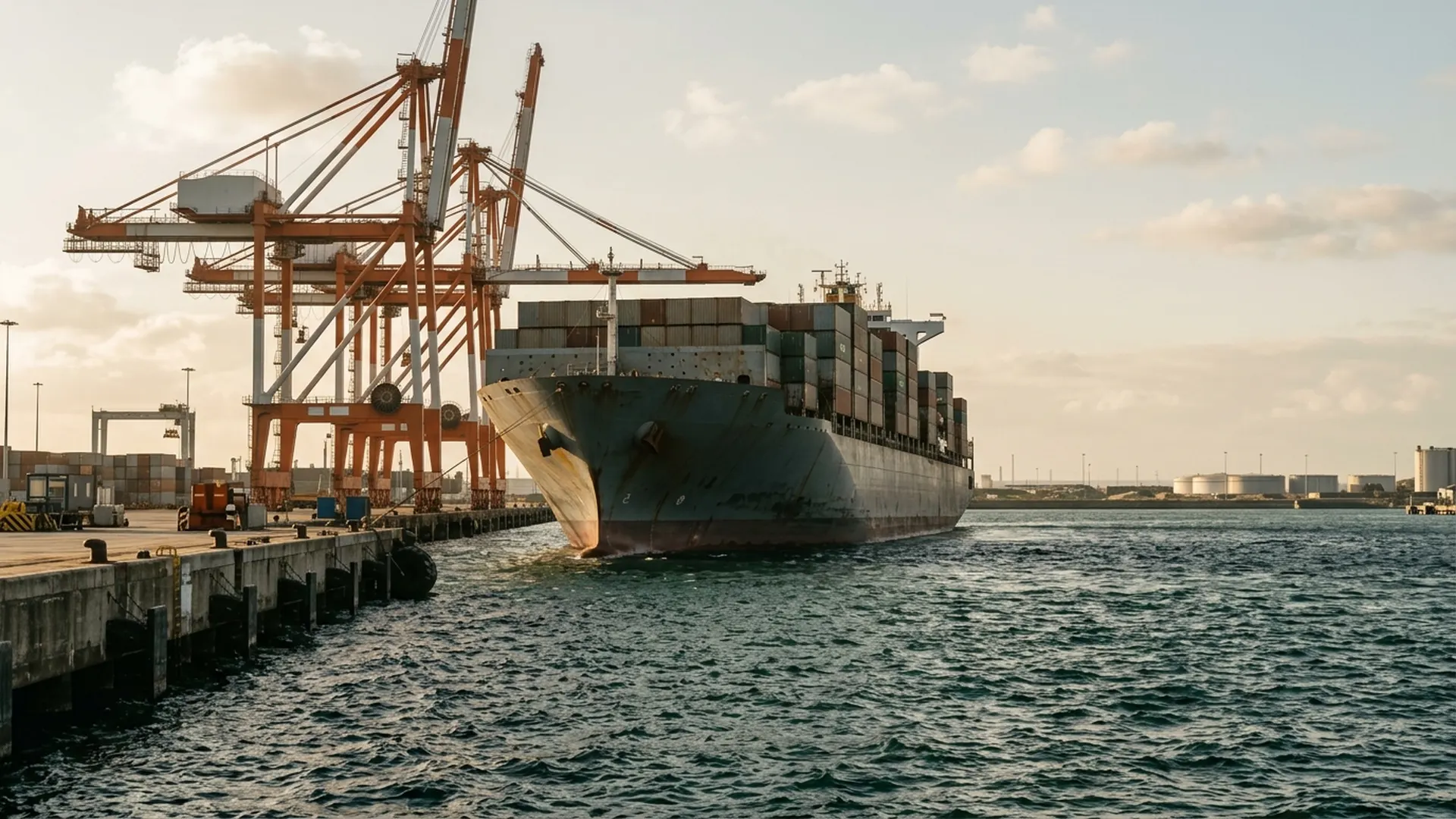
The diplomatic calendar and the regulatory calendar have come apart. In Washington on September 23, 2026, Treasury Secretary Scott Bessent announced on Fox News that the United States and China would extend the Busan Agreement, the trade truce first struck in October 2025, until January 10, 2027. Carriers read that as two more months of calm. On the legal record it is not. The suspension of the Section 301 vessel fees, the charge that would bill Chinese-owned and Chinese-operated ships $50 per net ton per voyage and non-Chinese operators on Chinese-built ships the higher of $18 per net ton or $120 per discharged container, runs out at 11:59 p.m. eastern time on November 9, 2026 under Federal Register document 2025-19873. Only a new Federal Register notice can move that date, and as of September 28 none had published. I checked the Federal Register's own API today: the most recent notice in this docket is still the November 13, 2025 suspension. Nothing from 2026.
Why a paperwork gap matters this much comes down to the fee schedule sitting dormant under the pause. The USTR's April 2025 Section 301 notice targets vessels operated by Chinese companies and Chinese-owned vessels at $50 per net ton, escalating by $30 per net ton annually through 2028. Non-Chinese operators using Chinese-built ships face the lower but still large alternative of $18 per net ton or $120 per discharged container, whichever is higher. A standard transpacific containership carrying roughly 50,000 net tons would owe about $2.5 million per voyage at the base rate, and at the $80 per net ton rate scheduled for April 2026 before it was suspended, roughly $4 million. Alphaliner estimated the top ten container lines would face $3.2 billion in fees across 2026 on their current deployments, with COSCO hardest hit, and HSBC analysts put COSCO's own annual exposure as high as $1.5 billion, about 74 percent of its projected 2026 earnings before interest and taxes, with an additional $654 million at subsidiary OOCL. When the charges were briefly in effect in October 2025, carriers passed them through to cargo owners almost immediately as invoice line items.
The industry has not been passive. On September 23, one day before the summit opened, a coalition of more than 200 importers, exporters, carriers and transportation groups sent USTR Ambassador Jamieson Greer a letter asking for the suspension to be extended before November 9. The signatories included the National Retail Federation, the American Apparel and Footwear Association, the Footwear Distributors and Retailers of America, the World Shipping Council, the International Chamber of Shipping and the Agriculture Transportation Coalition. Their argument is arithmetic: because China-built vessels carry a meaningful share of global container capacity, the fees would not land on a narrow set of operators but ripple across every network. A Trade Partnership Worldwide cost study estimated the fees at their full scheduled rate would raise container shipping costs by at least 25 percent and add about $30 billion in annual costs to US businesses and farmers.
The timing is worse than it looks for cargo owners, because the maritime deadline does not sit alone on November 10. The same date ends the 178 Section 301 China product exclusions under a separate notice, FR Doc 2025-21671 published December 1, 2025, and each instrument moves only when its own notice moves, the same legal-action test that governs the new goods lists in U.S. and China Approved $30 Billion Goods Lists. Tariff Cuts Still Need Legal Action. As FreightFigures laid out on September 24, a verbal truce extension does not amend either one. The base case now is that USTR publishes parallel notices extending both, most likely to January 10, but the precedent is uncomfortable: last December's exclusion extension published after the prior expiry with a one-day gap, and entries filed inside the gap paid the full list rate with no automatic refund. If the same pattern repeats, any covered vessel calling at a US port between November 10 and the publication date would technically owe fees, which is why freight practitioners are already talking about bonded entries for covered cargo.
The market context makes the threat pricier than it would have been in a normal autumn. Transpacific spot rates hit new annual highs the week of September 26, with Asia to the US West Coast at $8,400 per FEU and the East Coast holding around $9,600, per Freightos data reported by FreightWaves, while Golden Week blanks did little to cool the transpacific in Golden Week Blanks Hit 15, and Shanghai-LA Rates Still Rose 2%. Sea-Intelligence estimates port delays are absorbing more than 8 percent of global vessel capacity and could take up to 10 months to unwind. Carriers booking Q4 rotations are doing it against a rate base that is already the highest of the year, so a fee revival would not be absorbed quietly; the October 2025 experience says it would be surcharged within weeks, straight into peak holiday volume. Carriers could also re-cut vessel deployments to keep Chinese-built tonnage out of US rotations, tightening effective capacity at exactly the moment LA and Long Beach are reporting rising short-window delays ahead of October arrivals, a pressure point that September Set to Be 2026's Busiest Month at US Ports captures.
The bear case on this whole concern is simple: Washington extended the truce, and it is hard to see it letting its most visible deliverable to importers lapse two months later, so the notices will publish in time. That is the right base case, and Blank Rome's Matthew Thomas called the extension a positive signal that a longer-term arrangement is possible when Seatrade Maritime News asked him on September 29. But the risk is not direction, it is timing and mechanics. A Federal Register notice published on November 12 would leave a two-day exposure window that no announcement could retroactively close. What is dated next: watch for a USTR notice covering both the vessel-fee suspension and the 178 exclusions, ideally well before the week of November 2. If the calendar reaches November 6 with nothing published, the assumption should flip, and surcharge planning should start on November 10 pricing, not January pricing.
This content is for informational purposes only and does not constitute financial advice. Past performance is not indicative of future results. Consult a qualified financial advisor before making investment decisions.
Get daily intelligence delivered
Create a free account for the Daily Brief every weekday and The Week Ahead every Sunday. No card required.