Russia Crude Exports Slide to 5-Week Low on Tanker Costs

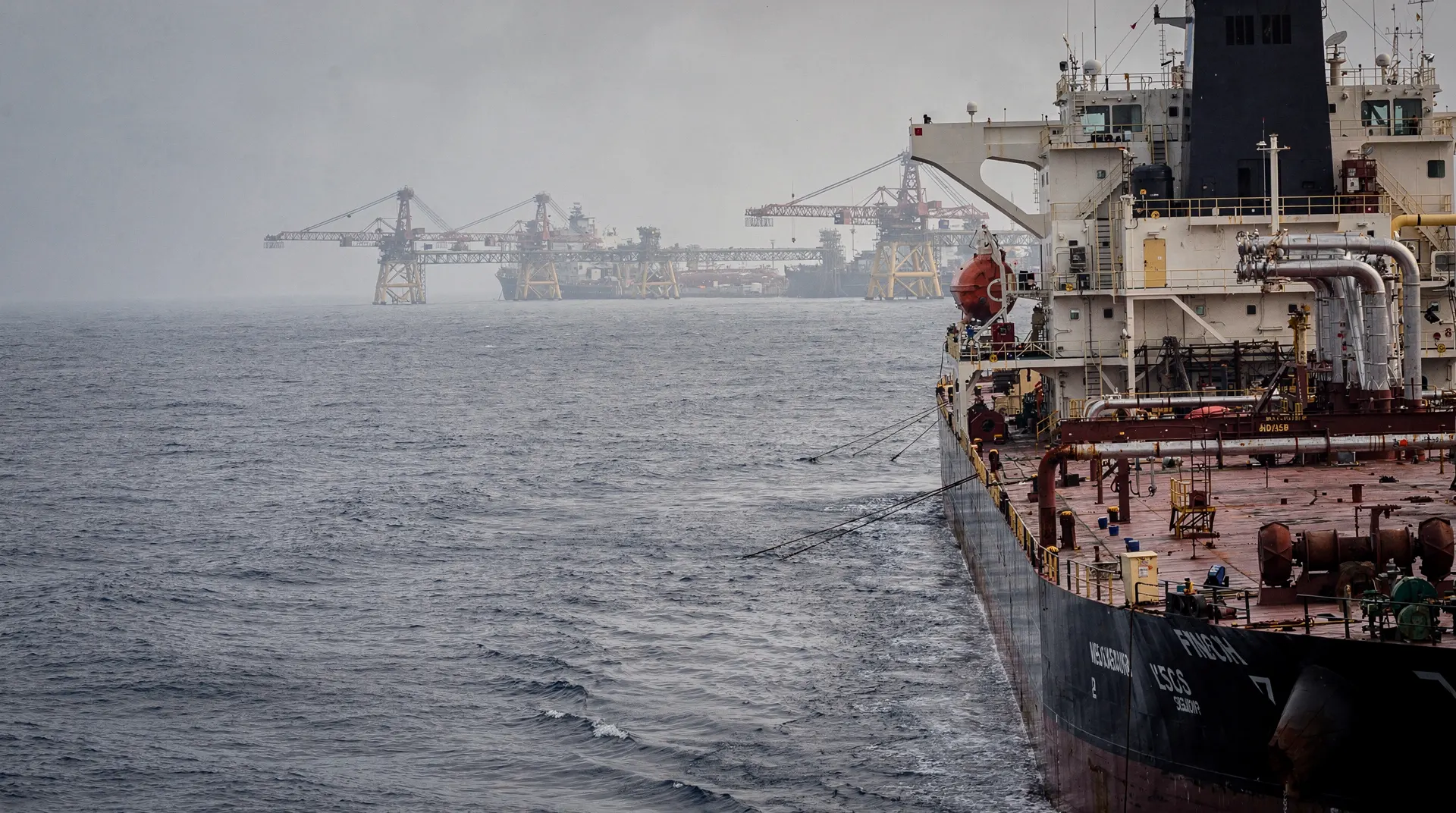
Russia's crude exports slid to a five-week low on a four-week average through October 25, dropping 30,000 barrels a day to 3.55 million barrels a day, and the freight numbers explain why. Tanker data compiled by Bloomberg showed overseas flows easing even as weekly loadings jumped, and sky-high shipping costs are now pushing India's refiners toward cheaper barrels from the Persian Gulf. For anyone watching physical flows rather than refinery headlines, the signal is in the ships.
Dig beneath the four-week average and the picture is choppy, not just weak. In the week to October 25, 37 tankers loaded 26.93 million barrels of Russian crude, against a revised 21.87 million barrels on 31 ships the prior week, according to vessel-tracking data and industry reports Bloomberg compiled. That pushed weekly shipments up 730,000 barrels a day to an average of 3.85 million, the highest in a month. Twelve tankers left the Primorsk terminal near St. Petersburg last week, compared with just four the week before, a week that had included a three-day gap in arrivals and departures that suggested loading may have been suspended for maintenance.
Related reading: Strait of Hormuz oil shipping: crude flows recover to 10.3M bpd, attacks keep freight at $1M a day.
That volatility is why the four-week average matters more than any single week. Weekly shipments swing with weather, maintenance work, sanctions, military activity and the timing of departures, so the 3.55 million barrel a day average through October 25, the lowest in five weeks, is the cleaner read on the trend. It also matches the story the tanker market is telling: Russia is shifting fewer barrels out of its western ports even as one of them, Primorsk, resumes normal flow.
The freight leg is where the demand-side shift shows up. Bloomberg reported that buyers in India may be turning away from Russian barrels amid sky-high shipping costs and cheaper alternatives from the Persian Gulf, just as crude flows from the Middle East return to near pre-war levels. Indian refiners are the largest buyer of Russian crude, so even a partial shift reroutes cargoes onto longer, costlier voyages or onto Gulf supply that was already closer and cheaper. The Baltic Exchange's weekly tanker report for week 43, published October 23, captured the freight side: an 80,000 tonne clean Aframax (TD19) Cross-Mediterranean run climbed about 86 points to roughly WS810, a daily round-trip TCE of $382,816, while the dirty Black Sea CPC-to-Augusta route (TD6) eased 20 points to WS1072.78, worth about $870,600 a day on a round trip.
For the broader framework, see our crude oil coverage.
Related reading: Crude Tanker Rates Hold Near Record as Baltic Primorsk Loadings Face a New Strike Threat.
The shadow-fleet premium is part of this. S&P Global Commodity Insights has documented how Black Sea tanker economics strengthened sharply in late September and early October as attacks on commercial shipping, disruption to Russian energy flows and tighter scrutiny of Russian crude pushed freight rates higher. Sanctions exposure and war-risk premia price into voyages to and from the region, and those costs sit on top of an already tight crude tanker market. That is the same mechanism that squeezes the landed cost of Russian barrels and makes competing supply, such as Iraqi and Saudi grades moving short Gulf hauls, relatively more attractive.
What the crude trend means for the wider goods economy is mostly indirect but real. Fewer Russian barrels exported in the coming weeks would leave more fuel and feedstock inside Russia, not less global supply, because no reported strikes on Russian oil processing plants occurred in the seven days to October 25. If that lull in the refinery campaign holds while talks between Russia, Ukraine and the US proceed, Moscow can repair damaged plants and process more crude at home, trimming what it must export. Bloomberg noted the amount of Russian crude available for export could fall in coming weeks precisely because refineries are coming back online.
Related reading: Freight This Week: Container Rates Slide as Tanker Costs Surge Through Hormuz.
The transport wiring supports that read. Since the start of September, Moscow has diverted all shipments of Kazakh crude through the Black Sea port of Novorossiysk, freeing capacity for its own barrels at Ust-Luga on the Baltic, which shippers view as safer. One cargo of Kazakhstan's Kebco grade loaded from Novorossiysk in the week to October 25. On value, the four-week gross value of Russia's oil shipments held near $2.61 billion a week, little changed, but the weekly figure jumped about $430 million to a wartime high of $2.76 billion, helped by an eighth straight weekly increase in the value of the Pacific ESPO grade even as Urals prices softened.
The freight numbers do not all point one way, and that is worth flagging. Daily returns on the largest crude tankers are cooling: the Baltic's week 43 report had the VLCC Middle East Gulf-to-China route (TD3C) down 88 points to WS1208.13, worth about $1.29 million a day, and the West Africa-to-China run (TD15) down 147 points to WS556.13. Cheaper long-haul crude freight would blunt part of the tanker-cost argument pushing India toward the Gulf. The offset is that the rates stay elevated in absolute terms, and any flare-up in the Iran conflict after the US midterms and the Israeli election could pull Middle East barrels off the water again, reversing the reloading that is now keeping Gulf supply ample.
Related reading: Tanker Rates Top $1.2 Million a Day as War Risk Compounds.
All of this runs through the freight market next week. The next Baltic Exchange weekly tanker report for week 44 is the closest dated read on whether crude-tanker rates, especially on Baltic and Black Sea routes, keep diverging from the softer VLCC leg. Alongside it, the weekly crude-flow trackers will show whether the four-week average has stabilized or slid further, and whether the trilateral talks turn the refinery lull into a durable pause. For buyers already paying for war risk and longer routes, the direction of those two prints will price the next month of landed Russian crude.
Every figure above is dated and attributed: the crude-flow and Primorsk data come from Bloomberg's tanker compilation, reported by gCaptain on October 27, 2026; the tanker index prints are from the Baltic Exchange's week 43 report published October 23, 2026; the shadow-fleet freight commentary is S&P Global Commodity Insights; the refinery-strike and talks context is attributed to Bloomberg's report of official statements and vessel data.
This content is for informational purposes only and does not constitute financial advice. Past performance is not indicative of future results. Consult a qualified financial advisor before making investment decisions.
Get daily intelligence delivered
Create a free account for the Daily Brief every weekday and The Week Ahead every Sunday. No card required.