New-Home Sales Climbed to 684,000 in August While Supply Thinned to 8.5 Months

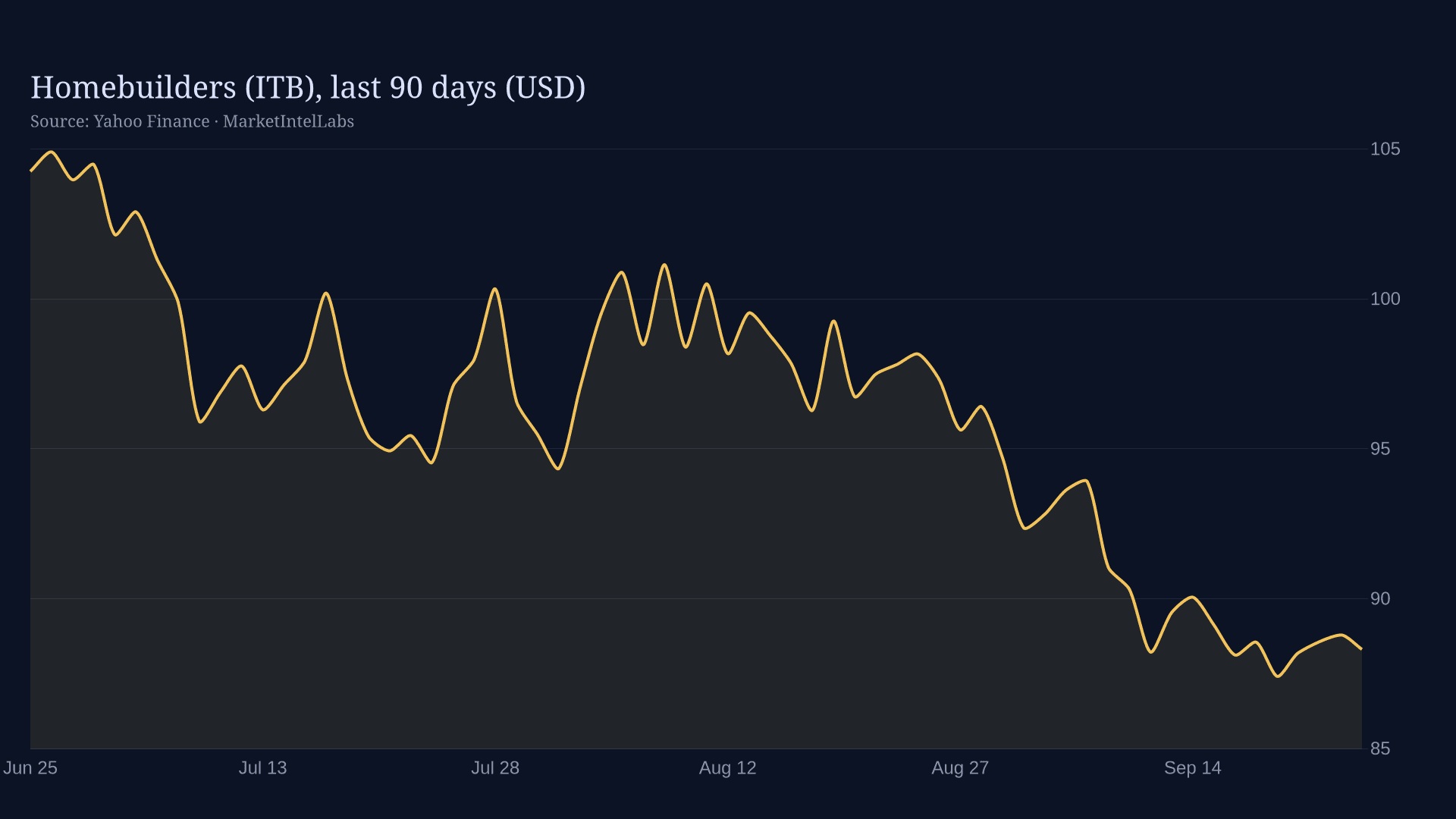
The Census Bureau's August new residential sales release, out September 25, put single-family new-home sales at a 684,000 annual pace, up 6.4 percent from July's 643,000 and just 2 percent below August 2025's 698,000. On the same day, Freddie Mac's PMMS put the 30-year fixed mortgage rate at 7.03 percent, up from 6.35 percent in September 2025 and the highest weekly print of 2026. Sales up nearly year over year while the financing cost to buy them rose 68 basis points is not a housing recovery. It is a reshuffle: the buyer the high-rate market is losing from resale, builders are catching through contract.
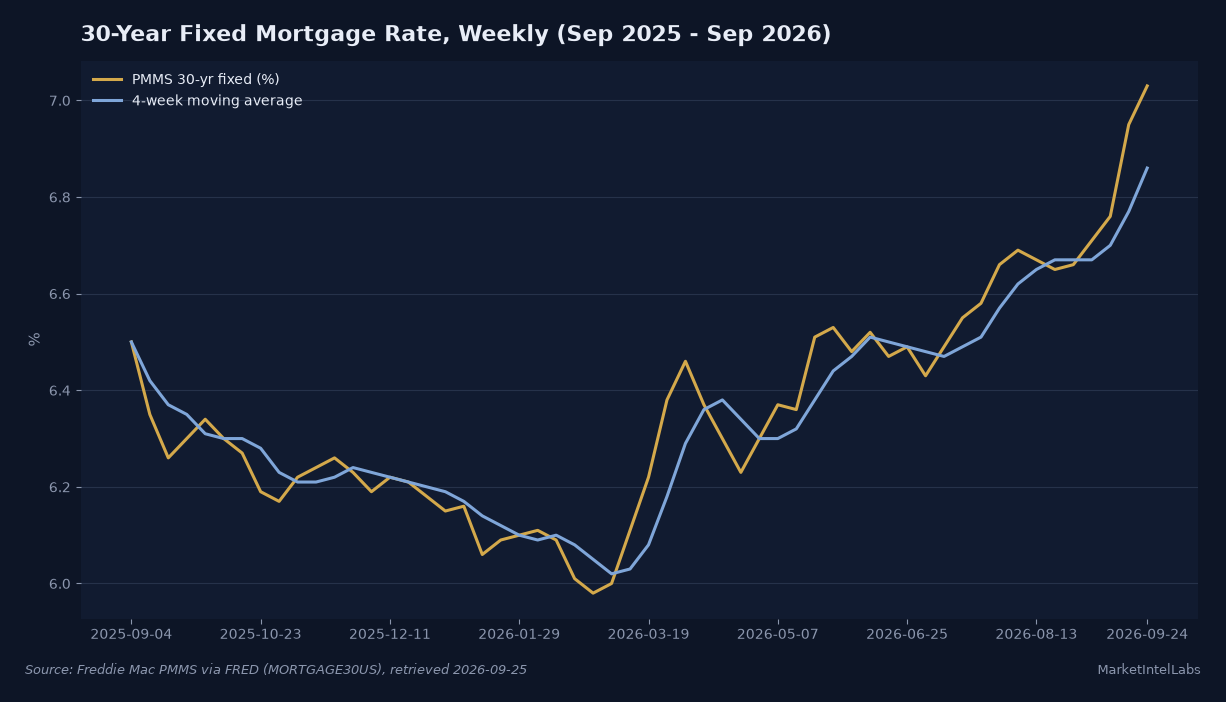
Demand shows the reshuffle in its composition. Applications to refinance collapse when rates move from the mid 6s toward 7, and purchase applications have been soft since the September 17 PMMS print, per the MBA survey our desk covered earlier this week. Yet new-home contracts rose. That divergence has a simple explanation: roughly nine in ten existing owners hold a mortgage below 6 percent, so they are not selling, and buyers who need to move in 2026 have two doors. One is a resale market with record active inventory, 1.14 million units in August per Realtor.com data on FRED, but prices that have not adjusted enough to offset a 7 percent rate. The other is a builder who can cut the effective rate with a forward commitment, buy the rate down for two years, or hand over $50,000 in options and closing costs. The door with the discount is the one buyers are walking through.
Supply is the quiet half of the print. New homes for sale rose for a seventh straight month to about 511,000 units, the highest August count in records going back to 2007, and the headline months-of-supply number fell to 8.5 from 9.0 in July because the denominator, sales, moved faster than the numerator. A year ago the figure was also 8.5. That tells you the balance between what builders have open and what they are selling is roughly where it was last August, only with a rate a full point higher and a resale market carrying more competing inventory. The pressure valve is not volume anymore. It is price.
Builder earnings calls already carry the price evidence. Lennar's most recent quarter showed the company selling homes for less than list, and our desk covered the discount math on Monday. August's sales gain, set against the strongest financing headwind of the year, should be read the same way: builders are buying market share with margin. The median new-home price, $403,800 in August per Census data, sits below the national median sale price of existing homes, $410,700 in the second quarter of 2026 per Federal Reserve data on FRED, an unusual inversion that exists mainly because builders are discounting into the rate shock while resale sellers hold.
Run the affordability math on the median existing home and the reshuffle sharpens. At $410,700 with 20 percent down, a 30-year fixed at 7.03 percent costs about $2,193 a month in principal and interest. At last September's average rate of 6.35 percent, the same loan cost roughly $2,044. That is about $149 a month worse in a year, on a house whose price barely moved. The median buyer's income did not rise 7 percent. Every basis point the builder can absorb through a rate buydown is worth roughly $27 a month on that loan, which is why the incentive war is a rational response to 7 percent rather than desperation.
Regionally, this month matters less than usual because the story is national: rates. But the supply split still shows. Sun Belt markets with heavy permit pipelines through 2024 and 2025 are where completed spec inventory sits, and where discounts are deepest. The Northeast and Midwest remain constrained in resale, and builders there are selling what they can start, not what they have finished. The sales gain is broad, but the margin damage is not evenly distributed.
What comes next is dated. The NAHB/Wells Fargo Housing Market Index for September, out this week at 32, frames builder confidence near cycle lows even as sales volumes hold, and the September PMMS print on October 1 is the single number that decides whether this reshuffle continues or turns into a volume correction. If the 30-year fixed holds above 7, expect months of supply to rebuild through the fall as completed inventory outruns contracts, and expect the incentive war to intensify into the year-end selling season. If rates retreat toward the mid 6s, the resale unlock that everyone in this market is waiting for begins, and builders lose their captive buyer quickly. The data do not support the headline that housing demand is collapsing. It is migrating, and it is being paid for in builder margin.
Get daily intelligence delivered
Create a free account for the Daily Brief every weekday and The Week Ahead every Sunday. No card required.