Lennar Just Told Us What New Homes Cost Once You Subtract the Discounts

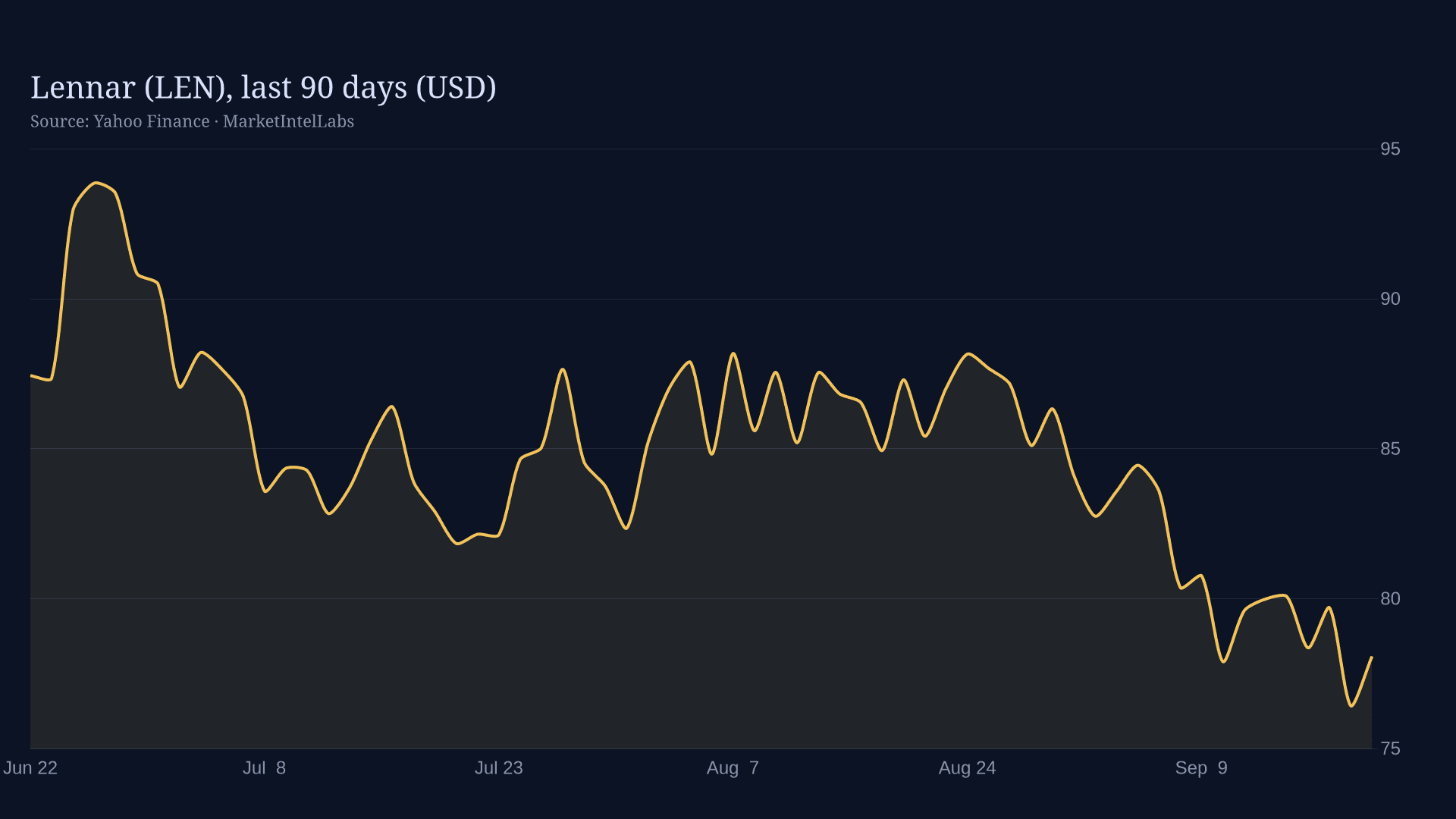
Lennar's fiscal third quarter filing, released September 16, 2026, put the average sales price of its homes at $372,000 after approximately 12.0 percent in incentives. Read that carefully: the country's largest budget to mid-market builder is conceding that roughly one dollar in eight of the nominal price never gets collected. The sticker price on a new home and the price a buyer actually pays have come apart, and this quarter's numbers say they have come apart by more than at any point in the current cycle.
The rest of the filing explains why. Deliveries came in at 20,840 homes, down from 21,584 a year earlier, while gross margin on home sales fell to 15.8 percent from 17.5 percent in the fiscal third quarter of 2025. Lennar guided the current quarter to a gross margin of 15.5 to 16.0 percent, which is a way of saying the discounting is not a one-month promotion. Net earnings attributable to Lennar were $284 million, or $1.19 per diluted share, against $591 million, or $2.29, a year ago.
Incentives at this scale are mostly mortgage-rate buydowns. A builder paying two points to hold a buyer's rate near 5.9 percent instead of the market's 6.95 percent is converting margin into a financing subsidy, and the 1.7 point year-over-year margin compression is roughly what those buydowns cost. Lennar's own guidance language has shifted too. In June the company told investors it expected incentive levels to continue to moderate into the third quarter; they did not, and the September filing stopped promising that they would.
The the affordability math behind the discounts is straightforward. At the $372,000 average sales price with 20 percent down, a 30-year fixed payment at the Freddie Mac survey rate of 6.95 percent for the week of September 17 runs about $1,970 in principal and interest. A year ago, on an implied average sales price near $380,500 at the September 2025 survey rates around 6.3 percent, the same loan cost roughly $1,894. A cheaper house on paper carries a bigger monthly payment than last year's more expensive one did, which is precisely the gap the buydowns are built to close.
The demand side has already responded. MBA purchase applications have fallen for consecutive weeks and the desk covered the 4.1 percent drop on September 21, so the buyers Lennar is courting are stepping back just as the incentives deepen. What the discounts have not done is clear the standing inventory. New homes available for sale were 9.6 months of supply in July per Census data, and active listings across the market reached 1.14 million on August 1 per Realtor.com's feed on FRED, the highest in that series in over a year.
There is one genuinely positive signal buried in the filing, and it matters for the supply picture over the next two quarters. Construction costs fell year over year under Lennar's cost program, and land under development on the balance sheet dropped to $865 million from $1.1 billion a year earlier as the company bought fewer finished lots. If builders are pulling back on land while incentives run at 12 percent, the supply wave crests in 2027 rather than growing. That is the bull case for whoever holds inventory into next year.
The bear case is simpler and shorter dated. Lennar's Q4 guide of 15.5 to 16.0 percent gross margin assumes the rate environment holds near current levels, and the 30-year fixed has moved from 6.66 to 6.95 percent in three weeks per Freddie Mac's survey. Every quarter point added to the mortgage rate either deepens the incentives or thins the delivery count, and Lennar has chosen the first path. Watch the October NAHB survey and the next MBA purchase applications print: if builder confidence keeps sliding from September's 32 while rates stay near 7 percent, the Q4 incentive number will exceed 12 percent, and the margin floor everyone is assuming at 15.5 percent is not a floor.
For buyers the filing is close to a confession that new-home pricing is a negotiation conducted through the rate sheet. For sellers of existing homes it is more uncomfortable: a builder willing to surrender 12 percent of price to move a home is competing directly with your listing, and the resale market has not yet repriced to match. That gap is the single most important thing on the housing beat this fall.
The next dated checkpoints are the Census new residential sales release for September in late October, Lennar's fiscal fourth quarter report in early December, and the Freddie Mac PMMS print every Thursday. This content is for informational purposes only and does not constitute financial advice. Past performance is not indicative of future results. Consult a qualified financial advisor before making investment decisions.
Get daily intelligence delivered
Create a free account for the Daily Brief every weekday and The Week Ahead every Sunday. No card required.