Microsoft Q1 earnings: capex doubles to $39.4B as Azure grows 48%

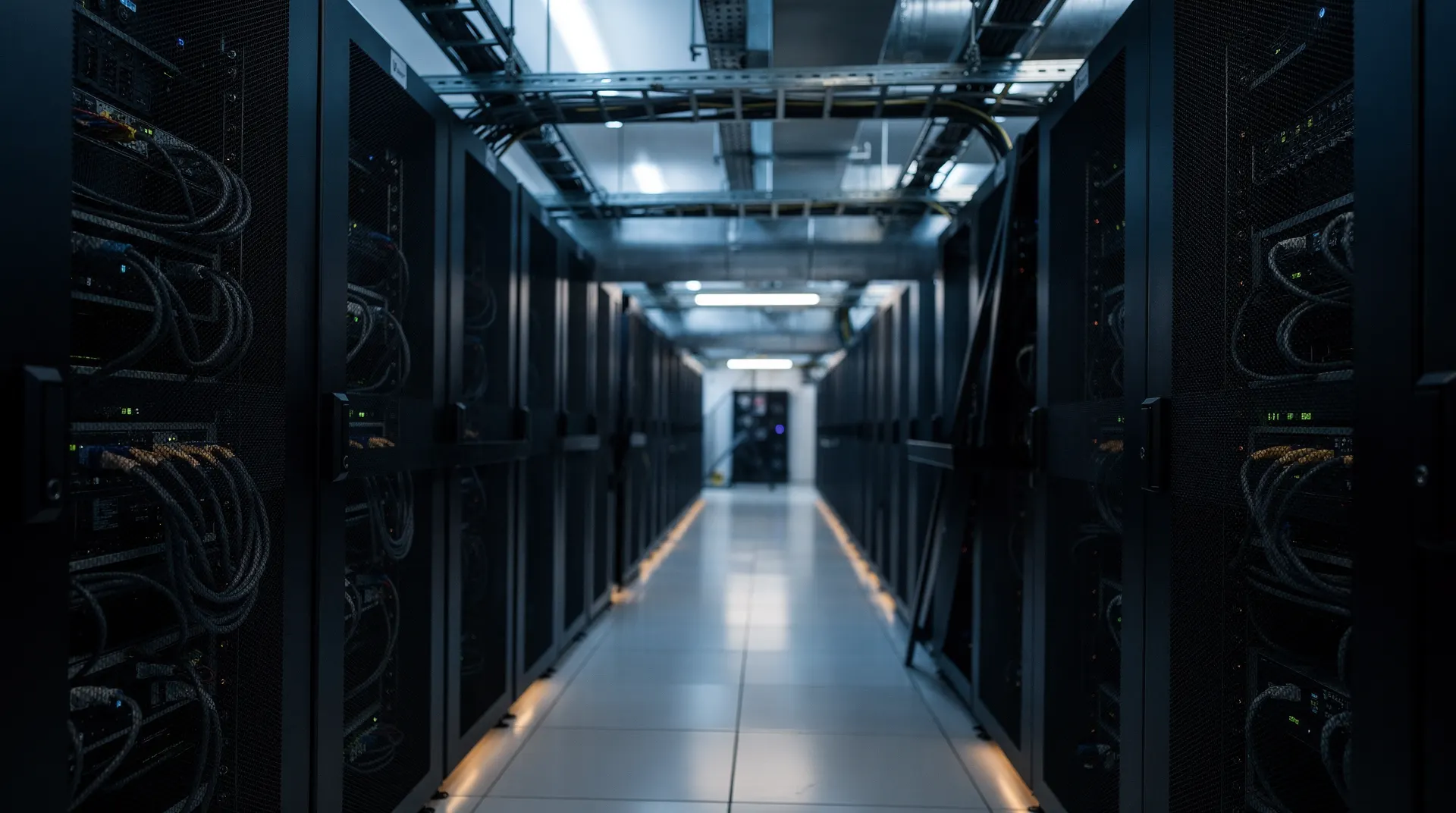
Microsoft's first fiscal quarter report, released after the close on October 28, is the clearest signal yet that the AI buildout is the company's dominant financial engine. Additions to property and equipment, the line that mostly funds data centers, servers and related AI infrastructure, reached $39.4 billion in the three months ended September 30, 2026, up from $19.4 billion in the same quarter a year earlier. Revenue rose 19% to $92.3 billion, while Microsoft Cloud revenue grew 30% to $63.9 billion.
The capex figure is the number that matters for anyone following AI through the markets lens. Property and equipment additions, a category Microsoft does not break out by product, are the company's direct claim on GPU capacity, data center construction and the power that runs it. At $39.4 billion, the pace of investment roughly doubled against the prior year's $19.4 billion, and it is a larger share of the quarter's cash from operations of $58.0 billion than it was a year ago. The spending is not abstract: it shows up in commercial backlogs spanning many quarters.
Related reading: Celestica Q3 earnings: revenue up 83% to $5.83 billion, 2027 target raised to $40 billion.
Commercial remaining performance obligation, the contracted revenue Microsoft already expects to recognize in future periods, increased 73% to $677 billion. That is the bookings signal investors watch as the closest proxy for committed cloud and AI demand. Azure revenue grew 48% in constant currency, and Microsoft Cloud revenue of $63.9 billion grew 30% (31% in constant currency), with management saying Cloud growth accelerated from the prior quarter. The company's newer "Agents and Infra" segment, recast in September 2026 and dominated by cloud, Azure and AI infrastructure, reported revenue of $76.8 billion, up 25%.
The rest of the quarter was strong by most headline measures but carried the AI cost story underneath. Operating income rose 21% to $45.9 billion. Net income of $36.6 billion on a GAAP basis grew 32%, helped by net gains on earlier investments in OpenAI; excluding that OpenAI impact, adjusted net income rose 18% to $36.4 billion, with adjusted diluted EPS of $4.89. Microsoft returned $10.2 billion to shareholders in the quarter through dividends and share repurchases, which keeps the capital-return machine running even as AI buildout accelerates. Windows OEM and Devices revenue fell 22%, and the Devices and Consumer segment declined 3% to $15.5 billion, a reminder that the traditional PC franchise keeps shrinking even as the AI stack accelerates.
Related reading: Alphabet and Microsoft earnings tonight: capex guidance decides the AI chip bid.
For the AI-markets read, the capex number is both fuel and risk. Microsoft is committing capital at nearly double last year's rate precisely because Azure growth plus 73% backlog growth say demand is there. The bull case is a self-reinforcing loop: more AI capacity attracts more workload, which books more revenue and justifies more buildout. The bear case is the cost side: at this pace, capital spending consumes a growing share of operating cash flow, and any AI-demand stumble would leave Microsoft carrying a larger depreciation bill with less room to absorb it. The market split the difference in the first reaction, with shares closing essentially flat at $531.01 on October 28, down 0.06%, per LSEG data quoted on Microsoft's investor page.
Guidance is the next numbered input. Microsoft said it will provide forward-looking guidance on the earnings call and webcast at 2:30 p.m. Pacific time on October 28 (5:30 p.m. Eastern), so the fiscal second quarter revenue and operating-income outlook, plus any explicit capex guidance, landed after this release was written. That call, and how management frames AI capacity additions against demand, is the next catalyst for the hyperscaler capex trade that has run through the AI complex this year.
Related reading: Meta Q3 2026 Earnings: Capex Floor Raised to $135 Billion as New Share Class Funds AI Spend.
Microsoft is one of the clearest direct plays on AI infrastructure in the S&P 500, and the quarter confirms the pattern other hyperscalers have been reporting: demand is front-loaded, spending is accelerating to meet it, and the balance sheet is absorbing it. The question for the rest of the AI sector is capacity. Every dollar Microsoft puts into data centers and chips is revenue for the chip, server, network and power names in its supply chain, and the 73% backlog growth suggests those dollars are already spoken for. What the company says about the coming quarter's capex, and how fast it can convert that backlog into recognized revenue, will set the tone for the AI trade into year end.
Related reading: Megacap earnings week: hyperscaler capex guidance is the AI-financing test.
This content is for informational purposes only and does not constitute financial advice. Past performance is not indicative of future results. Consult a qualified financial advisor before making investment decisions.
Get daily intelligence delivered
Create a free account for the Daily Brief every weekday and The Week Ahead every Sunday. No card required.