LA-LB port strike looms as contract talks with security union stall

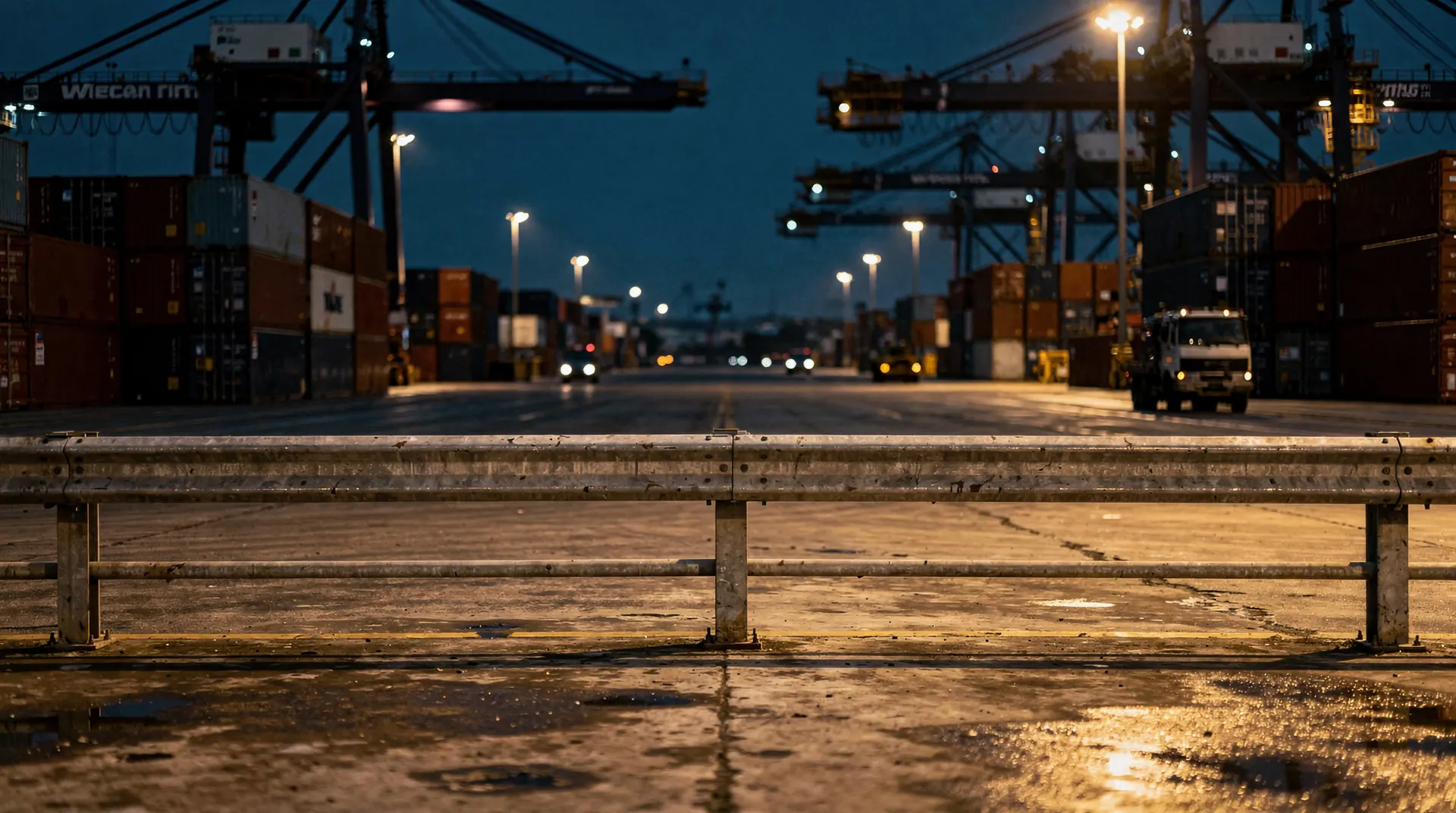
The Pacific Maritime Association warned Nov 18 that contract talks with the waterfront security union at the Ports of Los Angeles and Long Beach stalled with little to no movement, leaving what the employers group called “real potential” for a strike at the nation’s busiest port complex when the watchmen’s contract expires at 12:01 a.m. on Saturday, Nov 21. The union, International Longshore and Warehouse Union Local 26, has already voted to authorize a strike, and PMA said its members are unwilling to extend the contract again.
Local 26 represents about 250 unarmed watchmen who perform security duties at six container terminals in the complex, checking identification and credentials at access points, running routine patrols and reporting safety concerns, according to PMA. Their previous agreement expired in July 2025 and workers have operated under a series of extensions, most recently pushed to Nov 20 with help from the Federal Mediation and Conciliation Service after earlier deadlines of Nov 4 and Nov 6.
Related reading: Port of LA October cargo hits 1,026,872 TEUs, a record, as rates ease.
What is actually at issue
PMA said its offer includes a one-time bonus of $3,200 for each Local 26 member, a wage proposal raising average annual earnings for full-time watchmen from more than $170,000 to $198,000, fully employer-paid healthcare for active workers and retirees valued at over $62,000 a year, and pension increases up to $93,200 a year for the longest-serving workers. The association said it has tried to bargain with Local 26 for more than a year, most recently with FMCS assistance, that the union’s demands have not materially changed, and that the local came to the table on just three days during the extension. Local 26 had not detailed its demands publicly, and its response to the latest employer proposals was not immediately available as of Nov 18.
The exposure is out of proportion to the size of the local. Local 26 members make up about 2% of the ILWU waterfront workforce, but the terminals they guard handled more than half the complex’s cargo, roughly 85% of Long Beach’s intake and 33% of Los Angeles’, per PMA. Because thousands of longshore workers, marine clerks and foremen, who are not part of this dispute, are expected to honor the picket line, a strike would sharply cut cargo movement rather than merely pause security checks.
Related reading: Employment Cost Index September 2026: Q3 Compensation Rises 0.8% as Benefit Costs Outpace Wages.
What a shutdown would hit
PMA cited an analysis by maritime economist John Martin finding the six terminals handled about 6.2 million containers in 2025, supporting 50,000 direct jobs and nearly 4.2 million jobs nationwide, with $885 billion in associated national economic activity. That figure measures activity tied to the terminals, not projected strike losses, and PMA warned the losses would grow with each day vessels sit unable to offload and containers already inside cannot be cleared.
The timing is acute because the complex is running near records. The Port of Los Angeles handled a record 1,026,872 TEUs in October, its second-busiest month ever and the strongest five-month cargo run in its history, per port data reported by trade press, and terminals were already contending with a backlog of containers awaiting inland rail. A strike at holiday peak would idle truck drivers, disrupt rail shipments and cut warehouse hours, while farmers and manufacturers trying to export and retailers stocking holiday goods face delays and higher costs, PMA said.
Related reading: October Jobs Report Preview: Sept Hiring Slowed to 29k.
This is a container-port labor dispute, not an oil-tanker event, so its price transmission runs through box freight and inland logistics rather than tanker rates or war-risk premia. Rerouting volumes to other West Coast ports is limited by pier capacity and by the expected honoring of the picket line, so a shutdown would push container spot rates and congestion surcharges higher and strand holiday merchandise in the terminals.
Who pays and what comes next
Exporters, importers, retailers and holiday shoppers would absorb the cost of delay, and truckers, warehouses and other warehouse-adjacent workers would lose hours; neither side frames a shutdown as a win. Three prior extensions show both parties chose to avoid a walkout, and PMA said it remains available to negotiate around the clock. The next dated catalyst is the bargaining session on Friday, Nov 20, with the contract set to lapse at 12:01 a.m. Saturday, Nov 21, if no agreement or further extension is reached.
Related reading: Real Average Hourly Earnings Fell 0.5% in September as Wages Lost to Inflation.
This content is for informational purposes only and does not constitute financial advice. Past performance is not indicative of future results. Consult a qualified financial advisor before making investment decisions.
Get daily intelligence delivered
Create a free account for the Daily Brief every weekday and The Week Ahead every Sunday. No card required.