GlobalFoundries TSMC Deal Adds $2B to AI Packaging Supply

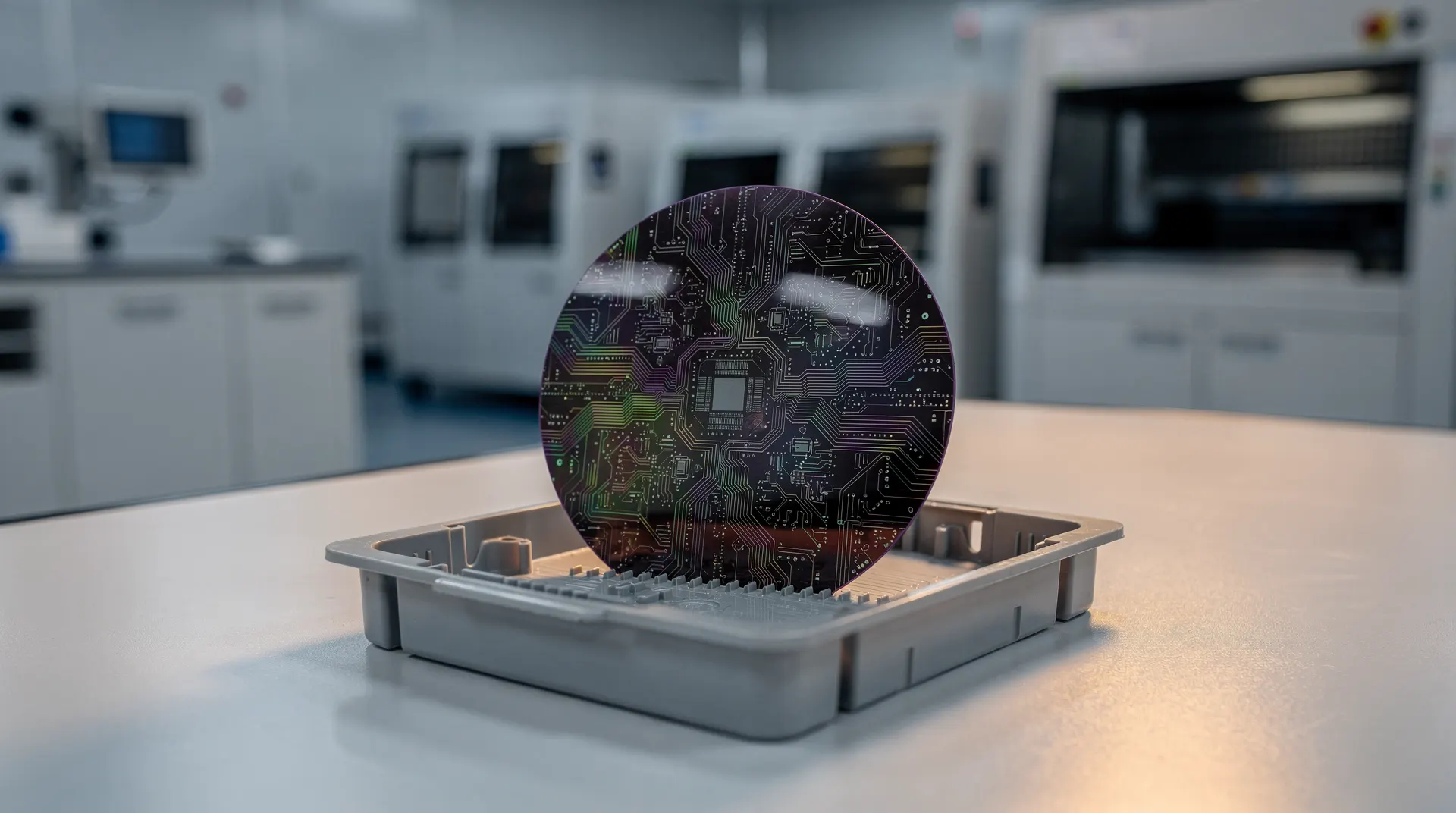
GlobalFoundries and TSMC have signed a five-year manufacturing agreement with a stated value of $2 billion to add U.S. production of silicon interposers used in advanced AI packaging. The October 8 announcement crosses the watch’s deal threshold, but the supplier’s operating contribution is a packaging input, not a new leading-edge wafer source. Capacity, customer demand and volume timing will determine how much of the headline value reaches revenue.
Advanced packaging can constrain accelerator delivery even when processor dies are available. GF will expand capacity at Malta and manufacture interposers for TSMC's CoWoS process. The release describes a framework for future expansion, not a published annual shipment schedule.
Related reading: Google Constellation Deal Adds 890 MW Nuclear Power to PJM.
The release says volume production is expected to begin ramping in the first half of 2028. That date puts any material shipment contribution well beyond the current build cycle. GF did not provide a ramp curve, unit volumes, project cost or expected margins in the October 8 announcement.
The agreement should be read as an expansion of an established manufacturing site, not evidence that new output is already available. The company release says GF plans to expand capacity at its Malta, New York facility, with volume production expected to ramp in the first half of 2028. That leaves a substantial gap between announcement and commercial contribution. Equipment installation, process qualification and customer acceptance are necessary steps before planned capacity can translate into shipments.
Related reading: AMD Plans More AI Chip Supply in 2027, but Demand Still Leads.
The companies have not specified how much of the $2 billion is tied to firm minimum orders or how quickly demand is expected to build. This limits comparison with a conventional take-or-pay supply contract. The five-year term signals a multi-year relationship, but the headline value alone cannot show annual revenue, gross margin or GF's required capital investment. Those are separate variables that will matter when investors assess the project's return.
Where the bottleneck sits
Silicon interposers connect processors and high-bandwidth memory within advanced packages. That layer can support accelerator throughput, but more interposer supply does not establish new GPU demand or prove downstream capacity is ready.
Related reading: Tencent's $7 Billion Oracle Lease Finds the Gap in the Export Control Rulebook.
GF says the U.S. source will include embedded deep trench capacitor components and support multiple product generations. It links the project to rising performance and power demands, but names no end customer beyond TSMC. Demand still depends on chip designers, cloud buyers and data-center construction.
Contract value is not recognized revenue. GF and TSMC did not say whether $2 billion represents minimum purchases, projected demand or a broader framework. Nor did they publish an annual schedule. An even annual split would be an assumption, not company guidance.
Related reading: Navitas Claros Acquisition Closes: $8B AI Power Market Claim.
GF gains an AI-related packaging role without entering leading-edge logic wafers. Its benefit depends on construction and qualification at Malta, TSMC allocation and production economics. Neither company quantified the added capacity or how much CoWoS demand the site might serve.
The design of the arrangement also matters for supply-chain resilience. A U.S.-based source can reduce reliance on a single geographic location for this component, but the public announcement does not establish that TSMC will shift a defined share of production from existing suppliers. GF's role is a planned addition to supply, and not a disclosed replacement for another source. The eventual effect on delivery risk depends on the scale and qualification status of the new capacity.
What the market can and cannot price
The $2 billion deal clears the watch threshold, but its financial detail is thin. The release gives no price data. Supply optionality is the clearest read, though production is years away.
Execution and demand are the main risks. Delayed construction or qualification would push out production; a cooler AI build cycle could reduce utilization by 2028. If capacity remains tight and GF qualifies on time, TSMC may gain flexibility. The release gives no capacity comparison.
The next milestone is the expected first-half 2028 ramp. Until then, construction updates, TSMC allocation and contract terms will show whether this deal becomes a meaningful revenue stream.
GlobalFoundries, October 8, 2026 announcement of its agreement with TSMC.
This content is for informational purposes only and does not constitute financial advice. Past performance is not indicative of future results. Consult a qualified financial advisor before making investment decisions.
Get daily intelligence delivered
Create a free account for the Daily Brief every weekday and The Week Ahead every Sunday. No card required.