Drewry’s Intra-Asia Index Sets a Sixth Record at $1,518

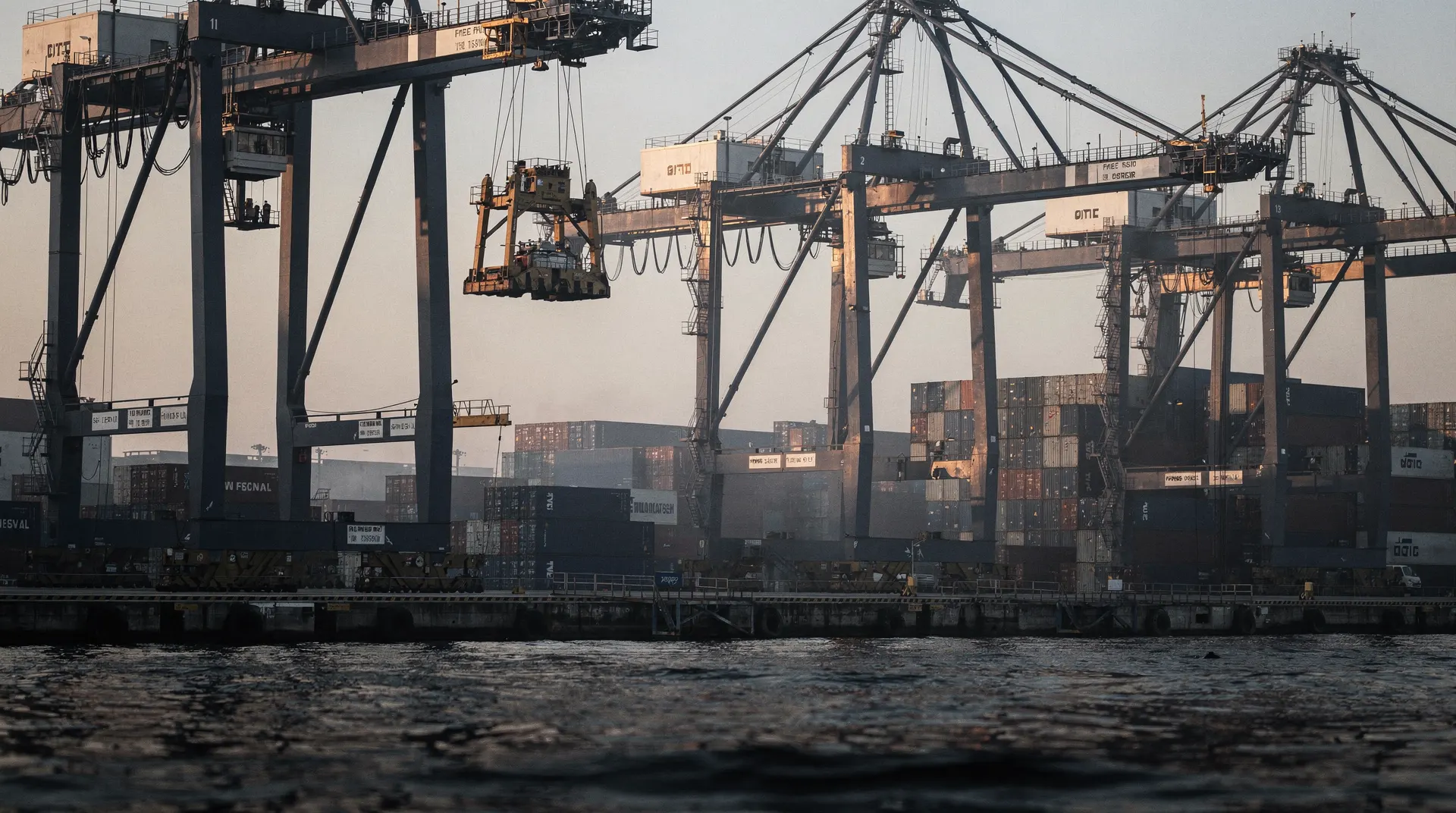
Drewry’s 1 October 2026 Intra-Asia Container Index rose 2% week over week to $1,518 per 40-foot container, its sixth consecutive weekly record. The latest print shows how typhoon disruption, vessel bunching and fuel charges are lifting regional shipping costs even as the approaching Golden Week volume lull may soon ease some routes.
Several southeast-bound routes drove the increase. Not every lane moved higher. For importers, the composite is a useful signal, but a route quote still determines the bill. Check whether that quote includes surcharges and terminal costs.
In its 1 October 2026 route breakdown, Drewry put Shanghai to Ho Chi Minh City at $1,377 per 40-foot container, up 7% for the week, and Shanghai to Manila at $1,062, also up 7%. Rates to Singapore and Tanjung Pelepas rose 4% to $2,073 and $2,056, respectively. Drewry said north Asian routes were broadly stable, so the increase did not apply uniformly to the region.
Congestion gives the rate move a physical explanation. Drewry reported Week 39 vessel waiting times of 82 hours in Shanghai and 56 hours in Ningbo in its 1 October assessment. Vessels held outside a port are capacity unavailable to the next leg of a rotation. That can tighten effective supply even when the global fleet has not changed, and missed windows can push cargo arrival dates out beyond the initial delay.
Across Asia, port backlogs are already consuming real vessel capacity. Our recent analysis “Asian Port Congestion Has Swallowed 3 Million TEU of Capacity, and the Contract Books Are Starting to Break” showed how those queues tighten contract-level supply: Asian Port Congestion Has Swallowed 3 Million TEU of Capacity, and the Contract Books Are Starting to Break.
Typhoon disruption, port congestion, carrier blank sailings and port omissions all contributed to the capacity squeeze, Drewry said. Blank sailings remove a scheduled departure, while omitting a port can shift available slots among origins. Those choices may help carriers restore schedule reliability, but they also leave shippers with fewer immediate alternatives and can make rate comparisons difficult across departure weeks.
Drewry’s 1 October 2026 report said CMA CGM had announced a $75 per-TEU emergency fuel surcharge on intra-regional lanes, effective 1 October. The surcharge sits outside the index’s quoted spot rate per 40-foot container. A carrier quote may add it, along with terminal handling charges. Drewry’s IACI methodology notes that its freight rates exclude origin and destination terminal handling charges.
Fees are the other lever on the all-in cost a shipper sees. Our note on “The Vessel Fee Pause Runs Out on November 9, and Only a Federal Register Notice Can Move It” explains how trans-Pacific pricing may face its own reset: The Vessel Fee Pause Runs Out on November 9, and Only a Federal Register Notice Can Move It.
Drewry put the index 212% above its year-earlier level. That shows more than a weekly blip, but not that every regional shipping cost rose by the same amount. The IACI combines 18 route-specific indices, and rates vary sharply by lane.
Routing changes can shift where that pressure lands. We recently covered “Panama Canal Restores 49-Foot Draft, Pulling Asia Cargo to East Coast Ports”, which showed trans-Pacific lanes pulling against a different pool of capacity than intra-Asia legs: Panama Canal Restores 49-Foot Draft, Pulling Asia Cargo to East Coast Ports.
The counterweight is the coming Golden Week volume dip. Drewry expects it to help clear backlogs and stabilize or ease rates on some southeast Asian routes. The company said the China-Cambodia-Thailand CCT4 service is due to start on 23 October 2026, adding direct links between South China and Southeast Asia. That future capacity will not clear today’s vessel queues or change existing bookings.
Demand may be strong ahead of the holiday, but the public report does not quantify cargo volumes or provide a numerical forecast for how much capacity will return after the lull. The 1 October rate print is observed data; the easing is a forecast. If schedules normalize, spot rates could fall. Continued delays or higher fuel costs would limit that relief.
The near-term test is whether post-holiday schedules bring shorter waits and dependable departures. That distinction matters because a vessel that reaches port on time but misses its berth window can still disrupt the next leg. For manufacturers using just-in-time inputs, a late box can idle production even if the freight rate is fixed. Drewry’s figures do not measure those downstream losses, but they show why schedule reliability belongs beside price in procurement decisions. Drewry’s next weekly IACI update will show whether the composite and southeast Asian lanes flatten. Cargo owners should check route quotes, confirmed space, departure dates and the surcharge terms.
A record index warns that capacity is tight. The 2% weekly change is modest beside the 212% year-over-year comparison, yet averages can hide sharp lane-level swings. The 7% increases to Ho Chi Minh City and Manila are more relevant to buyers routing through those ports than the composite alone. Likewise, a stable north Asian lane would not prove that southbound space is easy to secure. Importers should compare like-for-like departure dates and equipment before treating one quote as a market-wide signal. It does not predict that every shipment will cost more next week. Flexible buyers may benefit if the holiday slowdown clears congestion, while fixed delivery windows leave shippers exposed to port omissions and missed connections. In October bookings, a dependable arrival date may matter more than a lower spot quote.
This content is for informational purposes only and does not constitute financial advice. Past performance is not indicative of future results. Consult a qualified financial advisor before making investment decisions.
Get daily intelligence delivered
Create a free account for the Daily Brief every weekday and The Week Ahead every Sunday. No card required.