Inflation Expectations Hit 6.1% as Confidence Sinks to a 2014 Low

The one number a household cannot look away from showed up Tuesday in the Conference Board's Consumer Confidence Index: 81.9, down 6.7 points, the lowest reading since April 2014. Behind the headline index sits a write-in field the Board actually reads, and chief economist Dana Peterson reported that references to prices, the high cost of goods and services, and oil and gas prices in particular "rose to new heights." This is the cost-of-living story of the week: the squeeze has moved from the statistic to the sentiment, and sentiment is now doing the forecasting.
Confidence at a 12-and-a-half-year low is not a mood swing. The Board's own labor-market reads came in weak alongside it: the share of consumers calling jobs "plentiful" fell to 23.6% from 24.5% in August, the lowest since February 2021, while 21.9% called jobs "hard to get," the most since January 2021. When households say the pump price is eating the paycheck and the survey evidence agrees, the expectation number starts steering actual choices, and 6.1% expected inflation is a number that changes shopping lists.
What the pump is doing to the mood.
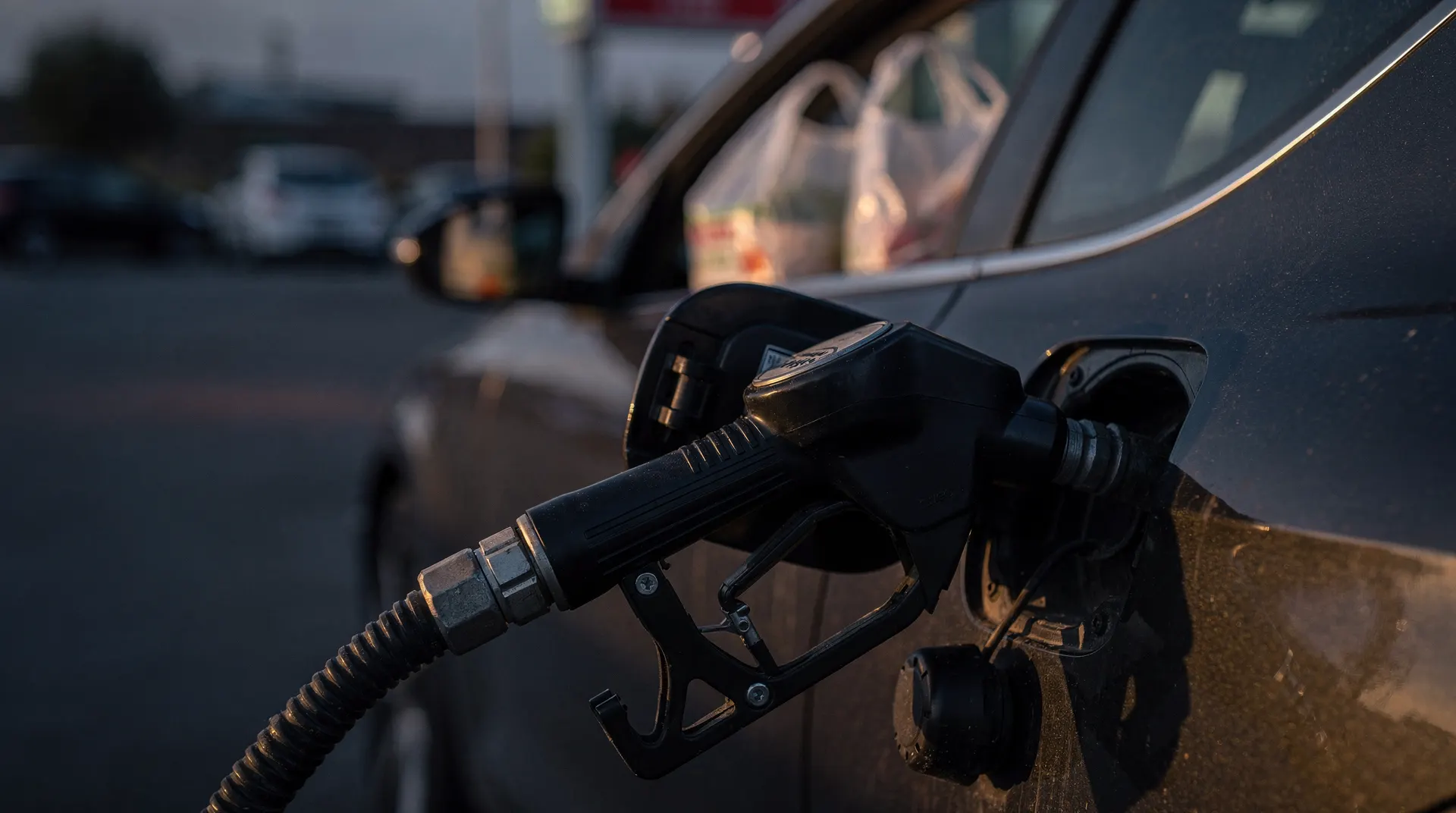
Gasoline is the visible driver. AAA's national average for regular stood at $4.45 a gallon on Tuesday, September 29, up 37 cents from $4.08 a month earlier, per AAA data cited by Reuters. That is roughly $4.40 more per fill-up than a household paid in late August, and at two fill-ups a month that is close to $9 added to the monthly budget in a single month's move. September as a whole averaged $4.33, a record for the month and above the prior September record of $3.83 from 2023 (see Gas Sets a September Record at $4.33 and CPI Inherits It). The seasonal relief that usually arrives after Labor Day never showed up this year because the Strait of Hormuz disruption has kept crude and product prices elevated into fall.
Diesel, which feeds the grocery bill, sits at a Diesel at a Record $6.53 Is a Household Number Too record $6.53 a gallon as of September 22, up 75% from a year earlier on AAA data. Freight and refrigerated-truck costs pass through to shelf prices with a lag of roughly one to three months, so the record diesel is less a today problem than an October and November problem. Expect the grocery line to catch up to the truck line before the year ends.
The borrowing side is compounding the pump side. The Freddie Mac 30-year fixed averaged 7.03% for the week ending September 24 (see The 7% Mortgage Rate Meets Rising Home Supply This Fall), up from 6.71% three weeks earlier, after the Federal Reserve lifted its target range to 3.75% to 4.00% at the September 17 meeting, per Federal Reserve data (FRED series DFEDTARU and DFEDTARL). On the average card balance of $6,500 carried at the current average APR near 21%, the Fed's move adds roughly $11 a year in interest per borrower. Small on the statement, real in the aggregate, and it lands on the same household that just absorbed 37 cents at the pump.
Why it matters for the inflation prints ahead.
August PCE inflation arrives Thursday, October 1, with the Dow Jones consensus at 0.3% for both headline and core. September CPI follows on October 14, and it will carry the full weight of the pump surge that pushed September's average to $4.33. Gasoline CPI moved sharply in the September print pipeline, and with diesel at a record, the goods side of the index is likely to keep firming through the fall. The confidence survey effectively tells you households expect all of this: 6.1% expected inflation is not a panel detail, it is the highest reading on the Board's series since the 2022 spike.
The household play here is not a market call, it is arithmetic. Costs that are priced by contract, like mortgages and insurance, reprice upward while confidence says the income side will not keep pace. A household weighing a large purchase is watching a 7.03% mortgage against a 6.1% expected-inflation number and concluding that waiting is expensive either way. That is why confidence fell across every political, age and income group in the Board's data: the squeeze is not a segment, it is the median.
Watch two dates. Thursday, October 1, when August PCE lands and either confirms or cools the 0.3% consensus; and October 14, when September CPI inherits a $4.33 September gasoline average and a $6.53 diesel record. If the expectation number keeps climbing past 6.1%, the confidence slide stops being a sentiment story and becomes a spending story, and the holiday quarter inherits it.
This content is for informational purposes only and does not constitute financial advice. Past performance is not indicative of future results. Consult a qualified financial advisor before making investment decisions.
Get daily intelligence delivered
Create a free account for the Daily Brief every weekday and The Week Ahead every Sunday. No card required.