Chinese van trailer tariffs hit 260% as US antidumping and countervailing orders take effect

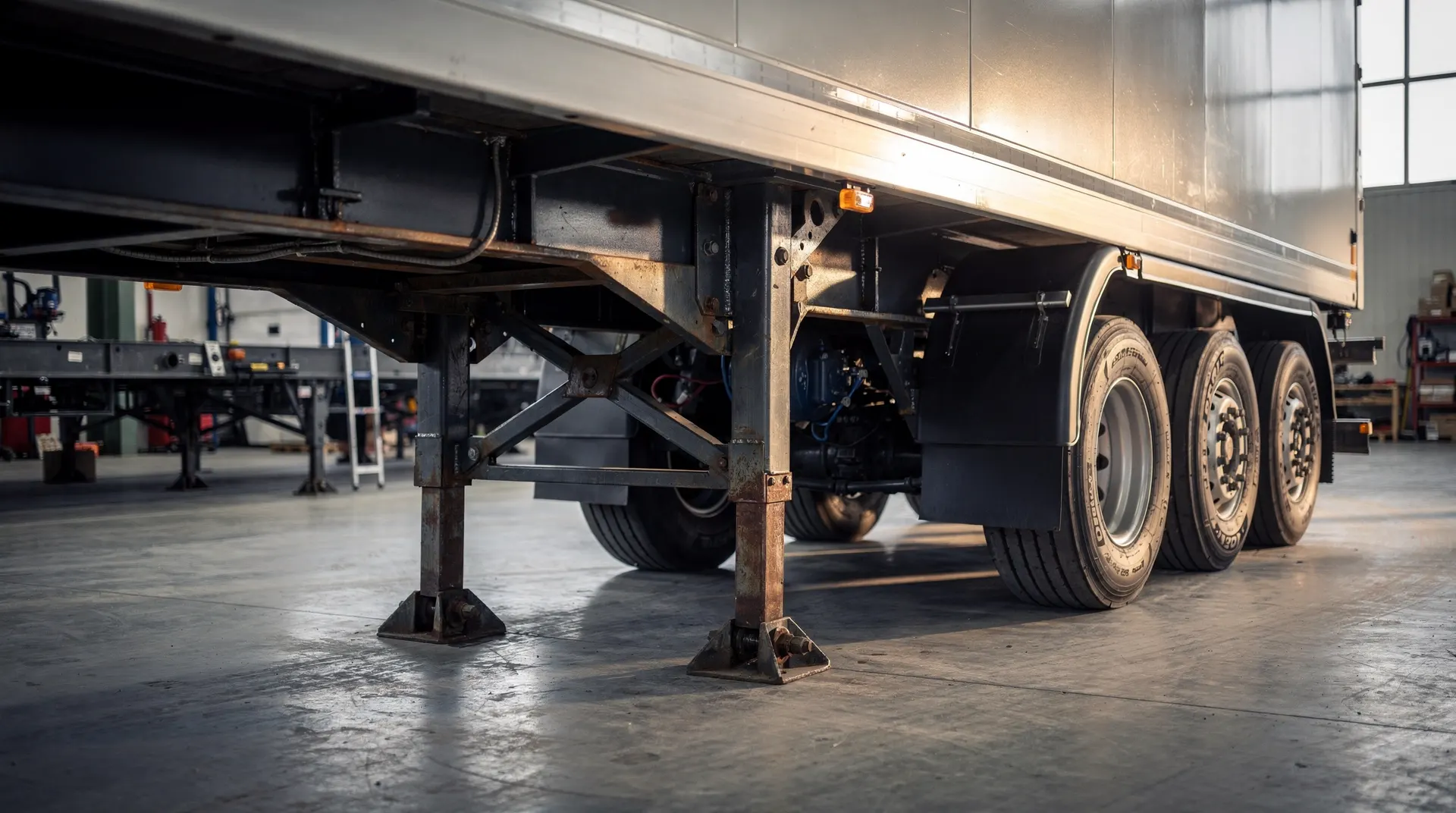
Washington stopped investigating and started collecting this week. On October 28, 2026, the Commerce Department published antidumping and countervailing duty orders on van-type trailers and subassemblies from China, converting preliminary findings from earlier this year into cash deposits at the border. The antidumping order assesses a China-wide weighted-average dumping margin of 130.86%, with a cash deposit rate of 129.73% after the export subsidy offset. The countervailing duty order applies a net countervailable subsidy rate of 134.75%. Stacked, the two orders land near 265%, which is why the move is being reported as tariffs of about 260%.
The trigger was automatic in process but specific in timing. Commerce published its final affirmative dumping and subsidy determinations on August 31, 2026. The International Trade Commission then notified Commerce on October 15, 2026 that a domestic industry is materially injured by the dumped and subsidized imports, the last condition the law requires before orders take effect. The orders became applicable October 28, 2026, the date of Federal Register publication. That clock matters for importers: unliquidated entries of the covered trailers are subject to antidumping duties for entries on or after June 15, 2026, the date the preliminary dumping determination was published, and to countervailing duties for entries on or after June 5, 2026, the date of the preliminary CVD determination.
Related reading: Commerce Moves to Choke Off Polysilicon Stockpiling Before Section 232 Tariffs Land December 4.
The five-year floor matters more for anyone planning US trucking equipment beyond this season. Trade remedies of this kind run for at least five years absent a successful sunset review, so the effective cost of Chinese van-type trailers is being reset for the medium term, not for a quarter. The petitioner behind this case is the American Trailer Manufacturers Coalition, a group of US producers, and its members have been explicit about the scale of the import share they were contesting. The coalition estimates that 40% of the van-type trailers sold in the United States were produced in China, Mexico or Canada.
The space the order opens is real but slow to fill. Stoughton Trailers, a Wisconsin manufacturer that has been public about expansion plans, is looking to add 500 to 700 jobs over the next six months alongside a capital program in Wisconsin. The risk in that timeline is the gap between the day the duties bite and the day new domestic capacity reaches the market. Trailers are the equipment that moves freight inland from the ports, so a shortfall in trailer supply shows up as tighter equipment availability and firmer drayage and truckload pricing into 2027, at exactly the moment import volumes are trying to recover. That is the fuller transmission channel: the tariff lands on a piece of capital equipment, not a consumable, and the price signal travels twice, once in the marginal cost of the imported unit and again in the scarcity premium on the domestic fleet while the industry rebuilds.
Related reading: Old Dominion's 4.9% LTL Rate Increase Takes Effect October 5.
What the orders actually cover
The scope is van-type trailers from China, including the subassemblies used to build them, as defined in the appendix to the Federal Register notice. Anyone importing a product that sits near the line, such as trailer chassis or trailer-adjacent equipment, faces a classification decision that carries real cost. A borderline classification found in error after the fact means retroactive duty plus potential penalties, which is why getting a binding ruling from US Customs before shipping is the operative risk-control move for importers with product anywhere near the category.
There is also a second administrative front this order does not close. The United States is separately probing van-type trailer imports from Mexico and Canada, and that investigation is expected to conclude in early 2027. If that probe produces orders too, the practical effect is to widen the tariff ring from one origin to the two near-shoring alternatives that the US industry says account for much of the same import share. Companies that route around the Chinese duty by sourcing from Mexico or Canada are therefore not taking the decision off the table, they are deferring it to next year.
Related reading: Diesel Hits $6.35 a Gallon as Trucking Fuel Costs Climb a Second Straight Week.
What it means for freight
For shippers and forwarders the practical reading is a cost and lead-time change concentrated in one equipment category. The margin math is stark: a van-type trailer that cleared customs at a landed figure near $5,000 before the duty roughly triples to around $18,000 with a 260% burden, though the exact pass-through depends on how the AD and CVD cash deposits interact with the underlying customs duty and on how much of the increase the supplier absorbs. In either case the landed-cost reset is large enough to change the build-versus-buy decision for owner-operators and small fleets, many of whom buy their trailers outright and hold them for a decade or more.
The offsetting consideration for the US side is that domestic capacity is not idle. The industry consolidation that preceded this case is the reason the petitioners organized: two decades ago there were roughly 20 distinct trailer manufacturers competing in the market, and industry executives describe that number as having fallen to about six under import pressure. That consolidation is what the trade case was designed to reverse, and the early reaction suggests equipment makers believe the orders can hold. Whether they can is a question of how fast capacity comes back online against how fast the domestic market needs it.
Related reading: US Extends Section 301 Suspension on Chinese Vessel Fees to January 9, 2027.
The balance of this trade action, then, is a straightforward transfer with a timing risk attached. It redirects production and investment toward US and near-shore factories, which is the intended outcome. It also sets a medium-term floor under trailer prices and, through the equipment channel, under the cost of moving freight inland, which is the indirect price US consumers end up paying. The orders are another step in the months-long escalation between Washington and Beijing, but they sit outside the tariff truce the two governments agreed to hold into January, so the pause does not delay this duty at all.
For anyone pricing US freight into 2027, the number to carry is the 5-year floor on the Chinese trailer category and the early-2027 decision on Mexico and Canada. The border decision is made; the inland capacity question is the one still in motion.
This content is for informational purposes only and does not constitute financial advice. Past performance is not indicative of future results. Consult a qualified financial advisor before making investment decisions.
Get daily intelligence delivered
Create a free account for the Daily Brief every weekday and The Week Ahead every Sunday. No card required.