Baltic Dry Index Drops to 2,511 as Capesize Rates Slide

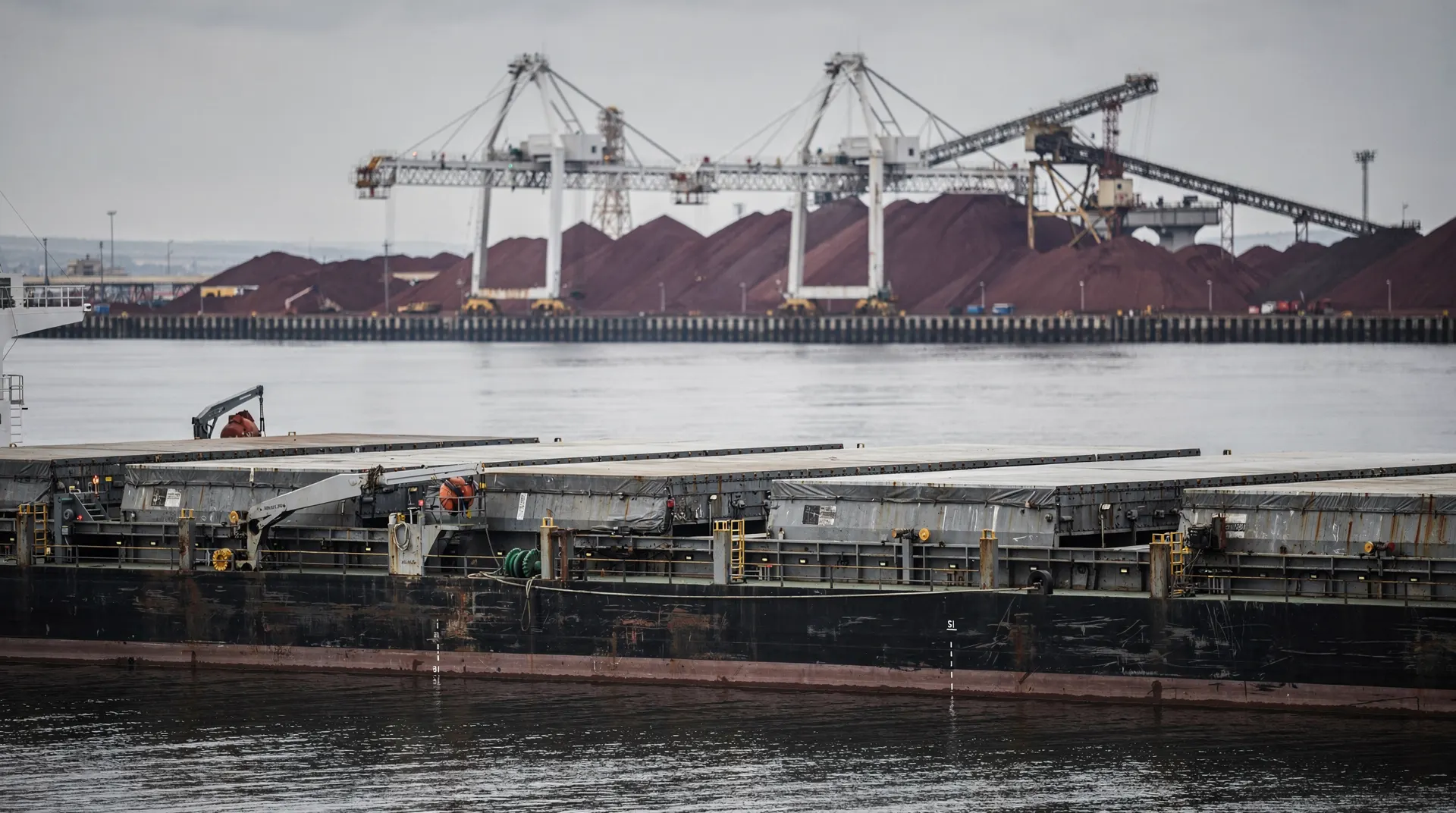
The Baltic Dry Index closed at 2,511 on Friday October 16, down 34 points on the day and roughly 14% for the week, its lowest reading since June 30. The slide was not a broad dry market retreat. It was a Capesize collapse.
The Capesize average for the standard five time-charter routes, the C5TC, fell 31% in a single week, from $37,618 per day on Monday to $25,961 on Friday, according to the Baltic Exchange and Baltic benchmark data compiled by FreightX. The Baltic Capesize Index dropped 73 points to 3,249, a weekly decline of about 25% and the index's lowest level since early April.
Related reading: Baltic Dry Index Falls to 2,667 as Capesize Rates Drag on Eight-Day Streak.
Weak Chinese iron ore demand did most of the damage. Subdued steel sentiment and a surplus of available tonnage, especially in the Atlantic, kept hammering Capesize earnings all week. The West Australia to Qingdao route, the benchmark C5, recovered to $11.70 per metric ton by Friday after softer prints earlier in the week, but the rebound came too late to rescue a week already defined by falling fixture levels. Spot iron ore itself bounced on Friday on dip buying and signs of improving steel margins and downstream consumption in China, a signal the market is watching for any freight pick-up in coming weeks (Reuters, October 16).
Panamax took a milder hit. The Panamax index lost 42 points to 2,314, down 4.8% on the week, with average daily earnings easing $373 to $20,827. Atlantic activity stayed subdued as list tonnage built and fresh enquiry lagged, while Pacific demand out of Indonesia, Australia and the North Pacific offered selective employment. The transatlantic round voyage closed at $20,545 per day and the Far East round at $21,904.
Related reading: Dry Bulk Splits in Two: A $28,550 Daily Gap Between Capesize and Panamax.
Smaller vessels kept the market from slumping further. The Supramax index edged up nine points to 1,865, up 2.4% on the week, with the S11TC at $23,573 per day, supported by regional demand across the Mediterranean, the US Gulf and the Indian Ocean. Handysize earnings rose 1.3% to $18,200. FreightX noted the US Gulf to China or South Japan route closed at $31,644 per day, and November paper in the Supramax segment attracted buyer interest.
Two structural shifts are working on the freight side in the background. India’s rising domestic coal output has trimmed import demand, cutting into cargo flow from Australian and Indonesian exporters and moderating activity in the Panamax and Supramax segments, per coverage in the October 19 maritime market briefings. Offsetting some of that, resilient industrial electricity demand and expanding data-center energy needs continue to support Pacific coal movements, a counterweight to the weaker iron ore sentiment.
Related reading: Truck Tonnage Fell Again in August, and Capacity Is Doing the Rest.
Dry bulk and containers are moving in opposite directions. The Drewry World Container Index held at $4,485 per 40-foot container in its latest print, with the Shanghai to Los Angeles lane at $7,884 on strong US import demand, while the Shanghai Containerized Freight Index stood near 3,680 points. Dry bulk is pricing the goods nobody is buying enough of; containers are still pricing the goods at the end of the line. That divergence is the useful read for what comes next in freight costs.
The forward curve sees the Capesize trough as temporary. Friday’s FFA market showed renewed buying interest in Capesize paper even as physical earnings weakened, with November Capesize contracts closing at $33,250 per day and December at $35,175, according to FreightX. Panamax November closed at $19,625 and Supramax November at $20,200. Improved sentiment in the paper is a bet that a recovery arrives on the strength of a Chinese steel pick-up that has not yet shown up in physical fixtures.
Related reading: Container Freight Rates: Drewry WCI Falls 2% to $4,351.
For importers and shippers, the direction is the story. Container rates are near their highs of the year while dry bulk is at a multi-month low, and the two trades answer to different demand bases: one to restocking and consumer import flows, the other to steel and raw materials. Until Chinese iron ore buying confirms the bounce in spot prices, dry bulk cargo owners face a stretch of soft earnings with Capesize as the laggard. The Baltic exchange publishes its next daily assessment on Monday October 19.
This content is for informational purposes only and does not constitute financial advice. Past performance is not indicative of future results. Consult a qualified financial advisor before making investment decisions.
Get daily intelligence delivered
Create a free account for the Daily Brief every weekday and The Week Ahead every Sunday. No card required.