Winter Heating Bills: EIA Sees Electricity Costs Up 4%

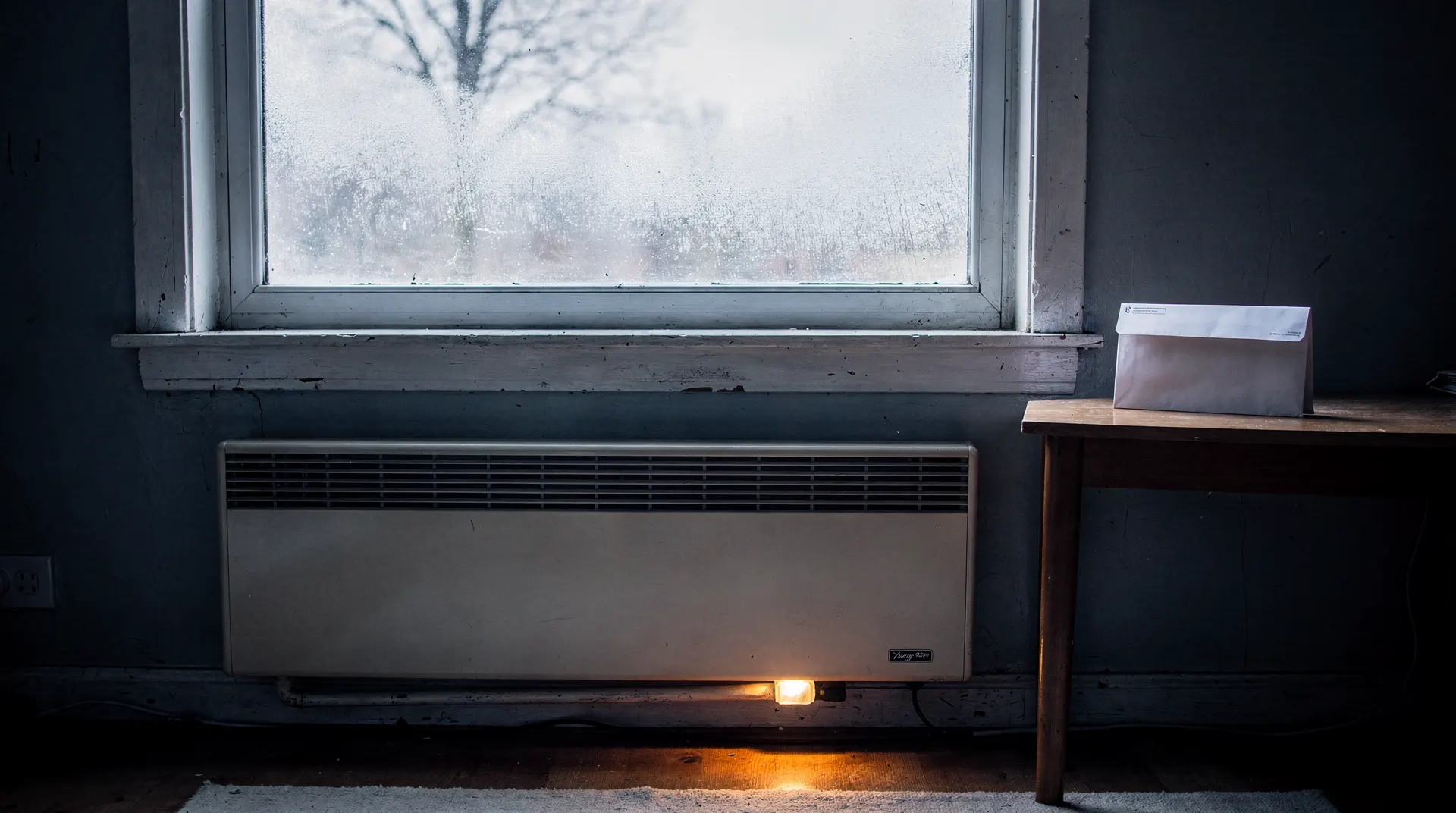
According to the U.S. Energy Information Administration (EIA) in its Winter Fuels Outlook 2026-27, EIA expects electricity-heated households to spend 4% more on bills this winter, while heating-oil households are forecast to spend 8% less. The October 6, 2026 forecast covers November 2026 through March 2027 and puts an uneven energy bill outlook into household dollars: gas costs remain close to last winter on average, propane and heating-oil bills fall, and electricity bills rise.
That split matters more than the national average. A household's heating fuel and region set the result, and EIA's estimates cover November 2026 through March 2027 rather than a full utility year. They are forecasts, not bills already incurred. EIA cites Census Bureau data showing natural gas heats 46% of U.S. homes in 2024; heating oil serves about 3%, and propane about 5%.
One forecast, sharply different bills
EIA forecasts natural-gas spending close to last winter for 46% of homes using it as their main heating fuel. Slightly milder weather is expected to trim use by 2%, while a 1% increase in residential prices partly offsets that reduction. The Midwest is the exception, with an average winter gas bill forecast at about $610, or 2% higher than last winter, as prices rise there.
For the broader framework, see our crude oil coverage.
Related reading: Gas Sets a September Record at $4.33 and CPI Inherits It.
Electricity is the cost increase in EIA's winter 2026-27 forecast: bills rise 4% nationally to $1,133 on average. The agency expects retail residential electricity prices to increase 5%, partly offset by 1% lower consumption under its slightly milder-weather assumption. The regional result varies: electricity expenditures rise 3% in the Northeast and West, and 4% in the Midwest and South. EIA estimates the average electricity-heating household will spend $1,133 over the five-month season. The outlook gives an estimate of $1,520 for the Northeast and $1,280 for the Midwest.
The heating-oil forecast declines, but it applies to a small, geographically concentrated group. EIA estimates an 8% decline, to about $1,390 for the average household. EIA expects an average price near $3.50 per gallon, 4% below winter 2025-26, with consumption down 4%. EIA says more than 80% of homes using heating oil as their main fuel are in the Northeast, so its U.S. average price closely follows that region.
Related reading: Gas Prices Ease, but Diesel Is Still 70% Higher.
Propane offers some relief in the winter 2026-27 forecast. EIA forecasts propane spending down 9% nationally to about $1,210. Regional bills are forecast down 11% in the Northeast, 8% in the Midwest, and 9% in the South. Its outlook does not promise lower delivered costs for every household: local winter demand and delivery charges can differ from a national average.
Weather and prices can overturn the base case
EIA's October 6, 2026 outlook assumes national temperatures close to winter 2025-26, but the regional pattern is uneven. EIA expects warmer conditions in the Northeast after a colder prior winter and a colder West after an unusually warm prior winter. EIA also publishes colder and warmer scenarios because consumption changes with local weather.
Related reading: Electricity Prices Are Up 30% From Last Year.
EIA's October 6, 2026 regional heating-degree-day forecast for winter 2026-27 illustrates the exposure: the West is projected at 2,781 for November 2026 through March 2027, 25% above the previous winter, while the Northeast is forecast at 4,331, 12% lower. Heating degree days measure demand for heat relative to a base temperature. A colder winter lifts consumption and can overwhelm a lower unit price. The outlook's colder and warmer scenarios show why household fuel type alone is not enough to predict a bill.
There is a separate price risk for electricity customers. EIA expects retail electricity rates to rise as wholesale fuel and delivery costs pass through to customers, with timing varying by market. Its October 6 outlook notes recent sharp price increases in parts of the country, including the Mountain, Middle Atlantic, and South Atlantic divisions. A forecast average cannot tell a household exactly when its utility will reset rates or whether it has a fixed-price plan.
For heating oil, global distillate supply also matters. EIA attributes its price forecast to lower crude prices, partly offset by wider distillate crack spreads. Northeast distillate inventories are lower than a year earlier, adding uncertainty, though EIA expects supply to remain sufficient for the region. A crude-price decline would not necessarily translate one-for-one into a lower heating-oil bill if refining margins widen. This is why a household should distinguish the fuel quote from the final delivered price.
Households should treat EIA's figures as a baseline for the season, not a promise for a particular address. The estimate excludes differences in home size, insulation, utility tariffs, and fuel contracts. EIA updates its forecasts alongside monthly Short-Term Energy Outlook releases. Actual early-season weather and retail prices will show whether the national temperature assumption holds.
This content is for informational purposes only and does not constitute financial advice. Past performance is not indicative of future results. Consult a qualified financial advisor before making investment decisions.
Get daily intelligence delivered
Create a free account for the Daily Brief every weekday and The Week Ahead every Sunday. No card required.