US Bans BGI and MGI Genomics Imports on Forced Labor

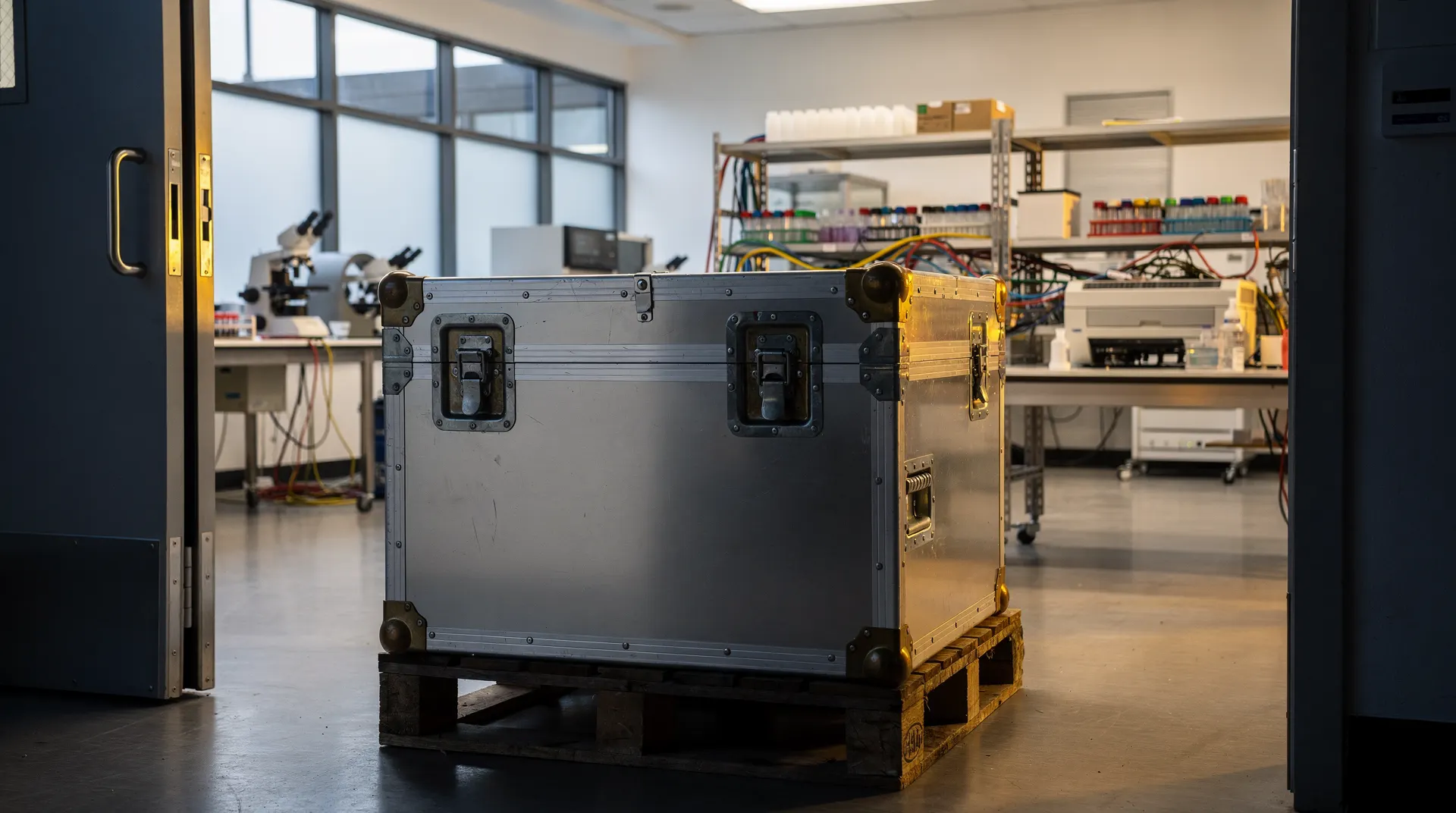
On Wednesday October 28, 2026 the U.S. Department of Homeland Security added three Chinese genomics companies to the Uyghur Forced Labor Prevention Act (UFLPA) Entity List, imposing an import ban on their goods effective October 29, 2026. The action targets BGI Genomics Co., Ltd. (SZSE:300676), its spin-off MGI Tech Co., Ltd. (SSE:688114), and Shenzhen BGI Technology Co., Ltd., also known as BGI Group or BGI Holdings, which Washington says worked with the government of Xinjiang to enable forced labor of Uyghurs and other ethnic minorities. Beijing has dismissed the accusations. The listing is among the most consequential applications yet of a law most Americans first heard of in reference to cotton and tomatoes: it now reaches the instruments that sequence genomes in research labs and clinical settings.
What changed is a named, dated trade restriction on a specific category of goods, gene sequencing and genomics instrumentation, tied to a country nexus, the Xinjiang supply chain, with the compliance clock starting almost immediately. Under the UFLPA, an entity listing creates a rebuttable presumption that the company's products are made with forced labor, shifting the burden onto the importer to prove otherwise. Goods covered by the listed entities are blocked at the border starting tomorrow, the fastest part of an enforcement mechanism that has otherwise moved in measured steps.
Related reading: Canada Import Bans Reach Federal Register as Volumes Turn.
The three companies are not small players. BGI Genomics and MGI Tech rank among the world's largest suppliers of gene-sequencing instruments and genomics-testing services, and they compete head to head with Illumina, the U.S. market leader. As the DHS UFLPA Entity List records all three entries with an effective date of October 29, 2026, and the Federal Register notice posted Wednesday carries the same date, the compliance obligation binds immediately.
Bloomberg Law framed the stakes this way: "The US placed an effective ban on imports from the Chinese genomics powerhouse BGI Group and two related entities, one of the most striking applications yet of a law seeking to block goods allegedly made by forced labor from entering the country." Reuters, via CNA, separately confirmed the U.S. ban on imports from the three companies citing forced labor.
Related reading: Canadian Imports Hit a Wall, Not a Price, on September 29.
For the market, the first question is which instruments are actually stranded. The entities sell across product families, but exposure differs. In 2024, BGI Genomics reported that a limited share of its revenue came from the United States, and MGI has long described China as its home market, so the direct revenue hit is one thing; the strategic and reputational cost is another.
Sequencing machines are platforms, not consumables. A laboratory that has validated a workflow around an MGI instrument cannot simply swap in an Illumina machine overnight, because the chemistry, the data format and the analysis pipeline are built around the installed base. That lock-in is the transmission channel that matters: even listed entities whose U.S. revenue is minimal can disrupt buyers who had counted on those systems remaining importable.
Related reading: U.S. Container Imports Set September Record as Port Delays Rise.
The bull case for the ban is straightforward and it centers on Illumina. A U.S.-only market that loses MGI's price competition is a U.S. market with more pricing power for domestic platforms, and gene-sequencing capacity is a stated policy priority given its role in biosecurity and medical research. An onshoring tailwind around U.S.-made sequencing instruments is the most direct beneficiary thesis, and it extends to suppliers of U.S. reagents and consumables that ride on top of domestic platforms. Instruments that support clients purely inside China, with no U.S. revenue, are least affected; the dollar and the direction of U.S. trade policy on forced-labor enforcement are the transmission channels, not the sequencing hardware alone.
The bear and cost case is equally concrete. U.S. biotech labs, hospitals and academic cores that run MGI or BGI systems now face a supply interruption and a compliance question: what do you do with installed instruments, spare parts and reagents that fall on the wrong side of a presumption? Transitioning fleets is expensive and slow, and it tends to push sequencing costs up at the margin while the market absorbs the shock. The action also raises the temperature on U.S.-China trade and on the Xinjiang-policy confrontation, and it establishes a precedent: if genomics instrumentation is now in scope, the same logic can be extended to other categories of Chinese technology, broadening the affected flows well beyond one product family.
Related reading: Treasury China AI investment rule: outbound curbs proposed.
The risks cut both ways on an escalation path. Beijing has dismissed the accusations and could respond through export controls on rare-earth elements and other materials that U.S. genomics and electronics supply chains need, which would hit a different set of U.S. importers. There is also execution risk for Washington: a listing that outruns evidence can be challenged in court, and the UFLPA framework has already generated litigation over the standard of proof, which means the first BGI or MGI filing could shape how far this specific decision extends.
The dated catalysts are clear. October 29 is the effective date, and the immediate watching point is how shipments already in transit, plus spares and consumables, are treated at the border. After that, look for any BGI or MGI filing, legal challenge or U.S. compliance response, and for follow-on DHS actions that name additional entities, which would signal that this is the start of a wider enforcement wave rather than a one-off. For sequencing-dependent U.S. buyers, the transition burden is now a budgeting line item, and the sequencing cost curve that had been bending down on Chinese competition is a variable to watch.
This content is for informational purposes only and does not constitute financial advice. Past performance is not indicative of future results. Consult a qualified financial advisor before making investment decisions.
Get daily intelligence delivered
Create a free account for the Daily Brief every weekday and The Week Ahead every Sunday. No card required.