Midstream MLPs Print Cash as Crude Faces a Supply Overhang

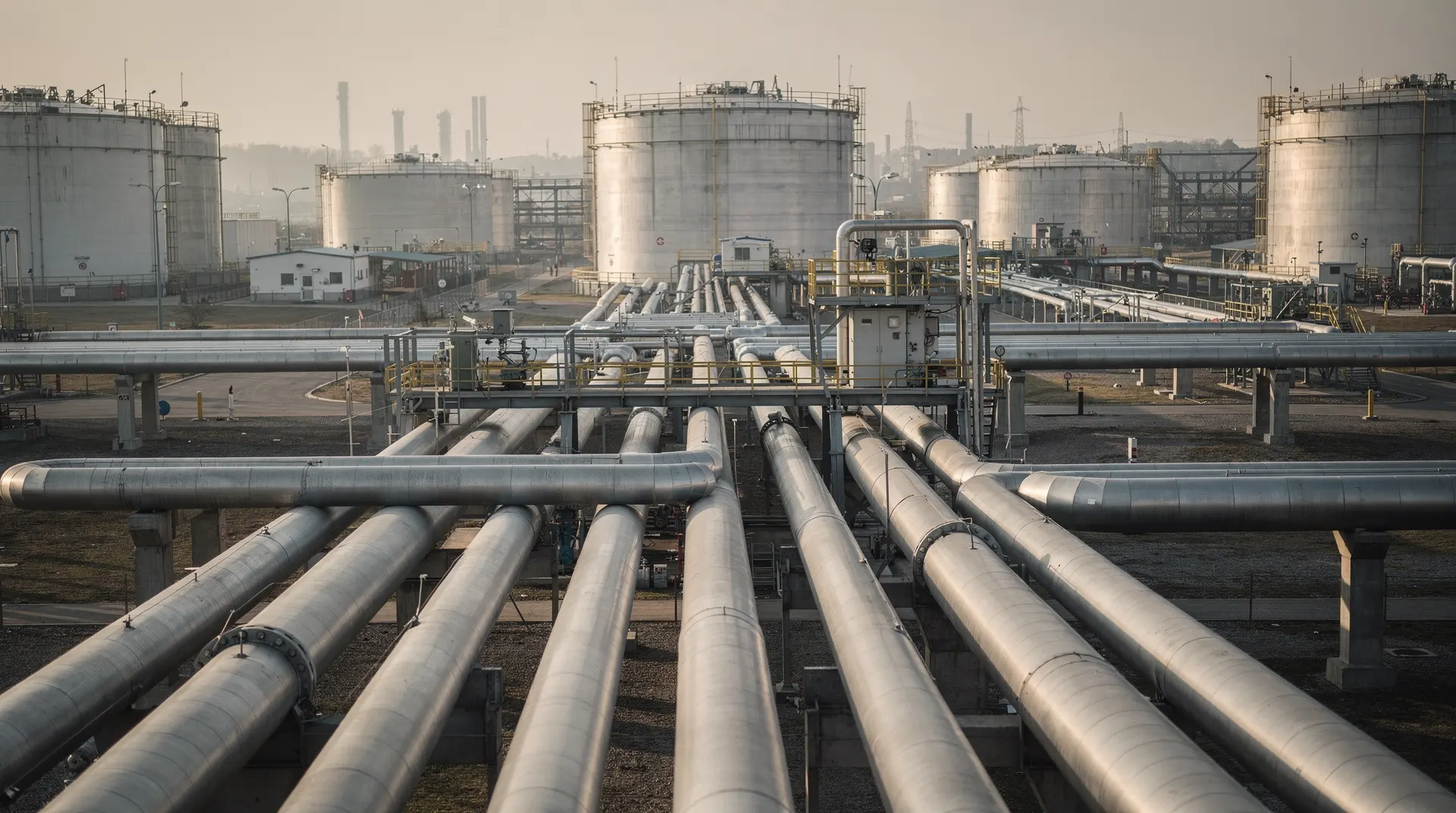
Midstream pipeline operators are having one of their best years on record. Energy Transfer (ET) reported Q2 2026 adjusted EBITDA of $5.07 billion, up 31% from $3.87 billion in Q2 2025, and raised its full-year guidance to $18.8-$19.1 billion. Delek Logistics Partners (DKL) raised its quarterly distribution for the 54th consecutive quarter, setting a yield of 7.7% at the current stock price of roughly $52.30. WTI crude, by contrast, is stuck: at $82.46 per barrel on Monday, the spot market is being held back by a 17.42-million-barrel inventory build in the week ending August 7 that traders are still digesting.
The reason ET and DKL keep raising distributions while crude meanders has nothing to do with spot prices. ET's NGL transportation volumes hit a new partnership record at plus 13% year over year; NGL exports set another record at plus 25%. This is fee-based throughput revenue tied to U.S. LNG export growth and Gulf Coast petrochemical expansion. Commodity price exposure is minimal by design. DKL draws most of its cash flow from long-term contracts with parent Delek Group, which is why it has posted 54 consecutive quarterly raises across two oil crashes. The 7.7% yield on a stock that has been sliding reflects either payout risk uncertainty or sector rotation out of bond-proxy names, depending on your read. Parent company health remains the relevant risk to track.
The crude supply picture is less constructive. The EIA reported a 17.42-million-barrel build in commercial inventories for the week ending August 7, against consensus expectations for a 600,000-barrel draw. Stockpiles at 424.4 million barrels sit roughly 28 million barrels above the five-year average of about 396 million. Geopolitical concerns around the Strait of Hormuz provided a bid that lifted WTI 12.5% off its August 5 low, but weak Chinese industrial demand and this inventory overhang create a ceiling. The $85 level is the near-term resistance to watch; support at $78 is roughly 5% below current prices.
The midstream distribution story is intact and volume-driven. The risk worth flagging is rate sensitivity: a higher-for-longer Fed environment compresses the premium investors assign to bond-proxy income names and raises the cost of capital for companies carrying meaningful debt loads. Watch the next EIA weekly inventory report to see whether the August 7 build was a one-week anomaly.
Related reading: Oil Above $100 and the Commodity Sector's Next Catalyst, OFAC's Clock Is Ticking on Lukoil's $22 Billion International Portfolio, BIS UAE A5 Reclassification Defense Energy Export Architecture.
For ongoing coverage, see our oil coverage.
This content is for informational purposes only and does not constitute financial advice. Past performance is not indicative of future results. Consult a qualified financial advisor before making investment decisions.
Get daily intelligence delivered
Create a free account for the Daily Brief every weekday and The Week Ahead every Sunday. No card required.