OFAC Reopens the Lukoil Sale Window for an Eleventh Time, and the Legal Fine Print Hasn't Moved Since November

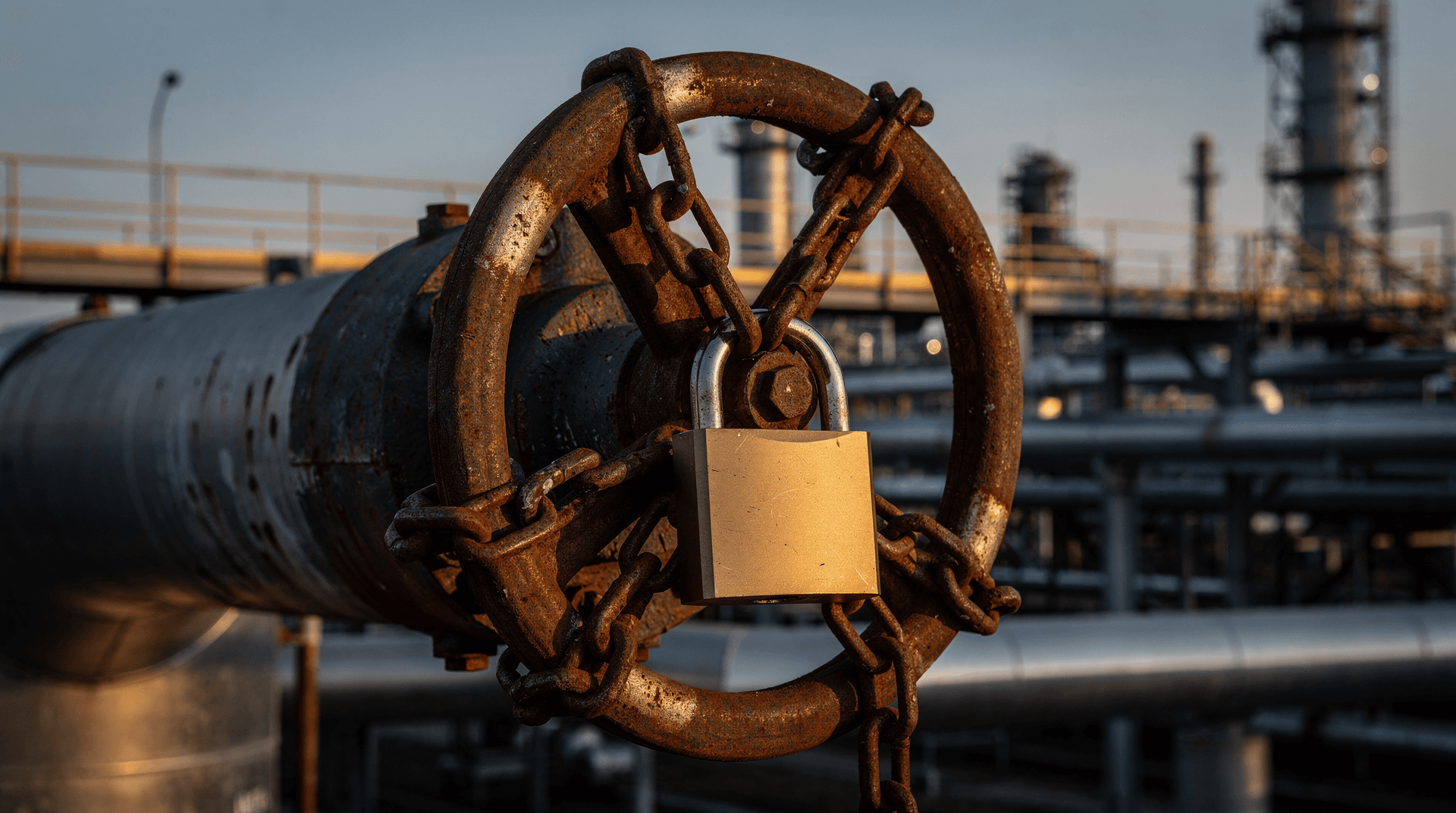
A new expiration date, the same conditions, and no closer to an actual transaction
The Finding
On September 18, 2026, the Treasury Department's Office of Foreign Assets Control issued General License 131J, extending to an October 22 expiry date the narrow authorization that lets American companies negotiate a sale of Lukoil International GmbH, the Swiss-registered international arm of sanctioned Russian oil major Lukoil. The license is the eleventh document in a chain that began in November 2025, and it changes nothing about what buyers are actually allowed to do. Every version of this license, from the original GL 131 through 131I, has permitted talk and paperwork, not a closing. GL 131J is no different. It authorizes contingent contracts, due diligence, and wind-down of existing operations. It does not authorize anyone to actually buy Lukoil International.
The Evidence
The text of GL 131J, signed by OFAC Director Bradley T. Smith and dated September 18, 2026, authorizes transactions "ordinarily incident and necessary to the negotiation of and entry into contracts" with Lukoil or its affiliates for the sale of Lukoil International GmbH, or any subsidiary in which the Swiss entity holds a 50 percent or greater stake, collectively defined as the "LIG Entities." The license is set to expire at 12:01 a.m. Eastern time on October 22, 2026. A single clause carries the entire legal weight of the document: any contract negotiated under this authority must be made "expressly contingent upon the receipt of separate authorization from the Office of Foreign Assets Control." A footnote widens the definition of "contingent contracts" to cover executory agreements, pro forma invoices, letters of intent, bids submitted to a tender, and memoranda of understanding, which is a way of saying that almost any document short of a wired payment qualifies for protection under the license, and none of those documents can be executed without OFAC's separate sign-off.
Paragraph (b) of the license separately authorizes maintenance and wind-down transactions for LIG's existing operations, and paragraph (c) allows blocked LIG accounts to be debited or credited for that maintenance activity. Paragraph (d) closes the loop: the license does not unblock any property beyond what paragraph (c) permits, does not touch any other sanctioned person, and does not authorize sending funds to anyone inside Russia. Paragraph (e) formally supersedes GL 131I, the license dated August 20, 2026, which expired on its own terms the day before GL 131J took effect.
OFAC published the new license inside a routine omnibus notice on its "recent actions" page, one that led with the unrelated expiration of the Ethiopia sanctions program and the resulting removal of designated persons from the SDN list. The Lukoil item ran as the second paragraph of that release, alongside two updated FAQs, without a standalone announcement. That placement matters for how the market absorbed the news: a filing that reporters and analysts had to know to look for, buried in a housekeeping notice about an entirely different sanctions program that happened to expire the same week.
The two amended FAQs give the fuller picture of what OFAC is actually asking for. FAQ 1224, first published in November 2025 and updated again on September 18, restates the origin of the whole license series: Lukoil was designated on October 22, 2025, "to increase pressure on Russia's energy sector and degrade Russia's ability to raise revenue for its war machine." Because that designation instantly blocked LIG along with its Russian parent, OFAC created the 131 series to let a sale process happen without immediately triggering a sanctions violation for every party that touched it. FAQ 1224 then lays out, in OFAC's own words, the conditions any eventual sale will have to meet. The proposed transaction must completely sever LIG's ties to Lukoil. Any funds owed to Lukoil out of the deal must be blocked in a U.S.-jurisdiction account until sanctions are lifted, not paid out. And the deal cannot hand Lukoil a windfall, a category OFAC specifically defines to include upfront value transfers or asset and share swaps. The FAQ adds one more condition on top of those three: as a condition of any future license actually authorizing the sale, OFAC expects to require the buyer to seek its review before divesting any material LIG asset further down the line. In other words, the strings attached don't end at closing. And OFAC reserves the right to revoke GL 131J entirely if it decides Lukoil and its counterparties aren't negotiating in good faith.
FAQ 1225 draws a distinction between GL 131J and a separate license, GL 128 and its amendments, which covers a narrower and unrelated slice of the same designated company: Lukoil-branded retail fuel stations outside Russia. That license track exists to keep gas stations open for ordinary consumers and runs on its own, longer timeline. The two tracks are often confused in casual reporting because they both stem from the same October 2025 Lukoil designation, but only the 131 series bears on a corporate sale of LIG.
The Mechanics: How a Blocked Asset Becomes a Negotiable One
What OFAC has built since November is a legal corridor, not a decision. A blocked asset under U.S. sanctions law is, by default, frozen in place, an enforcement posture that has also appeared in the rare-earth export controls story. Nobody may deal in it, negotiate over it, or take steps toward its transfer without violating the underlying executive order, in this case E.O. 14024. That default made LIG, a genuinely valuable international business with refineries, retail networks, and trading operations spread across Europe and elsewhere, effectively unsellable the moment its Russian parent was designated. A total freeze of that kind creates its own problem for Treasury's stated objective: an asset nobody can touch generates no incentive for Lukoil to disentangle itself from Russian ownership, and it leaves months or years of value sitting inert rather than converting into the kind of clean, Western-owned business that a sanctions regime is supposed to encourage.
The general license format solves that without granting the sale itself. OFAC's approach has been to carve out a specific, narrow set of permitted activities, in this case negotiation, due diligence, and contingent contracting, while withholding the one action that would actually complete the transaction: performance of the contract. Every license in the chain has used the same mechanism, and the "contingent contract" language is doing the real work. A buyer and Lukoil can sign something that looks, on paper, like a definitive purchase agreement. They can conduct financial and legal due diligence, retain outside counsel, and negotiate every term down to price and structure. None of it violates E.O. 14024, because the general license carves that activity out of the prohibition. But the agreement itself must say, in writing, that none of it takes effect unless and until OFAC issues a further, separate license authorizing the actual sale. The deal exists on paper before it exists in law.
That structure gives OFAC something it would not have if it simply authorized the sale outright: renewable, revocable control over every stage of the process. Each license expires on its own short clock, between 29 and 45 days across the eleven versions issued so far, which means OFAC reviews and effectively re-approves the negotiation window roughly monthly. FAQ 1224's explicit statement that the license "may [be] revoke[d] at any time" if the parties aren't negotiating in good faith turns each renewal into a checkpoint. A buyer with a signed, contingent agreement still has no legal claim to compel OFAC's cooperation, and Lukoil has no path to actually receiving proceeds until OFAC decides the deal meets its three published conditions: complete severance from Lukoil, blocked payment pending sanctions relief, and no disguised windfall through swaps or upfront value.
The Pattern: Eleven Licenses, Same Terms, No Closing
Comparing the sequence of licenses shows a clear pattern rather than an escalation. GL 131 issued November 14, 2025, ran 29 days. Each successor, 131A through 131I, followed on the heels of the prior license's expiration with a new date and, per side-by-side legal review of the text, no substantive change in scope. GL 131I, issued August 20, ran roughly a month before expiring on September 19, 2026, one day after GL 131J took its place. The window length has varied, from a tight 29 days to a looser 45, but the authorized activity has not moved: negotiate, don't perform.
That consistency is itself informative. Public reporting through the first half of 2026 described a competitive process for LIG's roughly $22 billion international portfolio, with Carlyle Group and a Chevron-Quantum Capital Group partnership both reported as leading bidders, and Lukoil's own press office confirming talks with Carlyle specifically. Legal commentary tracking the license series noted that by GL 131I in August, a Carlyle agreement had reportedly been signed, nine licenses into the sequence, and still no authorization to actually close. GL 131J, the tenth extension since that first license, sets its expiration date to October 22 and changes nothing else that OFAC has published. Whatever has been negotiated on paper between Lukoil and its prospective buyers remains, as a matter of law, contingent on an approval that has not yet arrived, the same sanctions-driven supply logic this month's Fed hike analysis of the oil supply floor traced through rates and gold.
Why It Matters
The Lukoil International case is now the clearest working example of a licensing architecture Treasury has used before, in smaller ways, and will likely use again. Rather than choosing between total sanctions enforcement, which freezes an asset indefinitely and destroys its value, and outright relief, which risks handing a sanctioned entity cash or standing, OFAC has built a middle path: authorize the process, withhold the outcome, and use renewal cycles as a compliance lever. The three conditions spelled out in FAQ 1224, complete severance, blocked proceeds, and no windfall, are a template that could apply to any large blocked asset held by a designated Russian entity where Treasury wants a Western buyer to end up owning it cleanly rather than leaving it frozen or letting it revert to Russian control through a workaround.
For markets watching the energy sector, the practical read is patience rather than anticipation, much as oil ceded the Hormuz spike while copper built managed-money length earlier this week. A signed agreement between Lukoil and a bidder, even one reported in the press as final, is not evidence that a transaction is imminent so long as OFAC's own general license explicitly withholds authorization to perform it. The relevant date to watch is not a deal-signing but the next general license expiration, and whether that license is renewed again, allowed to lapse, or, for the first time in nearly a year, replaced by an actual authorization to close. The license expires October 22, which is the next checkpoint in our crude oil coverage. Nothing in GL 131J or its accompanying FAQs suggests OFAC has decided which of those outcomes comes next.
Sources & Methodology
- OFAC General License No. 131J, "Authorizing Certain Transactions for the Negotiation of and Entry Into Contingent Contracts for the Sale of Lukoil International GmbH and Related Maintenance Activities," dated September 18, 2026. https://ofac.treasury.gov/media/936951/download?inline
- OFAC Recent Actions notice, September 18, 2026, announcing GL 131J alongside the Ethiopia sanctions program expiration. https://ofac.treasury.gov/recent-actions/20260918
- OFAC FAQ 1224, updated September 18, 2026 (originally released November 19, 2025), stating OFAC's three conditions for any eventual LIG sale and the good-faith revocation standard. https://ofac.treasury.gov/faqs/1224
- OFAC FAQ 1225, updated September 18, 2026, distinguishing the GL 131 sale-negotiation series from the separate GL 128 retail-station maintenance series. https://ofac.treasury.gov/faqs/1225
- Reuters, "Carlyle, Chevron-Quantum partnership among frontrunners for Lukoil assets, as a U.S. deadline to sell them expires this week, sources say," January 12, 2026, on the competitive bidding process for LIG's international portfolio.
- Financial Times, "Chevron and Quantum Capital Group line up bid for $22bn of Lukoil assets," on the scale and structure of one reported bid.
- LUKOIL press release, "LUKOIL Agrees With Carlyle on Sale of International Assets," company confirmation of negotiations.
- FesenkoLaw.com sanctions blog, "OFAC GL 131I: Nine Licenses, a Signed Carlyle Deal, and Still No Approval for Lukoil," August 25, 2026, secondary legal analysis comparing license text across the series.
Methodology: this piece is built from OFAC's own general license text and FAQ language, cross-checked against the agency's recent-actions release and against secondary legal commentary tracking the license series over its eleven-month run. Dates and license numbers were verified against OFAC's own published sequence; the $22 billion valuation and the identity of reported bidders come from independent news organizations' sourcing on the underlying commercial negotiation and are presented here only as market context for the licensing pattern, not as claims this outlet has independently verified. No claim in this piece characterizes the conduct, motives, or legal exposure of Lukoil, Carlyle, Chevron, Quantum Capital Group, or any other named commercial party; all statements about the sale process describe OFAC's own published licensing framework and its officially stated conditions.
Disclaimer: This content is for informational purposes only and does not constitute financial advice. Past performance is not indicative of future results. Consult a qualified financial advisor before making investment decisions. This is investigative journalism produced by MarketIntelLabs based on primary government documents. It is not legal advice and does not accuse any named party of wrongdoing.
Get daily intelligence delivered
Create a free account for the Daily Brief every weekday and The Week Ahead every Sunday. No card required.