Oil Surges on Saudi Strike Risk, Gold Slides With Dollar

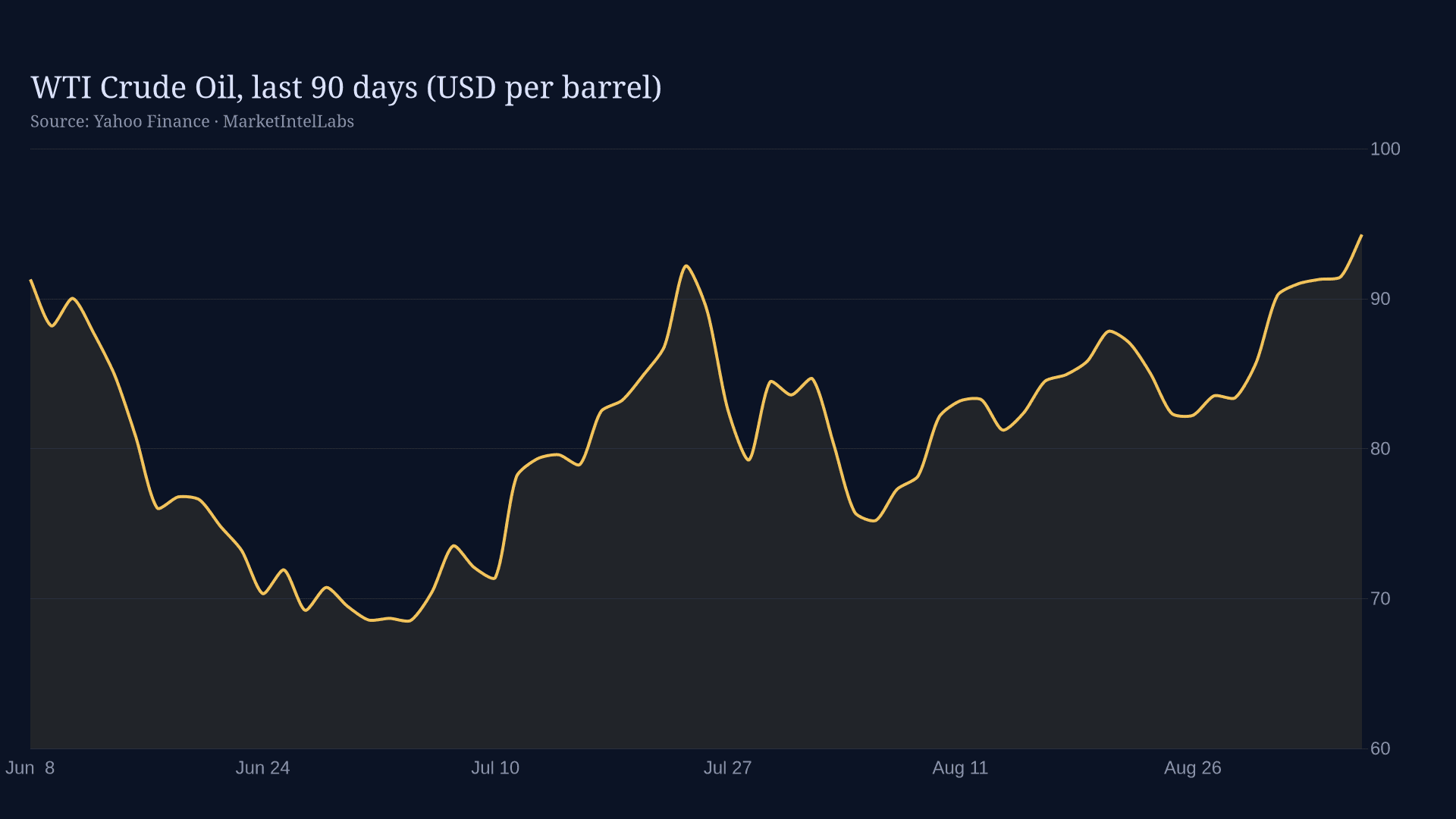
Oil prices surged more than 2% Tuesday after Houthi rebels struck a Saudi Aramco refinery, injecting fresh geopolitical risk into a market already tightened by OPEC+ cuts.
Related reading: Oil Surges 2.4% After Houthi Attack on Saudi Refinery, Gold Traders Take Profits, But Positioning Stays Bullish, Commodities Positioning Holds Bullish as Prices Consolidate, our oil coverage
Other commodities moved in response: gold slid as the dollar strengthened and traders priced in a higher probability of a September Fed rate hike. Silver rose 0.25% on industrial demand. Copper extended its three-week rally with a 1.31% gain.
The oil market's reaction shows how fragile global supply remains. Saudi Arabia is the world's largest oil exporter. Any disruption adds a risk premium to crude prices. The 2.4% move in WTI is moderate compared to the 2019 Abqaiq attack, which sent prices surging 19%.
That suggests traders are waiting for damage assessments before positioning aggressively. The underlying picture is tight. OPEC+ spare capacity sits near historic lows. If the situation escalates, especially if the Strait of Hormuz faces threat, WTI could push above $100.
Gold declined as the dollar strengthened. The U.S. Dollar Index ETF advanced 0.25% to 28.08. CNBC reported that markets are pricing in a higher probability of a September rate hike after recent hawkish commentary from Federal Reserve officials.
Gold's inverse relationship with real yields holds. The 10-year Treasury yield held steady at 4.78%. Physical demand from central banks and retail buyers provides a floor. Absent a broader risk-off catalyst, gold is likely to remain range-bound between $2,350 and $2,450.
Silver outperformed gold. The metal gained on accelerating orders from solar-panel manufacturers and electronics producers, according to Silver Institute data. Supply constraints are also supporting prices.
Copper's continued rally signals optimism about global manufacturing recovery. Traders expect Chinese stimulus measures to boost construction and electric vehicle production. Industrial metals are moving on growth-sensitive demand, while precious metals face monetary-policy headwinds.
The cross-asset implications are clear. Energy stocks should benefit from higher oil prices. Airlines may underperform as fuel costs rise. Oil-sensitive currencies like the Canadian dollar and Norwegian krone could strengthen against the dollar.
Higher oil prices could lift headline CPI. That complicates the Fed's disinflation path. Gold's muted response suggests the market views the oil shock as localized rather than systemic.
The contrarian view holds that the refinery attack may prove minor. Saudi spare capacity could offset any short-term disruption. Gold's decline may be overdone if the Fed signals a pause after September. Copper's rally could stall if Chinese stimulus underwhelms expectations.
Traders should watch for damage-assessment headlines and comments from Fed speakers.
Wednesday brings the start of the Federal Reserve's blackout period ahead of the September 17 FOMC meeting. That reduces the likelihood of policy-maker comments that could move markets. The next key economic releases are Thursday's weekly jobless claims and Friday's Producer Price Index.
This content is for informational purposes only and does not constitute financial advice. Past performance is not indicative of future results. Consult a qualified financial advisor before making investment decisions.
Get daily intelligence delivered
Create a free account for the Daily Brief every weekday and The Week Ahead every Sunday. No card required.