How Markets React to Rising Rate Expectations

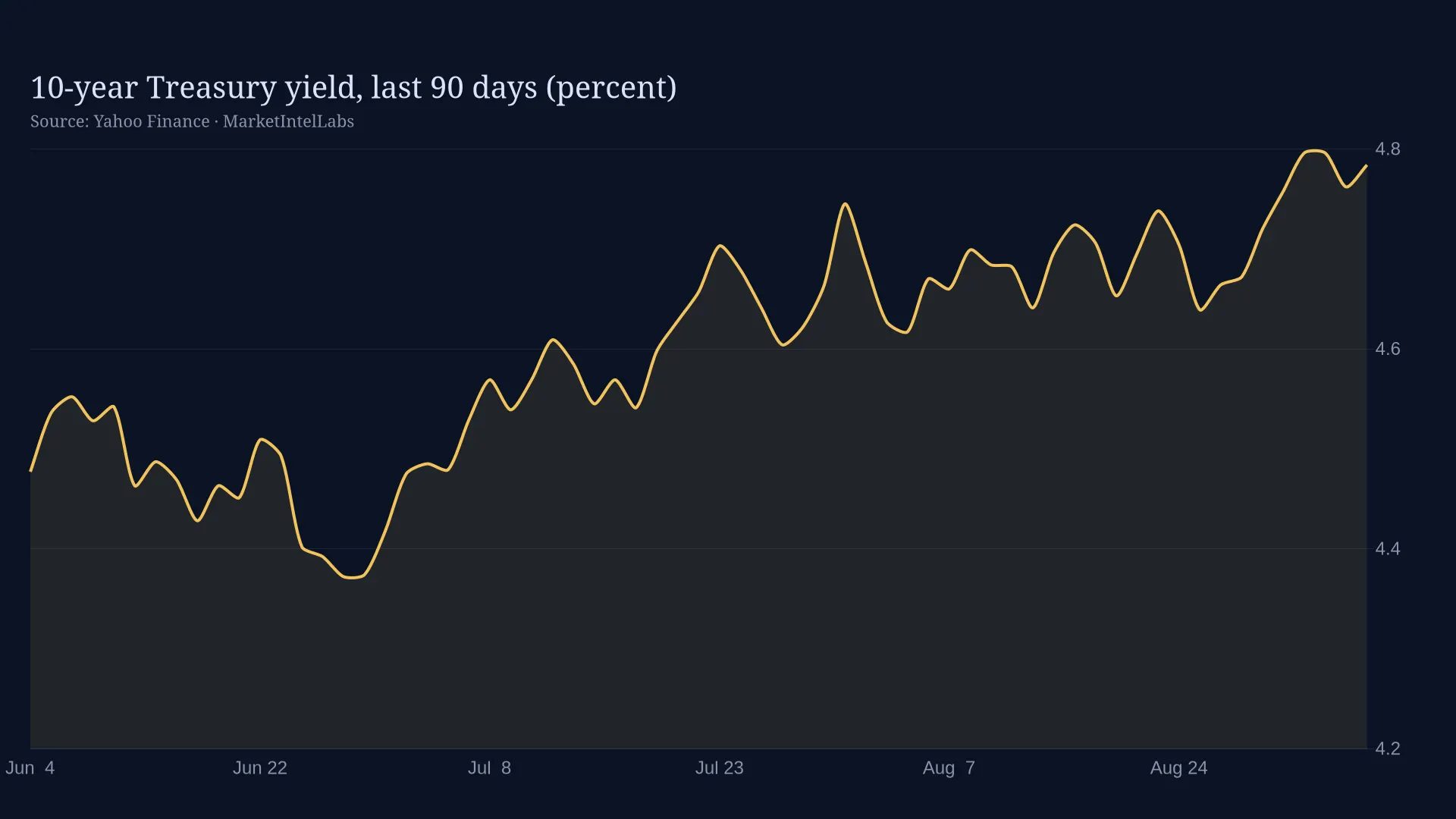
The 10-year Treasury yield climbed 8 basis points to 4.68% in August, and markets are taking notice. When rates rise, some assets thrive while others struggle. The current backdrop shows that pattern playing out in real time.
For more on Fed policy, see our Fed policy coverage .
Key Takeaways The 10-year Treasury yield rose to 4.68% in August, reflecting market expectations for continued Fed tightening. Gold and silver ETFs declined 0.84% and 1.21% respectively as real yields climbed. Tech stocks outperformed with QQQ gaining 0.18% while the broader S&P 500 slipped 0.39%. Bitcoin and Ethereum both posted modest declines, tracking risk-off sentiment. Rising real yields create headwinds for asse…
Keep reading with a free account
Get tomorrow's institutional market briefing before markets open, produced by specialized AI analysts researching markets 24/7. Takes under a minute, no card required.
- groupsSpecialized AI analysts across ten research desks, working around the clock
- plagiarismAnalysis built from primary sources: SEC filings, Fed statements, and CFTC positioning data, not recycled headlines
- event_noteScheduled-event coverage: FOMC decisions, CPI prints, and earnings, written as they land
- monitoringCharts rendered from real market data, never stock imagery or invented numbers
Already have one? Log in · Want everything the day it publishes? Go Premium
Secure checkout via Stripe