Fed's RRP Buffer Hits Zero as Inflation Gauges Diverge


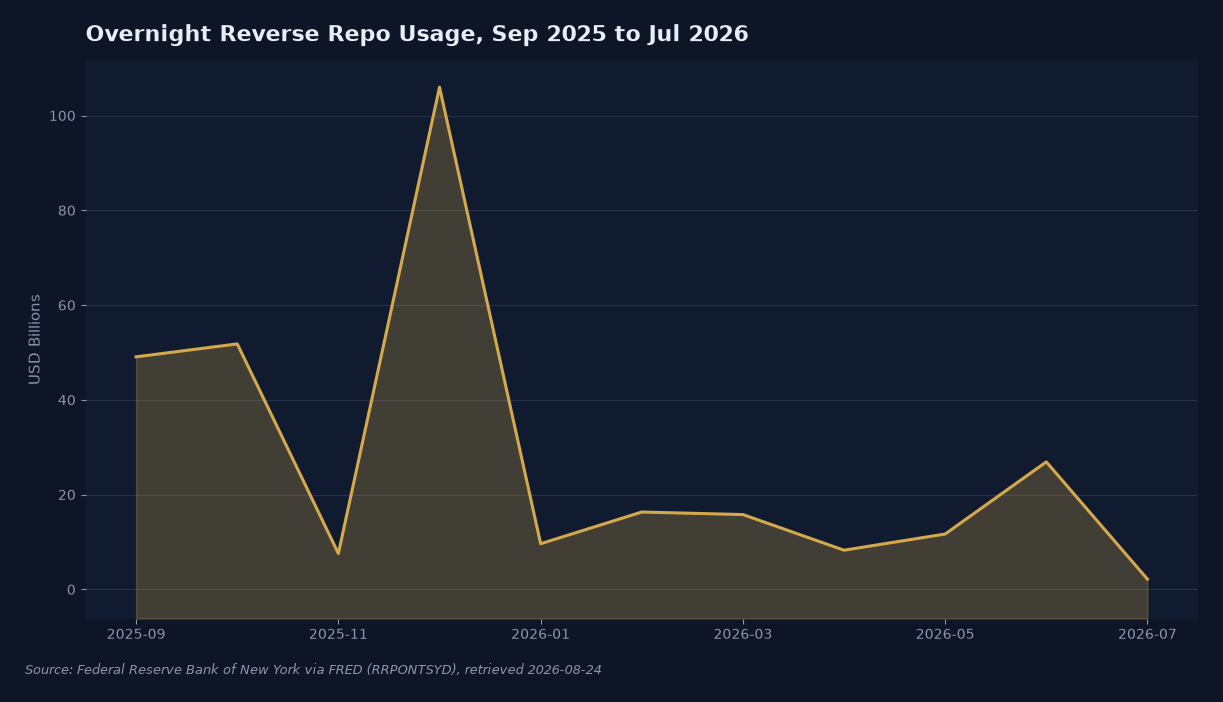
The overnight reverse repo facility has drained to $0.2 billion, down from a peak north of $2 trillion in 2022 and 2023, while the Treasury General Account has rebuilt to $953.6 billion since late July. That pairing, an empty RRP buffer alongside a growing TGA, is the same plumbing setup that preceded the September 2019 repo-rate spike, and it is unfolding while the Fed's two inflation gauges tell different stories: core CPI cooled to 2.47% year over year in July, but core PCE, the measure the Fed actually targets, held at 3.29% for June.
Fed Governor Lisa Cook recently outlined conditions for a September rate hike.
The inflation divergence matters because the Fed does not set policy off the CPI print that makes headlines. Core PCE weights shelter and healthcare differently, and an 80 basis point gap usually means services costs are still running hot even as CPI's goods components disinflate. Read CPI alone and the Fed looks close to done. Read PCE, the actual policy input, and the case for holding looks stronger than the headline suggests.
The liquidity side is a plumbing story, which is why it draws less attention than it deserves. From 2022 through 2024, the Fed ran quantitative tightening while RRP balances absorbed the offset, keeping bank reserves ample even as the balance sheet shrank by more than $2 trillion. That slack is gone. With RRP at $0.2 billion, the TGA's $124 billion rebuild has nowhere to draw from except reserves directly, and the Fed's balance sheet sits roughly flat at $6.746 trillion, down modestly from $6.760 trillion a week earlier. This is not a confirmed stress event: the 10s2s curve remains positively sloped at plus 50 basis points, up from plus 48, which is not the shape markets typically show heading into funding stress, and an empty RRP can also reflect money funds simply preferring direct T-bill yield over the Fed's overnight facility. It is a precondition worth watching, not a siren.
South Korea’s AI spending spree adds another layer to global inflation volatility.
M2 money supply grew 5.53% year over year through June, the fastest pace in years, while the fed funds rate sits at 3.63%, an unusually loose real policy stance against 3%-plus core PCE and a labor market where unemployment fell to 4.1% in July from 4.4% in February. Watch SOFR spreads and next month's TGA and RRP prints together. If reserves tighten faster than the Fed expects, the response could come from balance sheet policy before any rate decision does.
See also our Fed policy coverage: https://marketintellabs.com/topics/fed-policy.
Fed policy inflection points ahead of the September rate decision.
This content is for
Related reading: Retail Earnings Week Preview: HD, TGT, WMT Set to Define Market Direction; Fed Governor Cook Signals Rate Hike Readiness; Week Ahead: July CPI and Treasury Supply Collide.
Related reading: Bitcoin Touches $70,000 as Treasury Eases Liquidity
Related reading: BTC ETFs Pull $854M in August as SEC Opens Crypto Rulemaking
For more on Fed policy, see our Fed policy hub.
informational purposes only and does not constitute financial advice. Past performance is not indicative of future results. Consult a qualified financial advisor before making investment decisions.Get daily intelligence delivered
Create a free account for the Daily Brief every weekday and The Week Ahead every Sunday. No card required.