commodities

Treasury Yield at 4.78% Signals Term Premium Concerns as Gold Slips Below $4,450

Published September 9, 20263 min read
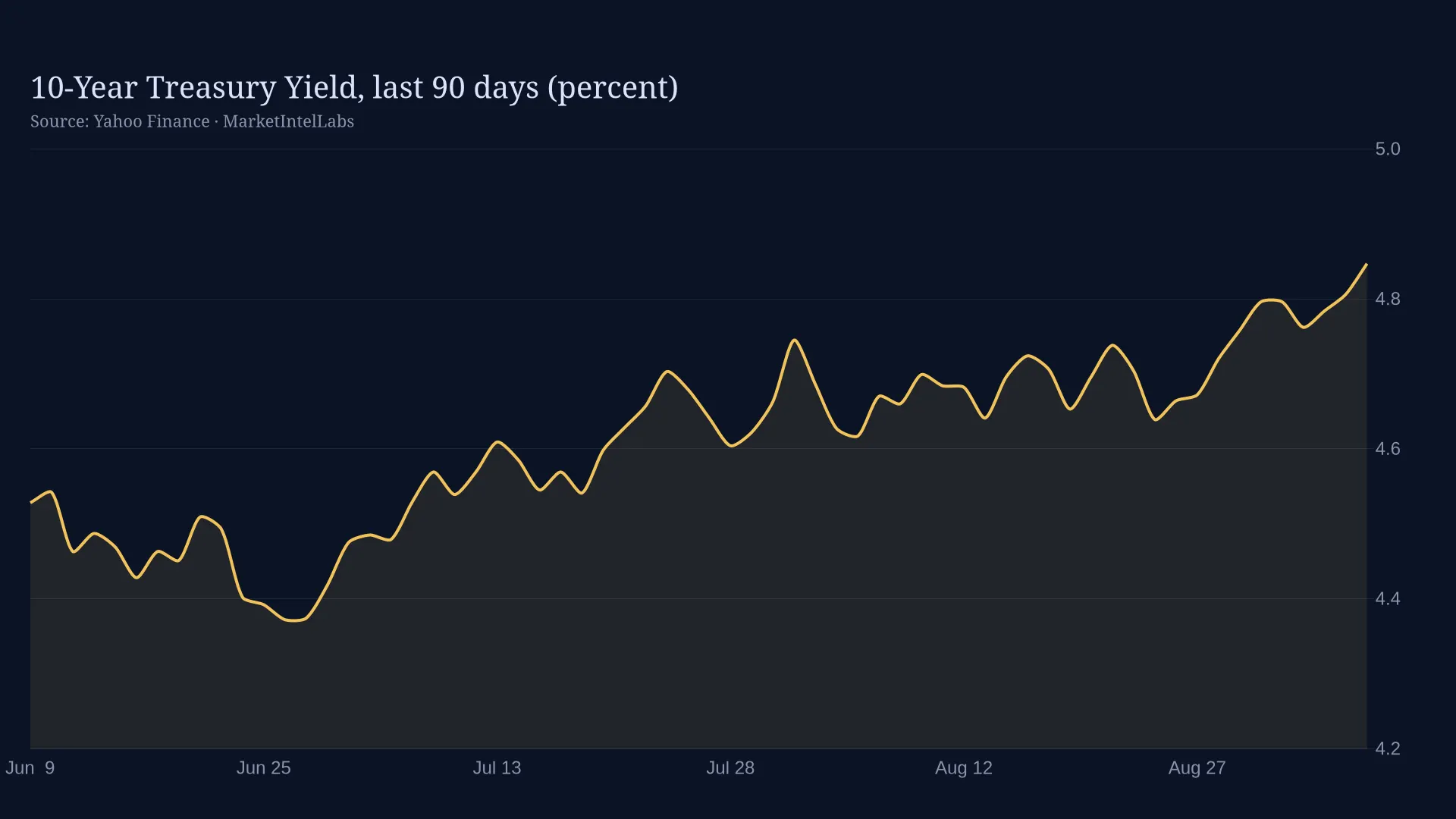
Line chart of 10-Year Treasury Yield, last 90 days (percent) on a dark background
10-Year Treasury Yield, last 90 days (percent) — Illustration: MarketIntelLabs

The 10-year Treasury yield climbed 1 basis point to 4.78%, suggesting bond markets are pricing in a slightly higher term premium as investors weigh fiscal deficit concerns against contained inflation. Gold slipped 0.17% to $4,446.40 despite a modest dollar decline to 98.78, indicating reduced safe-haven demand as real yields remain elevated. The dollar index softened 0.06% as risk assets traded lower across the board, with the S&P 500 ETF off 0.55% and the Nasdaq-100 ETF down 0.39%.

our Fed policy coverage

The modest uptick in long-term yields matters for what it shows about market expectations about future inflation and fiscal policy. When the 10-year yield climbs even as short-term rates hold steady, investors are demanding more compensation for holding longer-dated debt. This term premium typically rises when bond markets anticipate larger deficits, higher supply, or persistent inflation pressure that the Federal Reserve may not fully offset.

Gold's decline matters because it occurred alongside dollar weakness. The yellow metal usually is an inflation hedge and dollar alternative, so when both fall simultaneously it signals a shift in market expectations. The most likely driver is the real yield environment. Nominal yields may be rising only slightly, but if inflation expectations are falling faster, real yields increase. Higher real yields reduce gold's appeal because the metal offers no yield.

The Federal Reserve's policy rate remains at 3.63%, unchanged from the previous meeting. This stability contrasts with the gradual creep in long-term yields, creating a mild flattening pressure on the yield curve. Curve dynamics matter for risk assets. When short-term rates hold steady while long-term rates rise, banks face a steeper funding cost curve, which can tighten lending conditions. Tighter lending typically weighs on growth stocks and sectors dependent on credit availability.

Cross-asset correlations confirm the macro interpretation. The S&P 500 ETF declined 0.55% while the Nasdaq-100 ETF slipped 0.39%. This pattern suggests rotation rather than risk-off capitulation, as technology names showed relative resilience compared to the broader market. When growth stocks outperform value stocks in a rising yield environment, it typically indicates investors expect higher yields to stem from growth and fiscal factors rather than monetary tightening.

Money supply data from the Federal Reserve adds context. M2 expanded 0.44% in July, maintaining a gradual upward trajectory but remaining well below the expansion rates seen earlier in the decade. This subdued growth shows the Fed's quantitative tightening posture, which continues to drain liquidity from the financial system. Lower liquidity supports higher yields across the curve as Treasury supply competes for a shrinking pool of reserves.

The labor market remains tight at 4.1% unemployment, which supports consumer spending but also keeps wage pressure relevant for inflation dynamics. The Cleveland Fed's inflation nowcast suggests CPI will rise 0.2% month-over-month in September, consistent with the contained inflation narrative. However, even contained inflation can force yields higher if fiscal deficits continue expanding Treasury supply without a corresponding increase in demand from foreign investors or the Fed itself.

The 10-year yield near 4.8% represents a key threshold for risk assets. Historically, yields above this level have correlated with equity volatility as higher discount rates compress present values of future earnings. The current configuration of steady short-term rates, gradually rising long-term rates, and contained inflationcould persist through the September FOMC meeting, where the probability of a rate change remains below 20%. Traders should watch the dollar index for signs of whether foreign investors are stepping into the Treasury market. A stronger dollar alongside higher yields would suggest domestic demand is absorbing the supply increase, which could stabilize the equity market. Conversely, a weaker dollar with rising yields would signal foreign demand is insufficient, potentially accelerating the yield rise.

Related reading: Macro Landscape Stable: M2 Growth, CPI Uptick, and Fed Policy Outlook, July CPI Dip Marks First Monthly Decline Since January, Fed Signals No Rate Cuts as Inflation Moderates.

Get daily intelligence delivered

Create a free account for the Daily Brief every weekday and The Week Ahead every Sunday. No card required.