macroboltSpecial Coverage

August PPI Jumps 0.9% vs Consensus for Decline, Inflation Pressure Rebounds

Published September 10, 20262 min read
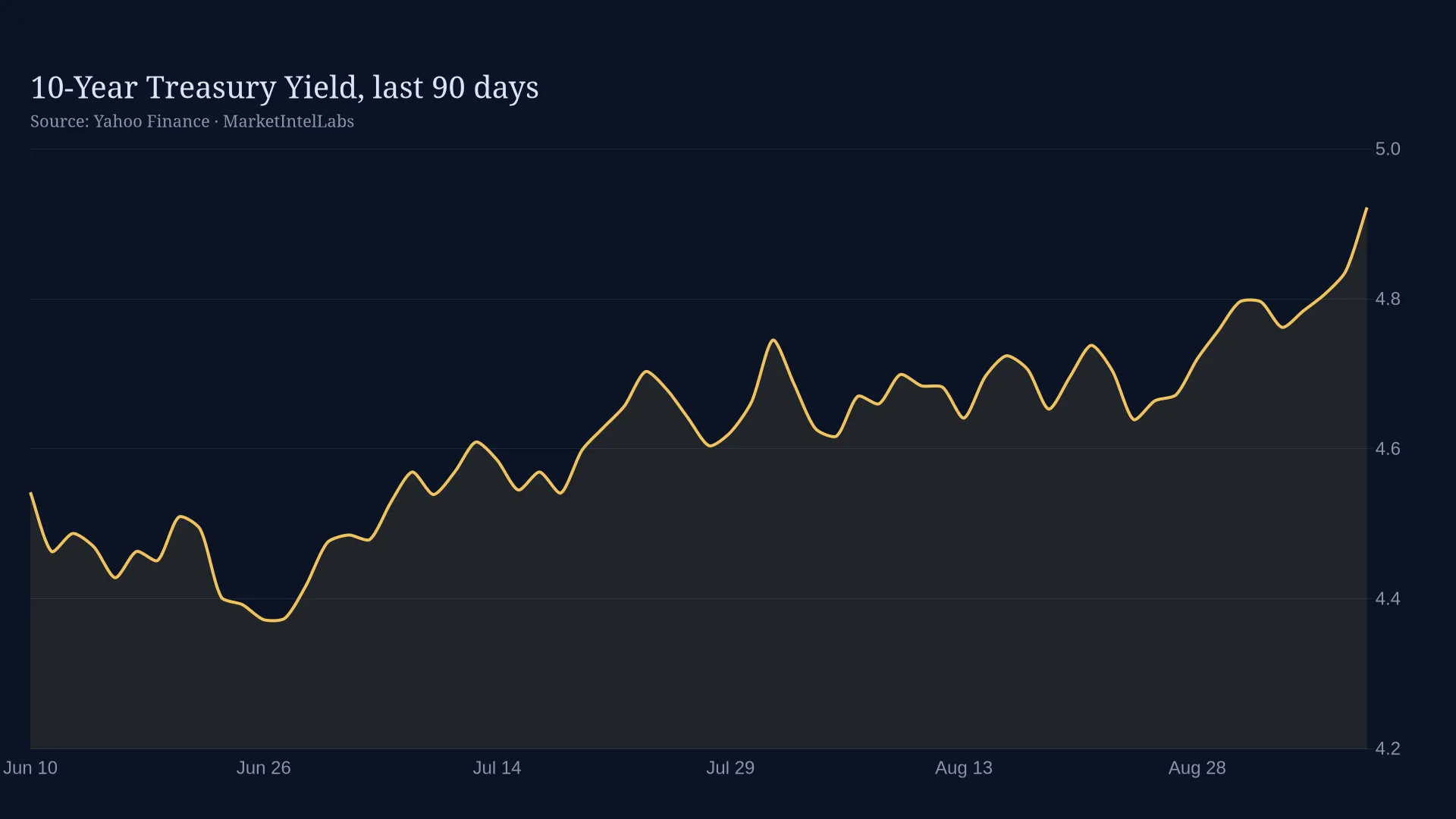
Line chart of 10-Year Treasury Yield, last 90 days on a dark background

The Producer Price Index rose 0.9% month-over-month in August, shattering expectations for a 0.5% decline and marking the sharpest gain since February. Year-over-year, producer inflation accelerated to 6.4%, more than triple the 1.8% consensus forecast. The print breaks three consecutive months of declining wholesale prices and signals that the disinflationary trend may be stalling just as markets had grown comfortable with a near-term Fed pivot.

The data represents a massive 140 basis point upside surprise on the monthly print and a 460 basis point miss on the annual rate. Prior month data was also revised slightly higher, with July now showing a 0.8% decline rather than the initially reported 0.9% drop. The breadth of the increase was notable, with both goods and services components contributing to the upside. Energy prices, which had been a deflationary drag in prior months, showed signs of stabilization, while transportation and warehousing costs picked up meaningfully.

Markets reacted sharply to the report. The S&P 500 ETF (SPY) fell 0.46%, while long-duration Treasuries (TLT) dropped 0.57%, reflecting immediate repricing of inflation expectations and Fed policy. The market move suggests that positioning had become too aligned with a benign inflation narrative, and traders were forced to unwind bets on aggressive near-term easing. The dollar index initially strengthened on the data before giving back some gains by the afternoon session.

This print matters because producer inflation typically feeds into consumer prices with a lag of 2-3 months. The Federal Reserve has been carefully watching PPI as an early indicator of where CPI might be headed. Fed Chair Powell in his recent Jackson Hole remarks emphasized that the central bank needs to see convincing evidence that inflation is returning to 2% sustainably before adjusting policy. August's PPI suggests that evidence may be harder to come by than markets had hoped.

The breakdown matters as much as the headline. The core PPI reading, excluding food and energy, also showed unexpected strength, indicating that the pressure is not coming solely from volatile components. Services inflation, which the Fed has described as particularly sticky, accelerated on the month. This breadth reduces the ability to dismiss the print as a one-off energy price adjustment.

Looking forward, the market's focus will immediately shift to next week's Consumer Price Index release. If the PPI rebound flows through to consumer-level inflation, it would raise serious questions about the timing and magnitude of any Fed rate cut. futures markets are currently pricing in roughly a 60% probability of a September cut, but those odds could shift dramatically depending on the CPI number.

The Fed's data-dependent framework remains dependent on whichever data supports the current narrative, and today's PPI suggests the narrative is shifting. Three months of benign inflation data had convinced many market participants that the Fed was inching toward a pivot. One hot print does not make a trend, but it does increase the odds that the central bank maintains its restrictive stance longer than the consensus assumes.

Related reading: What to Watch: August Consumer Price Index, August CPI: What to Watch as Inflation Data Lands, Small Caps Drop as Yield Spike Triggers Rotation.

For more on Fed policy, see our Fed policy coverage hub.

Get daily intelligence delivered

Create a free account for the Daily Brief every weekday and The Week Ahead every Sunday. No card required.