equities

Gap Store Closures and Old Navy Strategy Headwinds

Published September 8, 20262 min read
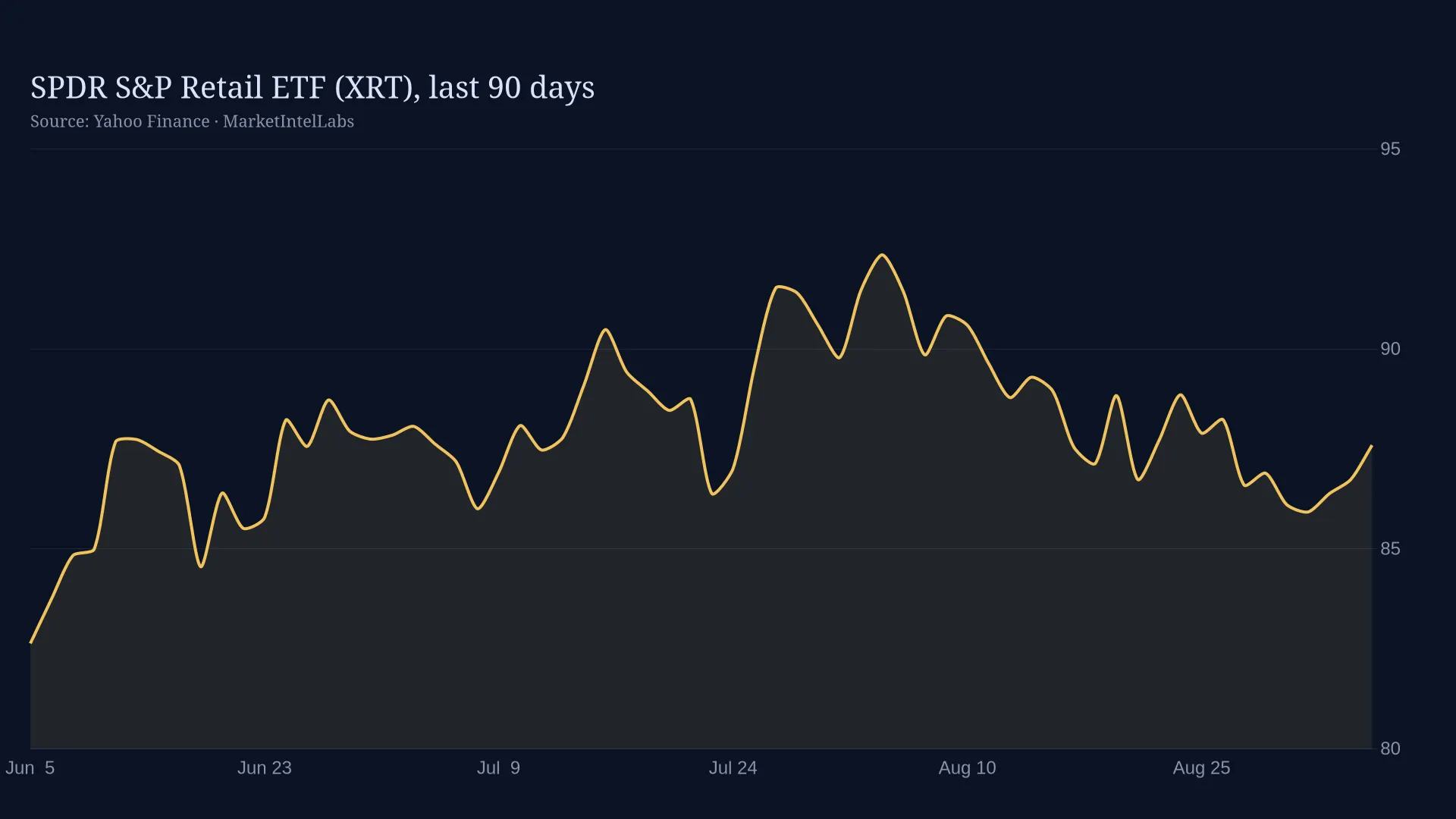
Line chart of SPDR S&P Retail ETF price on a dark background
SPDR S&P Retail ETF price performance over the last 90 days — Illustration: MarketIntelLabs

Gap Inc. has shuttered 350 stores as part of a broader restructuring effort. The deeper problem lies in the Old Navy brand, which historically served as Gap's value-oriented growth engine but is now losing its price-value proposition in a crowded discount-apparel market. Macro data reinforce the sector's headwinds: retail sales declined 0.58% month-over-month in July to $763.6 billion, and consumer sentiment remains deeply depressed at 55.2. Gap stock at $22.43 trades near the lower end of its 52-week range of $18.11 to $29.36, underperforming the SPDR S&P Retail ETF.

Related reading

The retail sector is confronting a dual challenge of structural shift toward e-commerce and cyclical softening in consumer spending. Gap's store-closure program highlights the pressure on brick-and-mortar footprints as foot traffic dwindles and online penetration rises. Old Navy's recent sales slump suggests the brand is losing its competitive position in the value apparel space.

Macro conditions are compounding these structural challenges. The month-over-month decline in retail sales aligns with the downward trend in consumer sentiment, which remains far below the 90 to 100 range typical of a confident consumer. This weakness likely reflects persistent inflation, higher borrowing costs, and a cooling labor market. All three factors weigh on discretionary purchases, particularly in the apparel segment where Gap competes.

From a market perspective, Gap's stock has underperformed the broader retail ETF and the S&P 500 over the past year, reflecting investor skepticism about the company's turnaround prospects. The appointment of a new Old Navy CEO may provide a catalyst for sentiment, but execution risk is high. Historically, retail turnarounds require multiple quarters of consistent comparable-sales growth and margin improvement. Gap has yet to demonstrate either metric.

Market breadth in the consumer discretionary sector shows mixed signals. While some apparel and retail names have found support, the group remains under pressure relative to the broader market. The advance-decline line for retail stocks has trended lower over the past quarter, indicating more stocks declining than advancing. This breadth weakness suggests investors are rotating out of traditional retail names.

Risks to the thesis include a sharper-than-expected slowdown in consumer spending, which could accelerate store closures and depress earnings across the sector. Successful execution of Old Navy's new strategy could drive a faster-than-anticipated rebound in Gap's stock. Geopolitical events or a resurgence in inflation could further erode consumer purchasing power. On the flip side, any signs of a consumer rebound would likely benefit retail stocks disproportionately, creating a potential contrarian opportunity for patient investors.

What to watch next: Old Navy's comparable sales trends in the coming quarters will be the key indicator of whether the new strategy is gaining traction. Consumer sentiment readings above 60 would signal improving confidence that could support discretionary spending. Retail sales data turning positive month-over-month would mark an important inflection point for the sector. Gap's ability to stabilize its store footprint and show positive same-store sales will be critical for the turnaround thesis.

This content is for informational purposes only and does not constitute financial advice. Past performance is not indicative of future results. Consult a qualified financial advisor before making investment decisions.

More on equities

Get daily intelligence delivered

Create a free account for the Daily Brief every weekday and The Week Ahead every Sunday. No card required.